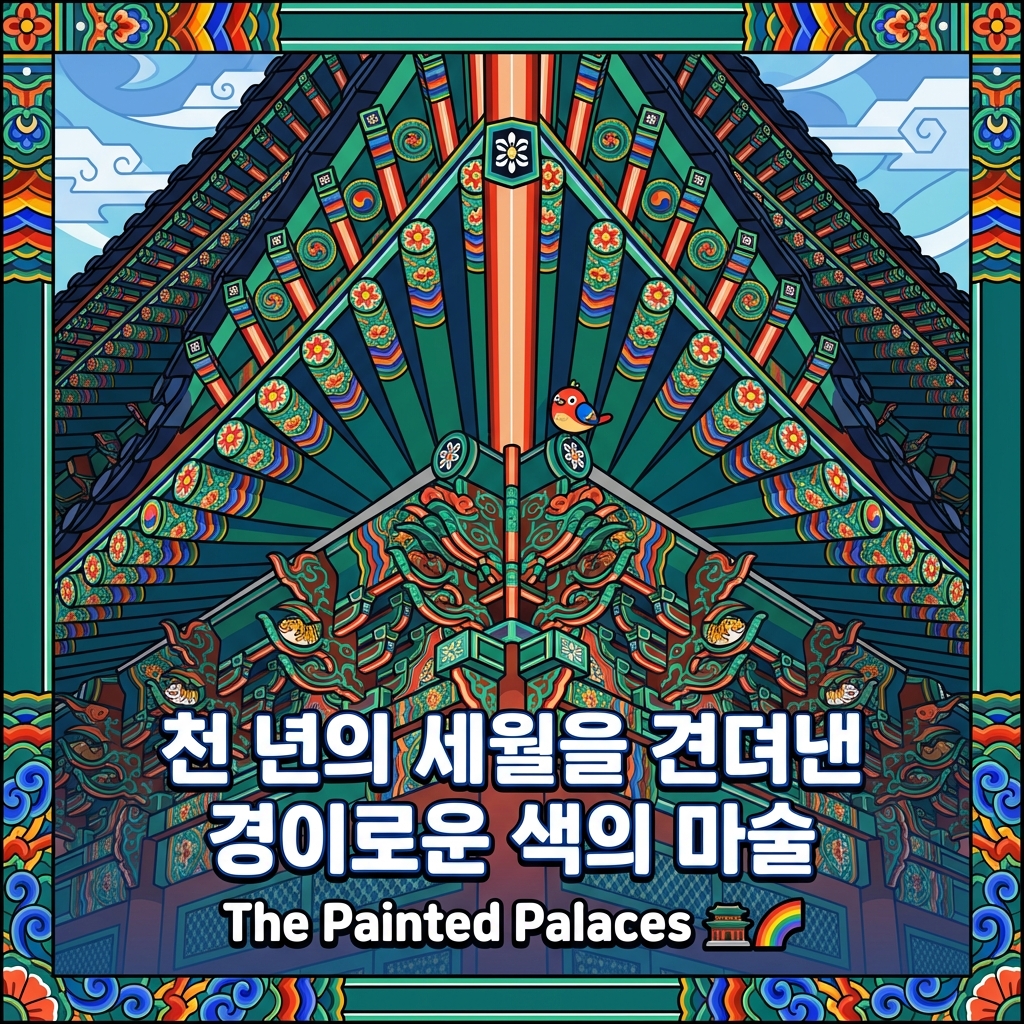
The Painted Palaces 🏯🌈
If you visit any ancient palace, Buddhist temple, or royal tomb in South Korea, the very first thing that will instantly capture your attention isn’t the size of the buildings… it’s the color. 🎨
The undersides of the sweeping roofs and the massive wooden pillars are covered in breathtaking, mesmerizing, hyper-intricate geometric patterns. 💠
This isn’t just decoration. This is the ancient, highly regulated, deeply philosophical art of Dancheong (단청). 🖌️
The undersides of the sweeping roofs and the massive wooden pillars are covered in breathtaking, mesmerizing, hyper-intricate geometric patterns. 💠
This isn’t just decoration. This is the ancient, highly regulated, deeply philosophical art of Dancheong (단청). 🖌️
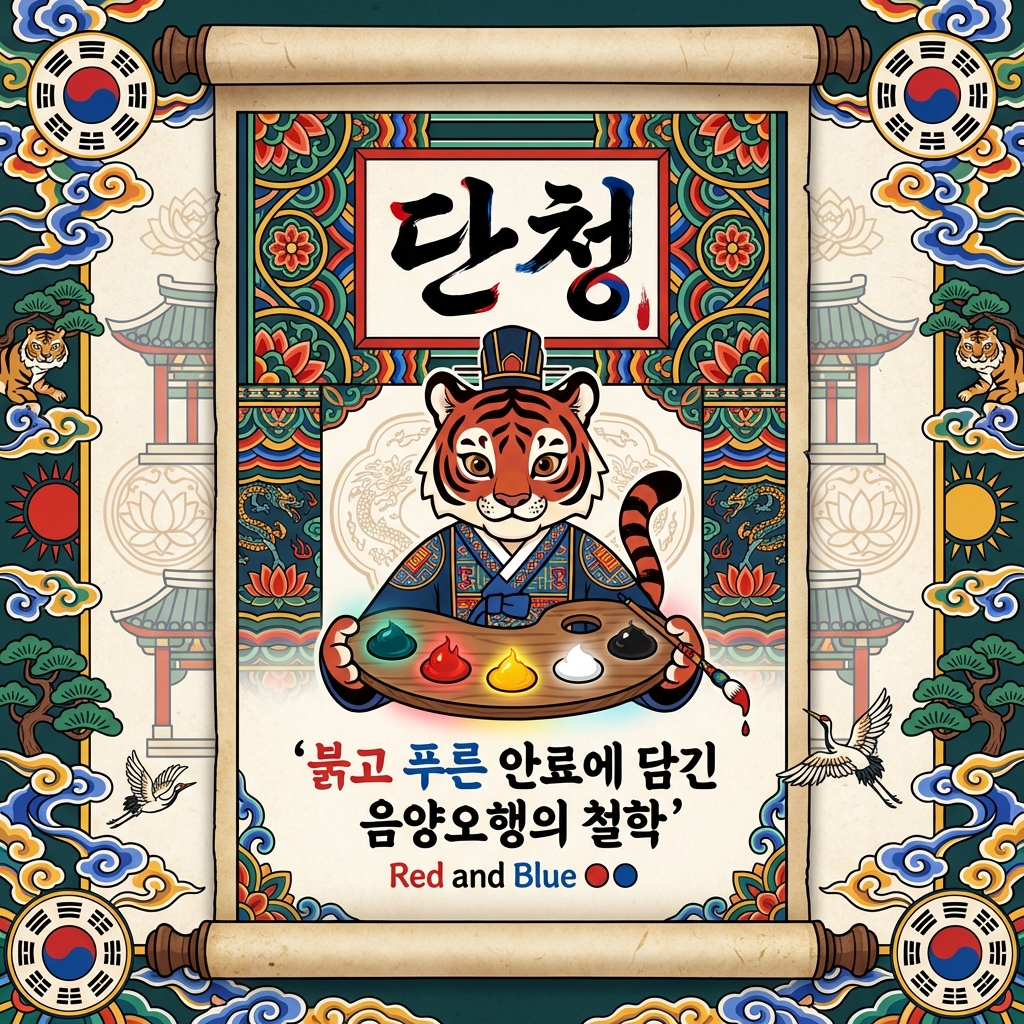
Red and Blue 🔴🔵
While Dancheong utilizes many colors, the name itself comes from the two most prominent contrasting pigments used in the artwork. ☯️
단청 (Dan-cheong) * 단 (Dan / 丹): Cinnabar / Red. 🔴 * 청 (Cheong / 靑): Blue / Green. 🔵 (In traditional Korean, cheong often refers to both blue and the vibrant green seen on the palaces).
It literally translates to “Red and Blue/Green painting.” 🎨🖌️
단청 (Dan-cheong) * 단 (Dan / 丹): Cinnabar / Red. 🔴 * 청 (Cheong / 靑): Blue / Green. 🔵 (In traditional Korean, cheong often refers to both blue and the vibrant green seen on the palaces).
It literally translates to “Red and Blue/Green painting.” 🎨🖌️
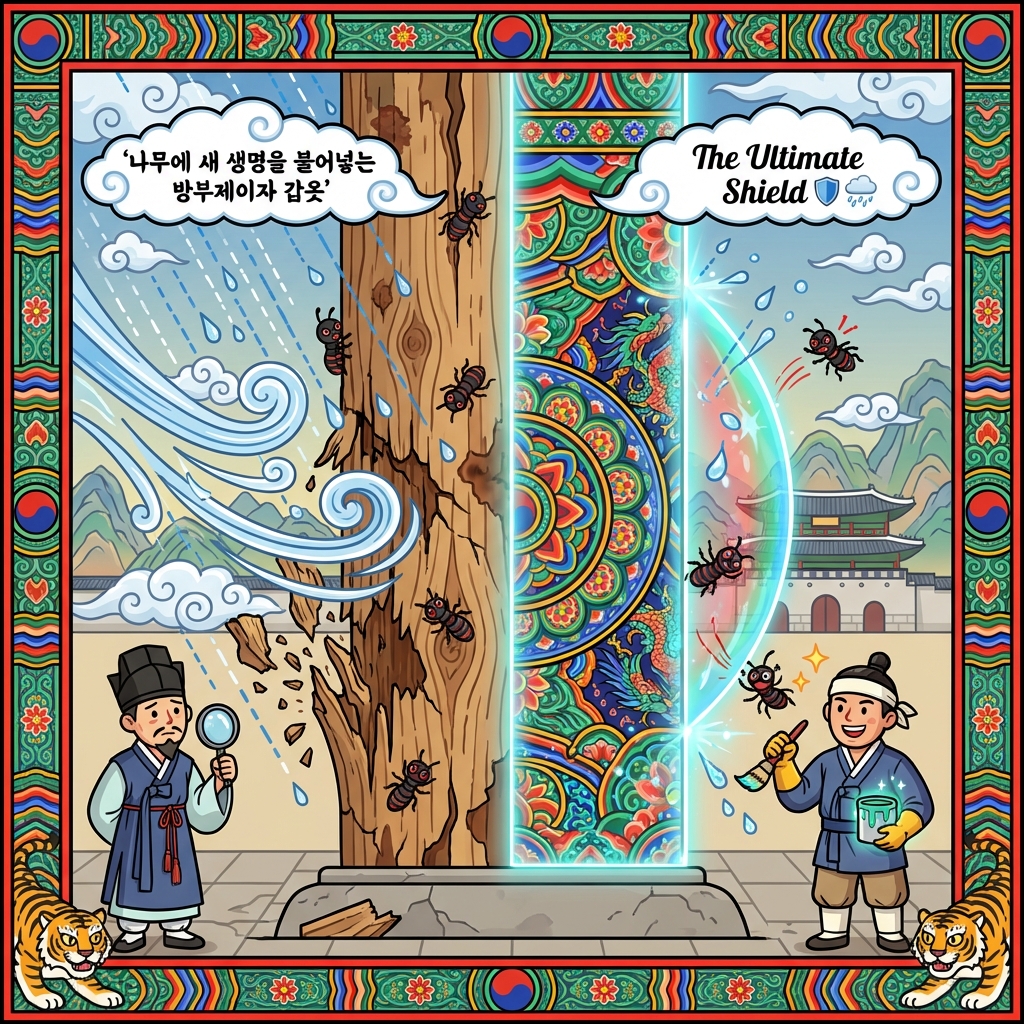
The Ultimate Shield 🛡️🌧️
Why spend years painstakingly painting the ceiling of a massive temple? 🤷♀️
Because traditional Korean architecture is made entirely of pine wood. 🌲
Wood rots. Wood warps in the rain. Wood gets eaten by insects.
Dancheong wasn’t just invented to look pretty. The thick, mineral-based pigments acted as an incredibly powerful, functional weatherproofing shield and insect repellent! It was literally armor for the buildings! 🛡️🇰🇷
Because traditional Korean architecture is made entirely of pine wood. 🌲
Wood rots. Wood warps in the rain. Wood gets eaten by insects.
Dancheong wasn’t just invented to look pretty. The thick, mineral-based pigments acted as an incredibly powerful, functional weatherproofing shield and insect repellent! It was literally armor for the buildings! 🛡️🇰🇷
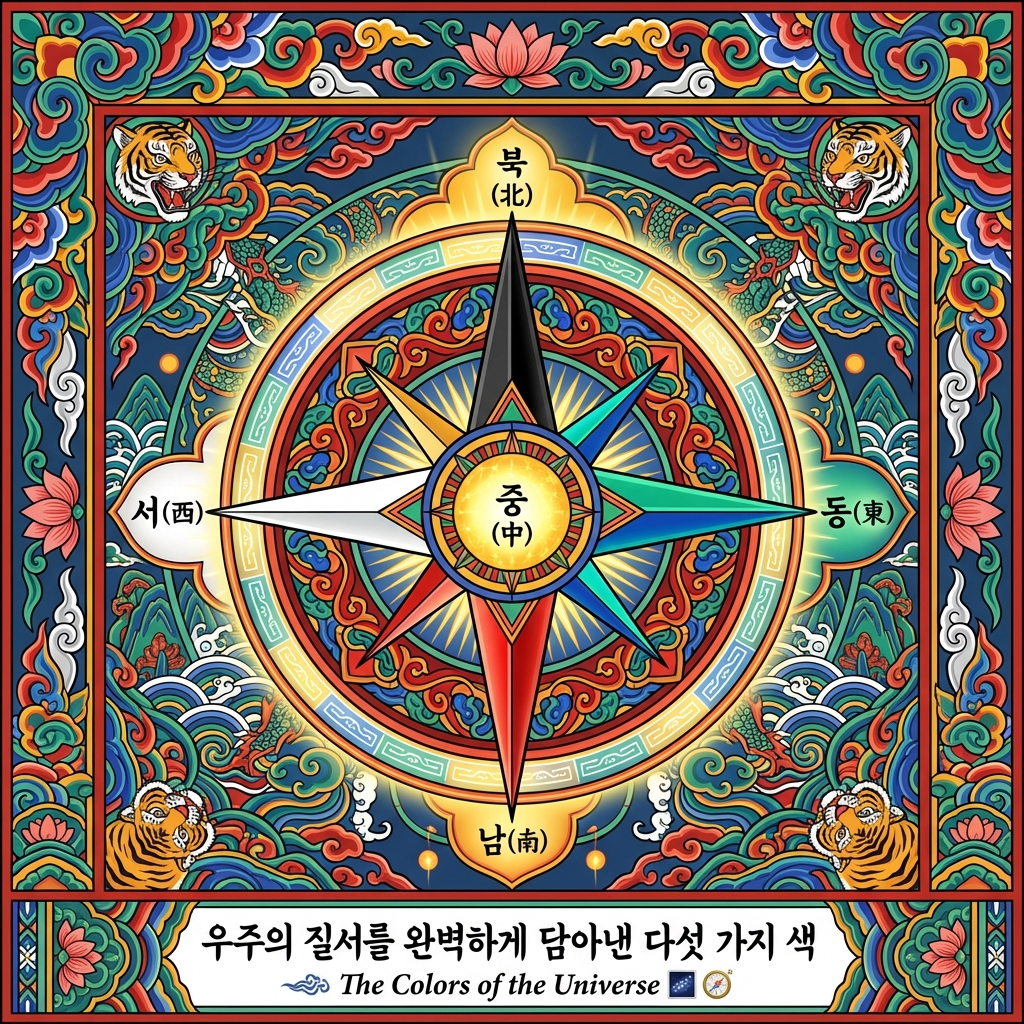
The Colors of the Universe 🌌🧭
The colors of Dancheong are strictly governed by Obangsaek (오방색)—the five traditional Korean colors that represent the elements of the universe based on Yin and Yang. ☯️
🔵 Blue/Green (East): Wood / Spring
🔴 Red (South): Fire / Summer
🟡 Yellow (Center): Earth / Emperor
⚪ White (West): Metal / Autumn
⚫ Black (North): Water / Winter
Every single stroke of paint represents cosmic harmony. ⚖️✨
🔵 Blue/Green (East): Wood / Spring
🔴 Red (South): Fire / Summer
🟡 Yellow (Center): Earth / Emperor
⚪ White (West): Metal / Autumn
⚫ Black (North): Water / Winter
Every single stroke of paint represents cosmic harmony. ⚖️✨
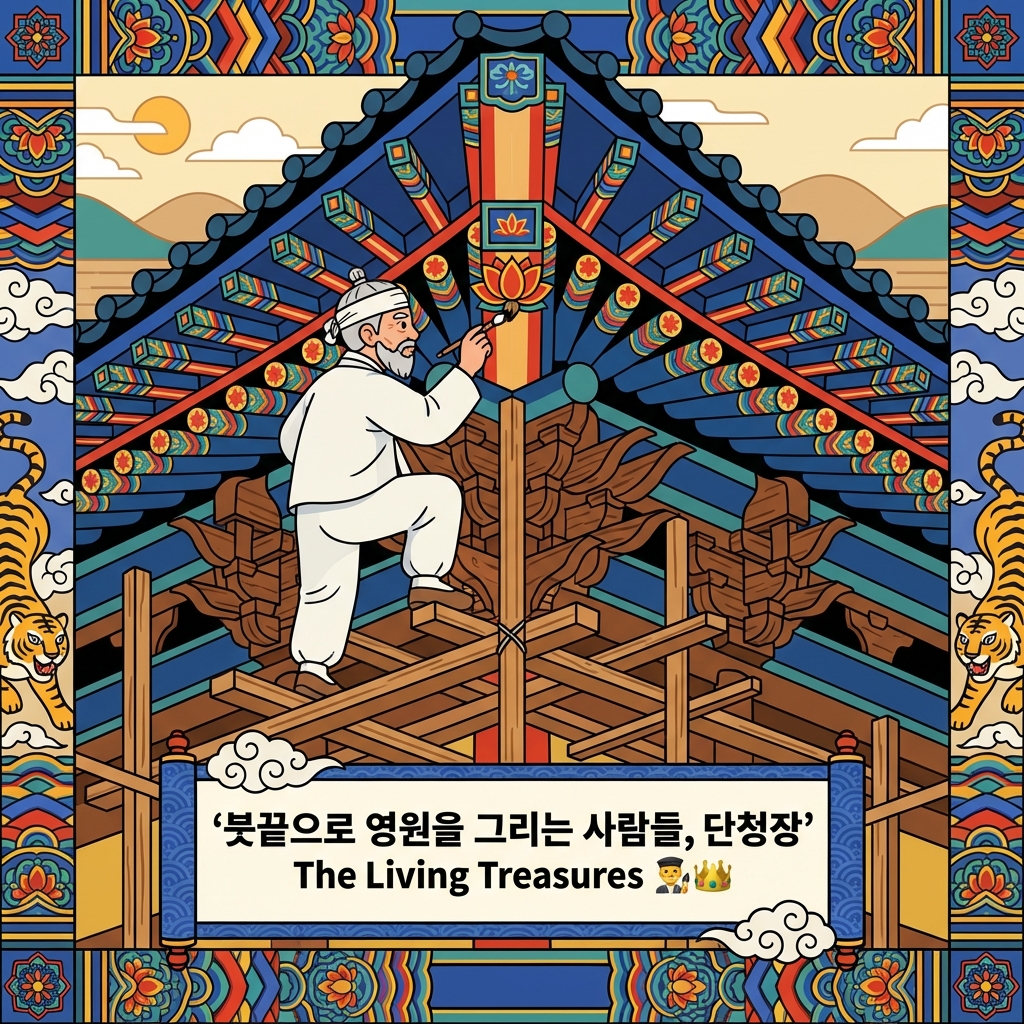
The Living Treasures 🧑🎨👑
You cannot just hire a normal house painter to do this! 🛑
The artists who paint these incredibly complex, spiritually significant patterns are called Dancheongjang (단청장). 🖌️
Because the rules, chemistry of the mineral paints, and geometry are so incredibly complex, these master artisans are officially designated by the South Korean government as “Intangible Cultural Properties” (living national treasures)! 🏅🇰🇷
The artists who paint these incredibly complex, spiritually significant patterns are called Dancheongjang (단청장). 🖌️
Because the rules, chemistry of the mineral paints, and geometry are so incredibly complex, these master artisans are officially designated by the South Korean government as “Intangible Cultural Properties” (living national treasures)! 🏅🇰🇷
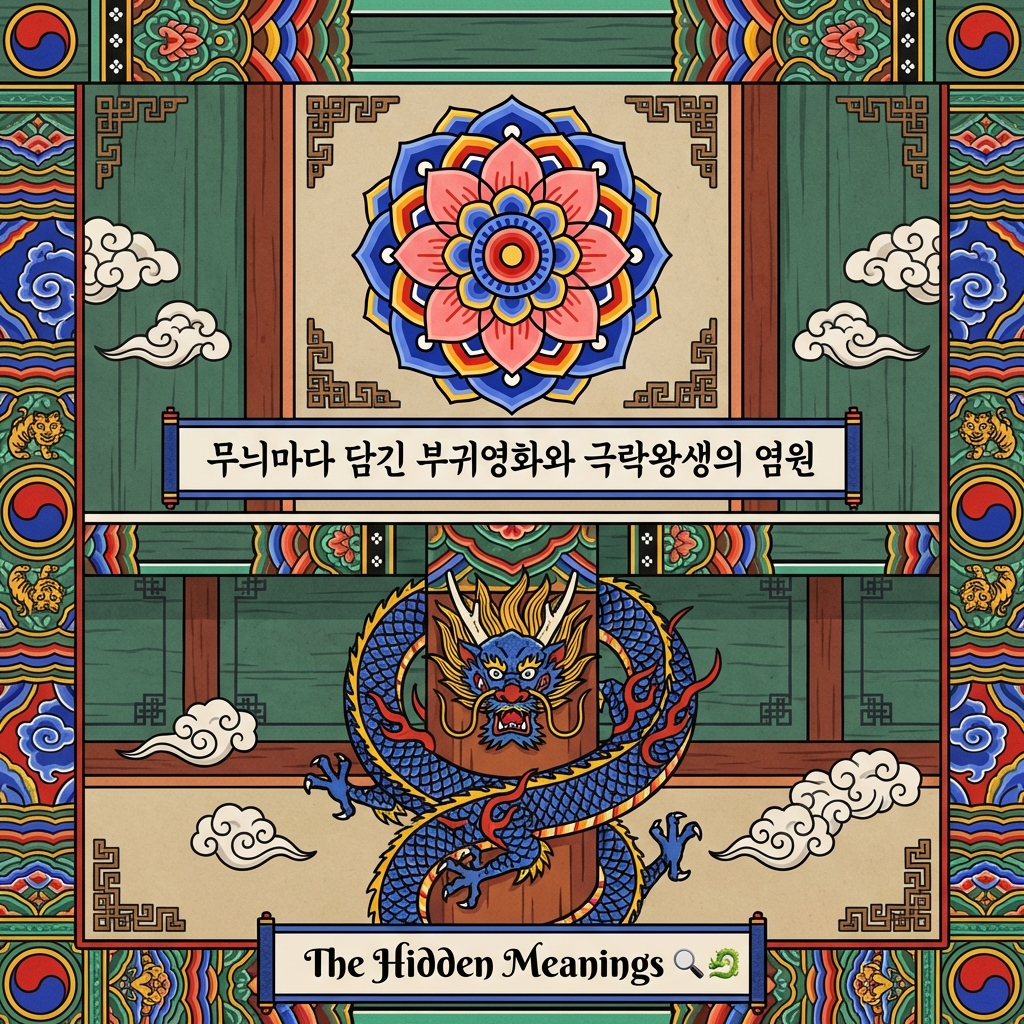
The Hidden Meanings 🔍🐉
The patterns are not random geometric shapes! They are deeply symbolic. 🧩
You will constantly see:
🪷 The Lotus (연꽃): Representing purity lifting out of the mud (heavily used in Buddhist temples).
🐉 Dragons (용): Symbolizing massive power, royal authority, and protection against fires (crucial for wooden buildings).
🍑 Peaches & Pomegranates: Symbolizing longevity and abundant children.
The roof isn’t just painted; it’s telling a thousand-year-old story! 📖✨
You will constantly see:
🪷 The Lotus (연꽃): Representing purity lifting out of the mud (heavily used in Buddhist temples).
🐉 Dragons (용): Symbolizing massive power, royal authority, and protection against fires (crucial for wooden buildings).
🍑 Peaches & Pomegranates: Symbolizing longevity and abundant children.
The roof isn’t just painted; it’s telling a thousand-year-old story! 📖✨
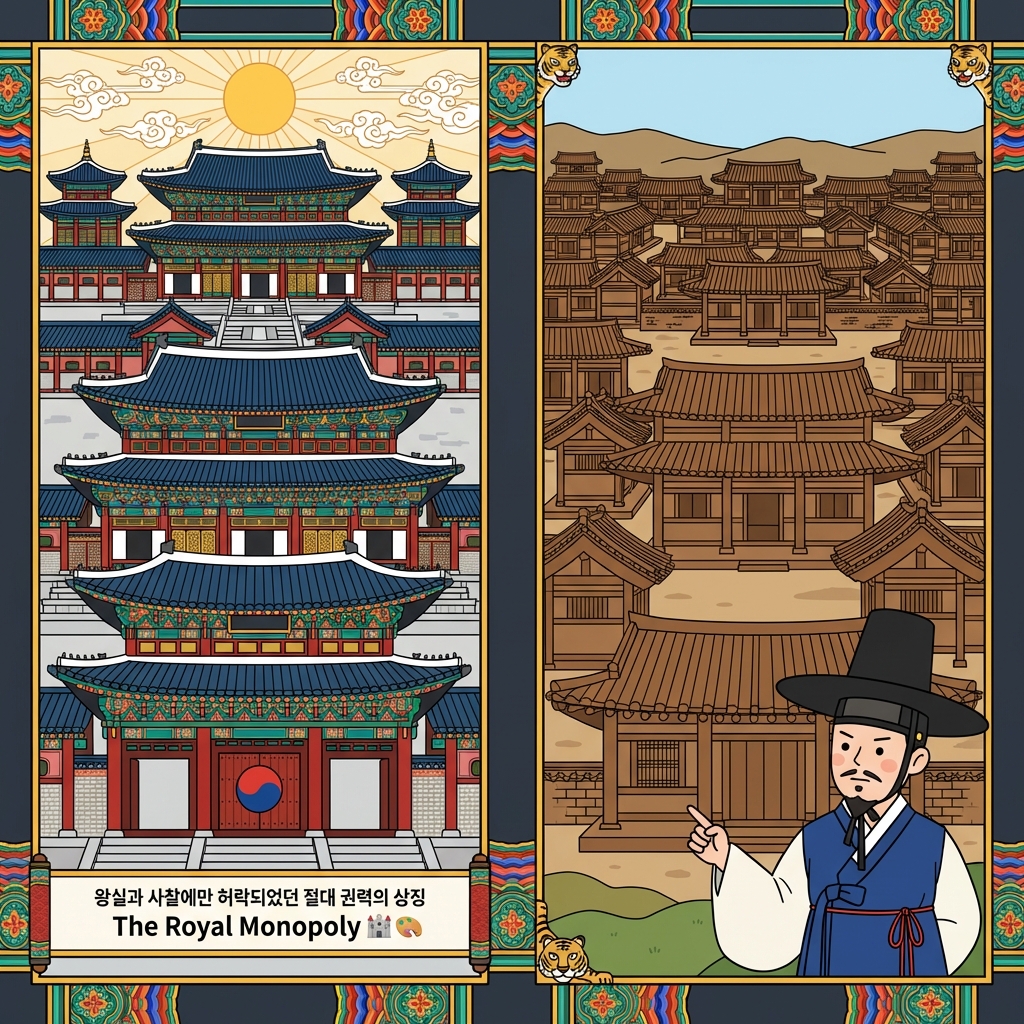
The Royal Monopoly 🏰🎨
During the Joseon Dynasty, the mineral paints used for Dancheong were incredibly rare, imported, and outrageously expensive. 💸
Because of this, society had strict “sumptuary laws.” 📜 ⚖️
It was absolutely illegal for normal people—even incredibly rich noblemen (Yangban)—to paint their houses with these colors. Dancheong was strictly, exclusively reserved for Royal Palaces, Buddhist Temples, and government buildings. If you painted your house red and green, you were committing treason! 😱🚨
Because of this, society had strict “sumptuary laws.” 📜 ⚖️
It was absolutely illegal for normal people—even incredibly rich noblemen (Yangban)—to paint their houses with these colors. Dancheong was strictly, exclusively reserved for Royal Palaces, Buddhist Temples, and government buildings. If you painted your house red and green, you were committing treason! 😱🚨
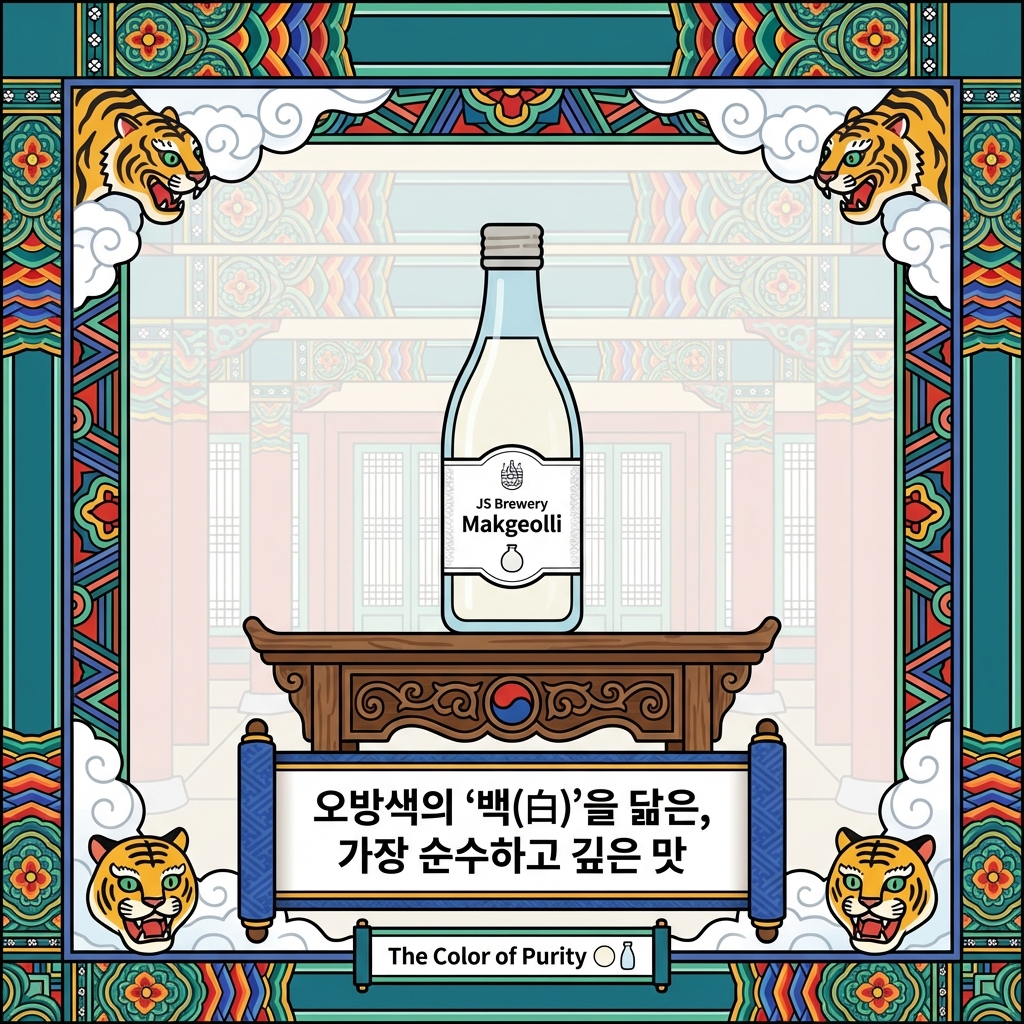
The Color of Purity ⚪🍶
The Five Colors of the universe (Obangsaek) govern everything in Korea, from architecture down to the food we eat! 🍲🎨
The color White (백 / Baek) represents Metal, Autumn, purity, and truth. ⚪🍃
There is no better, more perfectly “White” representation of Korean purity than a deeply chilled, cloudy, naturally fermented bowl of JS Brewery Makgeolli. 🍶 When you drink our Makgeolli, you aren’t just drinking alcohol; you are tasting the pure, ancient philosophical balance of the Korean peninsula! 🌾⚖️
The color White (백 / Baek) represents Metal, Autumn, purity, and truth. ⚪🍃
There is no better, more perfectly “White” representation of Korean purity than a deeply chilled, cloudy, naturally fermented bowl of JS Brewery Makgeolli. 🍶 When you drink our Makgeolli, you aren’t just drinking alcohol; you are tasting the pure, ancient philosophical balance of the Korean peninsula! 🌾⚖️
The Art of the Ages 🎨🏔️
Have you ever seen the painted palaces of Korea in person? Let us know which one is your favorite below! 👇
1 / 9