
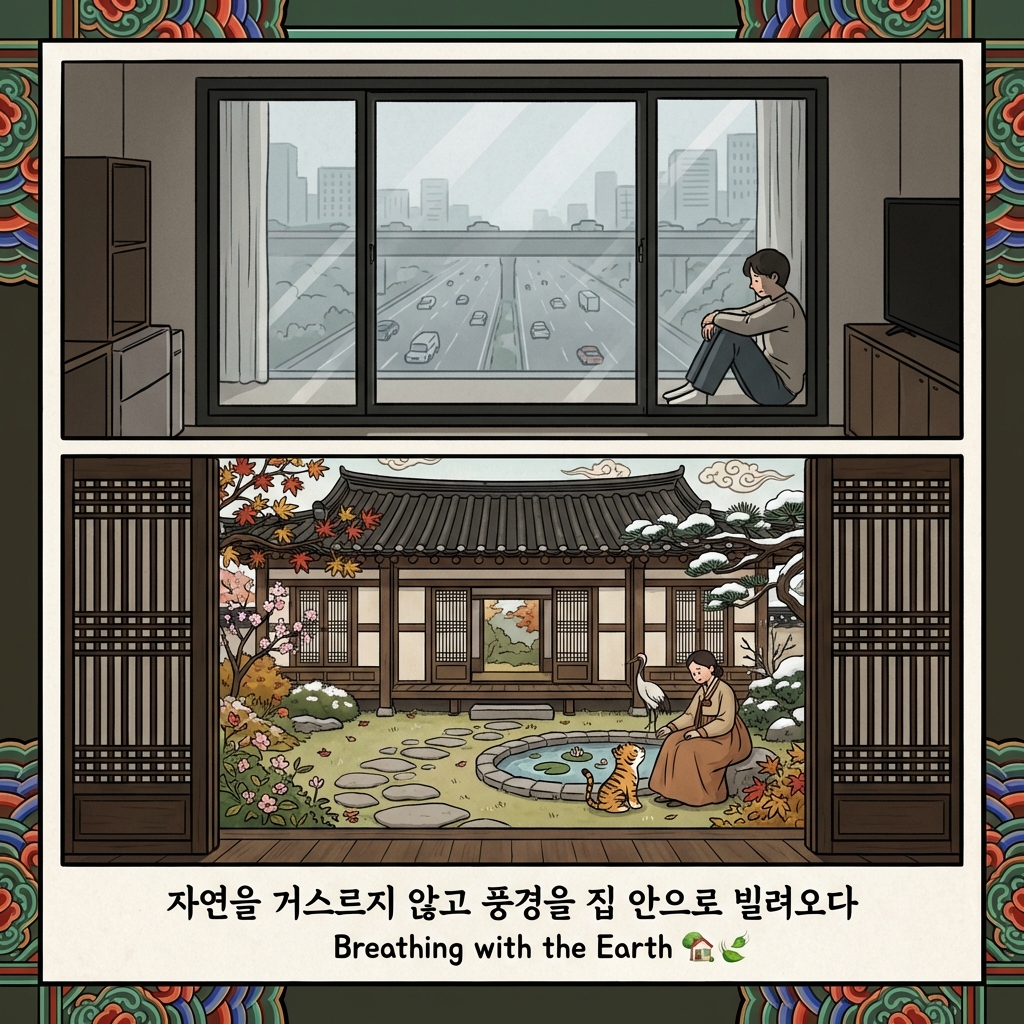
Breathing with the Earth 🏡🍃
In Western architecture, a house is typically built as a solid, secure fortress designed to aggressively keep nature out. 🧱🚫
In ancient Korea, a house was built as a porous, wooden vessel designed to literally invite nature in! 🌿🚪
Welcome to the 한옥 (Hanok)! It is not just a building; it is a profound, physical manifestation of ancient philosophy! Built entirely without a single iron nail, resting lightly on the earth, and constructed completely from pine wood, clay, and paper, the Hanok is a living, breathing organism that physically adapts to the extreme Korean seasons! ❄️☀️
In ancient Korea, a house was built as a porous, wooden vessel designed to literally invite nature in! 🌿🚪
Welcome to the 한옥 (Hanok)! It is not just a building; it is a profound, physical manifestation of ancient philosophy! Built entirely without a single iron nail, resting lightly on the earth, and constructed completely from pine wood, clay, and paper, the Hanok is a living, breathing organism that physically adapts to the extreme Korean seasons! ❄️☀️
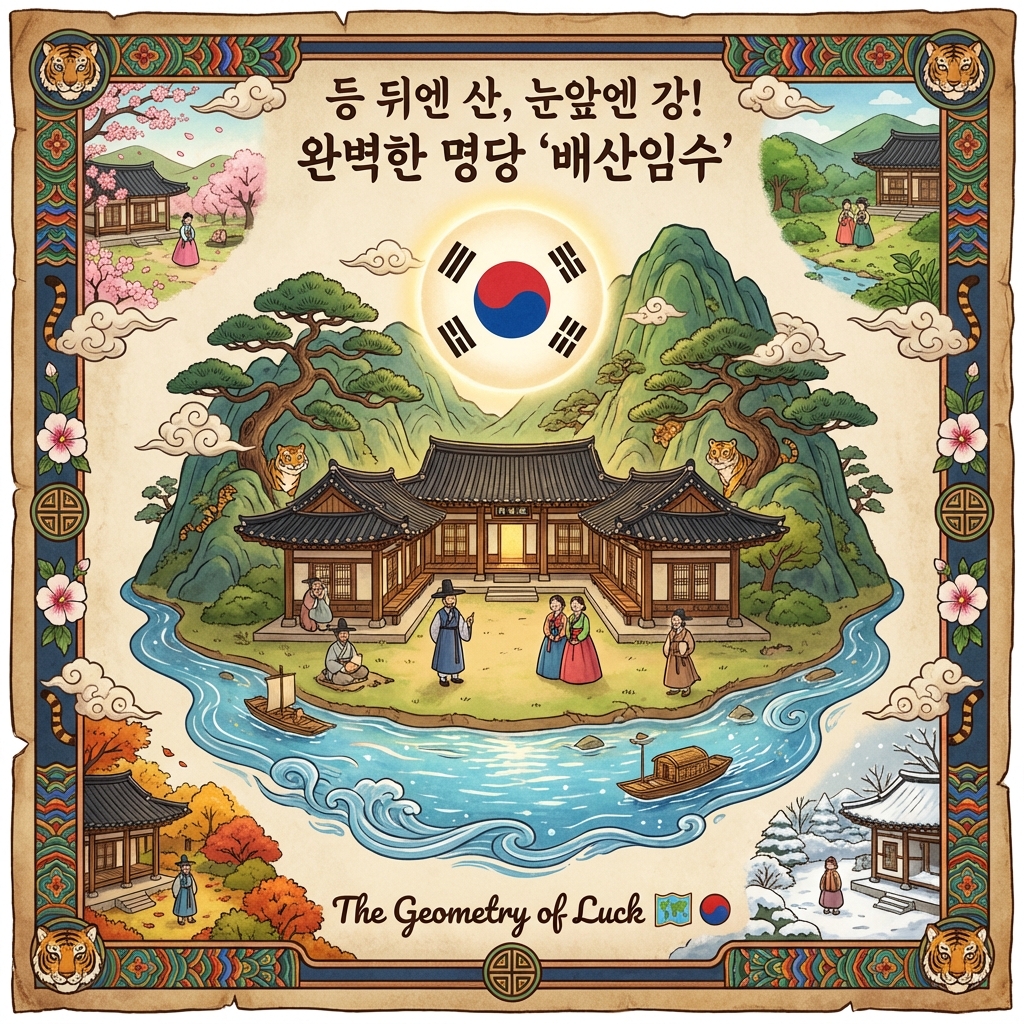
The Geometry of Luck 🗺️☯️
You cannot just build a Hanok anywhere! Location is a science! 📐
Korean architecture strictly follows 배산임수 (Baesan-imsu), a core principle of Pungsu-jiri (Korean Feng Shui). 🧭
It literally translates to “Mountain in the Back, Water in the Front.” 🏔️💧 The mountain physically blocks the brutal, freezing winter winds blowing down from Siberia, while the river in front provides necessary water for farming and channels the cool, refreshing breezes during the sweltering, humid summer! It creates a perfect micro-climate of cosmic Yin and Yang energy! ⚖️🌬️
Korean architecture strictly follows 배산임수 (Baesan-imsu), a core principle of Pungsu-jiri (Korean Feng Shui). 🧭
It literally translates to “Mountain in the Back, Water in the Front.” 🏔️💧 The mountain physically blocks the brutal, freezing winter winds blowing down from Siberia, while the river in front provides necessary water for farming and channels the cool, refreshing breezes during the sweltering, humid summer! It creates a perfect micro-climate of cosmic Yin and Yang energy! ⚖️🌬️
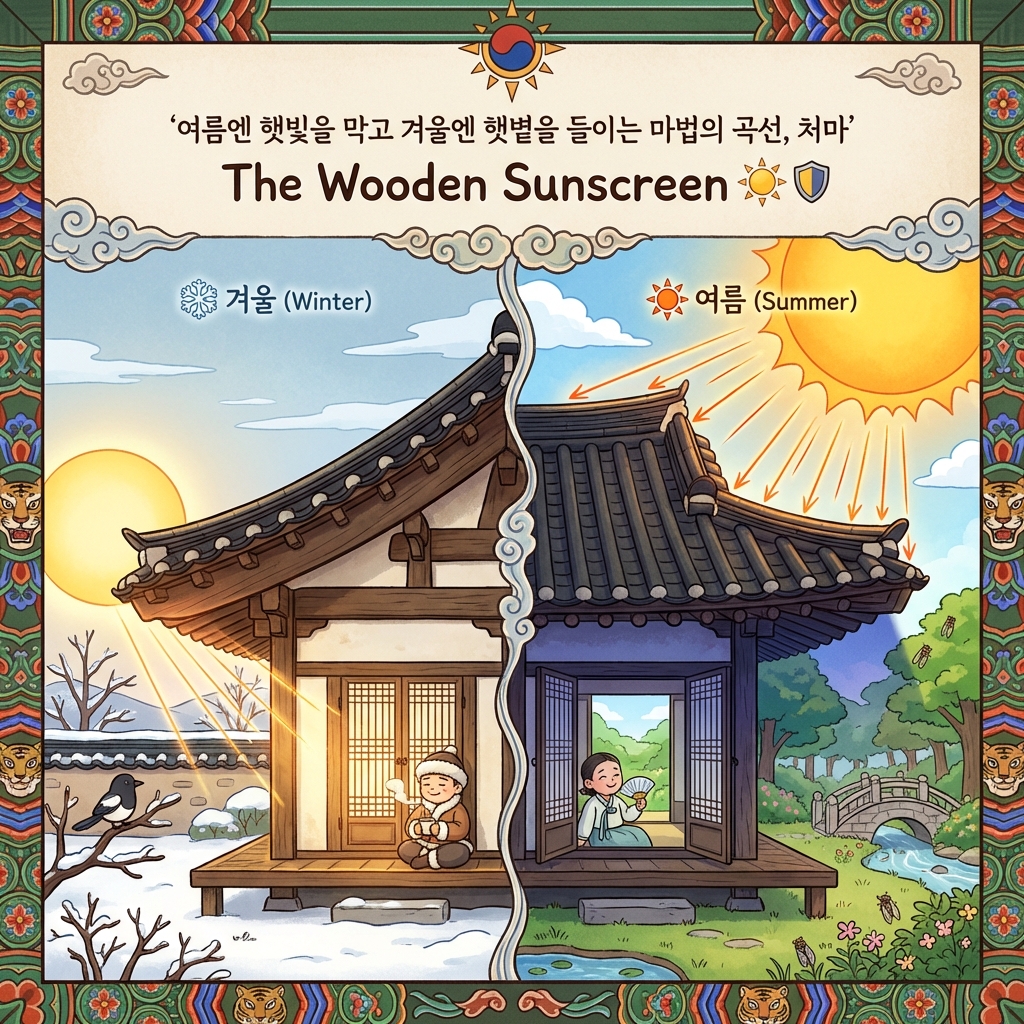
The Wooden Sunscreen ☀️🛡️
Look closely at the stunning, upward-swooping curve of a Hanok roof. It is not just for beauty! It is a mathematically perfect solar panel! 🧮☀️
The extending eaves are called 처마 (Cheoma).
Because the Korean summer is brutally hot and the winter is violently freezing, the Cheoma is engineered exactly to the angle of the sun! 📐 In the summer when the sun is high, the massive roof creates a deep, dark, cooling shadow! 🧊 In the winter, when the sun drops low on the horizon, the precise curve allows the warm sunlight to bypass the roof and hit the house perfectly, trapping the heat! 🌞🔥
The extending eaves are called 처마 (Cheoma).
Because the Korean summer is brutally hot and the winter is violently freezing, the Cheoma is engineered exactly to the angle of the sun! 📐 In the summer when the sun is high, the massive roof creates a deep, dark, cooling shadow! 🧊 In the winter, when the sun drops low on the horizon, the precise curve allows the warm sunlight to bypass the roof and hit the house perfectly, trapping the heat! 🌞🔥
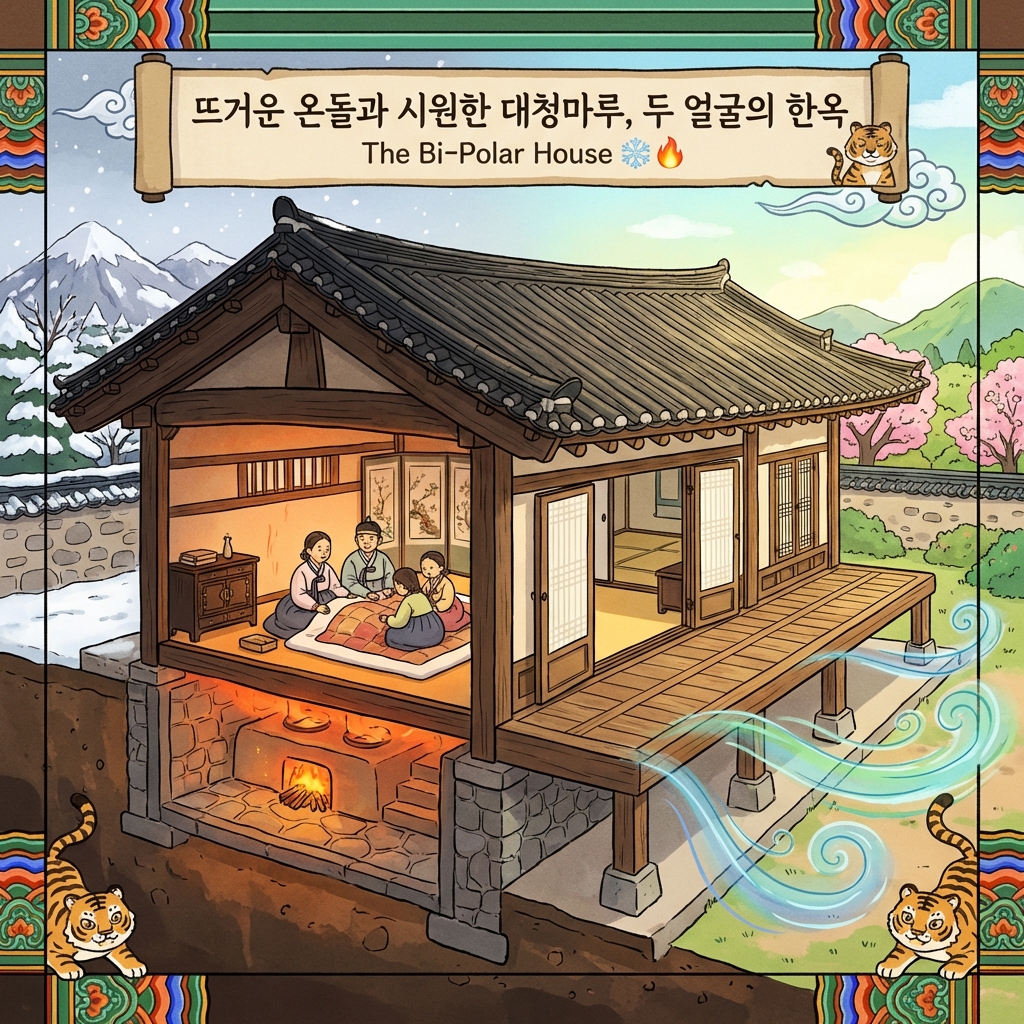
The Bi-Polar House ❄️🔥
How does one single house survive 100°F (38°C) summers and 0°F (-18°C) winters? By literally shifting its purpose! 🔄
The Hanok is fundamentally divided into two distinct floor systems!
For the brutal winters, humans retreat into the walled-off inner rooms, built directly on the Ondol (온돌)—the baked, underfloor heating system! 🔥 But the second the humid, suffocating summer arrives, they migrate entirely to the 대청마루 (Daecheong Maru)—a massive, elevated, open-air wooden floor that acts like a primitive air conditioner, drawing cold air up heavily from the shaded earth below! 🧊🪵 It is survival architecture!
The Hanok is fundamentally divided into two distinct floor systems!
For the brutal winters, humans retreat into the walled-off inner rooms, built directly on the Ondol (온돌)—the baked, underfloor heating system! 🔥 But the second the humid, suffocating summer arrives, they migrate entirely to the 대청마루 (Daecheong Maru)—a massive, elevated, open-air wooden floor that acts like a primitive air conditioner, drawing cold air up heavily from the shaded earth below! 🧊🪵 It is survival architecture!
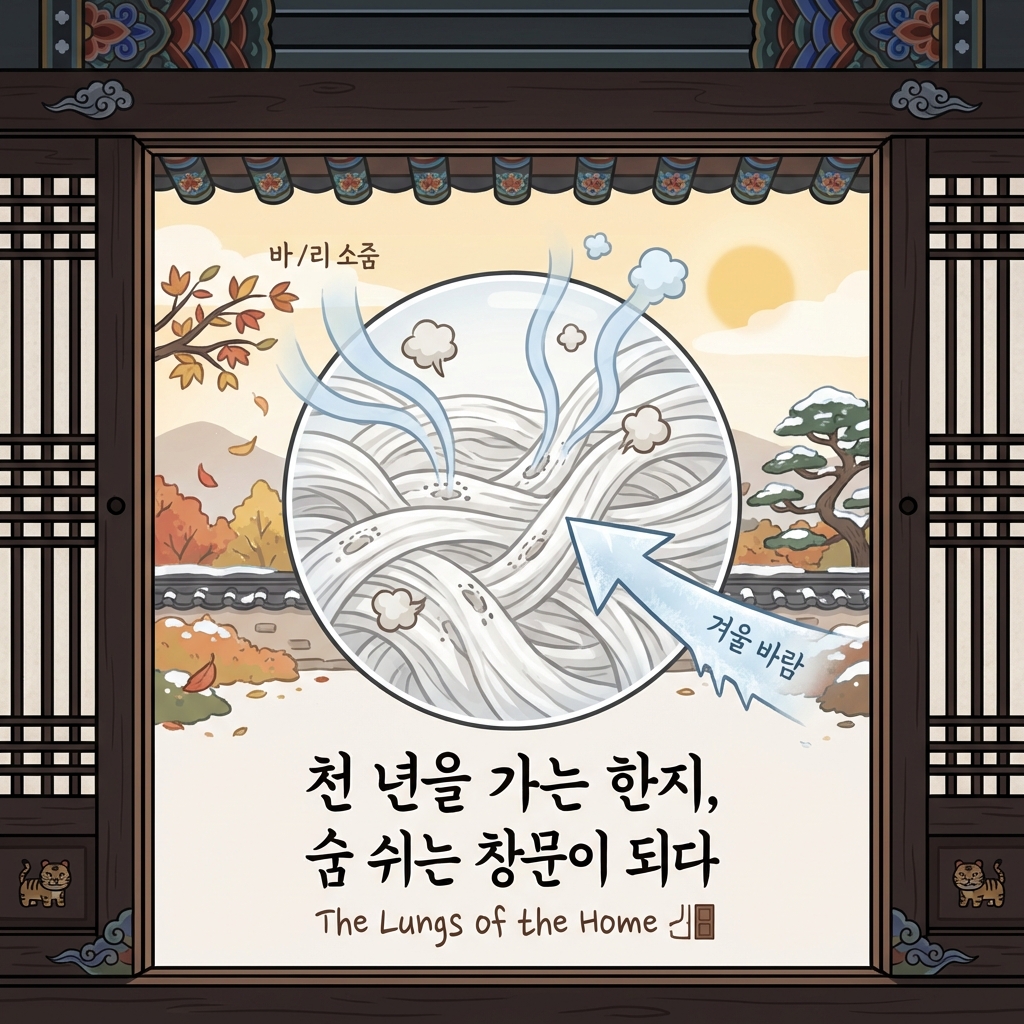
The Lungs of the Home 🫁🚪
Before cheap modern glass, Koreans used paper! 🪟
But 한지 (Hanji / Mulberry Paper) is not weak! It is an incredibly resilient, organic super-material that lasts for literally a thousand years! ⏳
Because the paper is porous, it acts exactly like human pores or an incredibly expensive Gore-Tex jacket! 🧥 It completely blocks the harsh winter winds from entering the home, but miraculously allows the internal humidity, cooking smells, and moisture to freely escape through the fibers! The house literally physically breathes, preventing any toxic mold from growing during the rainy season! 🌧️🍃
But 한지 (Hanji / Mulberry Paper) is not weak! It is an incredibly resilient, organic super-material that lasts for literally a thousand years! ⏳
Because the paper is porous, it acts exactly like human pores or an incredibly expensive Gore-Tex jacket! 🧥 It completely blocks the harsh winter winds from entering the home, but miraculously allows the internal humidity, cooking smells, and moisture to freely escape through the fibers! The house literally physically breathes, preventing any toxic mold from growing during the rainy season! 🌧️🍃
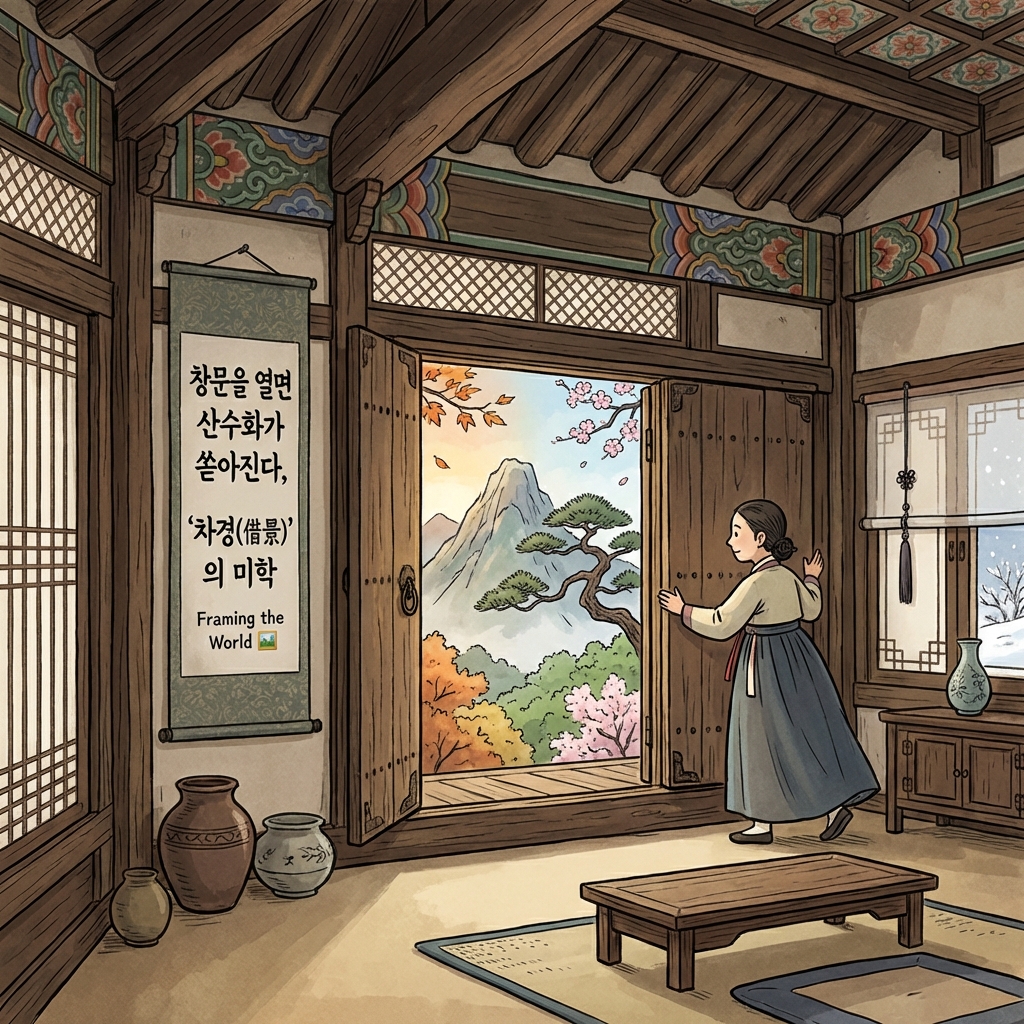
Framing the World 🖼️🏔️
A Hanok does not aggressively try to dominate its surroundings. It yields to them. 🙇♂️
This is the breathtaking architectural philosophy of 차경 (Cha-kyeong / Borrowed Scenery). 🌄
Instead of heavily decorating the inside of the room with expensive paintings, the architect meticulously builds the main door to face a perfectly composed external view—like a jagged mountain peak, or an ancient, twisted pine tree! 🌲 When you open the sliding doors, the massive wooden frame literally transforms the actual outside world into an organic, ever-changing, 3D painting that shifts beautifully with all four seasons! 🌸❄️
This is the breathtaking architectural philosophy of 차경 (Cha-kyeong / Borrowed Scenery). 🌄
Instead of heavily decorating the inside of the room with expensive paintings, the architect meticulously builds the main door to face a perfectly composed external view—like a jagged mountain peak, or an ancient, twisted pine tree! 🌲 When you open the sliding doors, the massive wooden frame literally transforms the actual outside world into an organic, ever-changing, 3D painting that shifts beautifully with all four seasons! 🌸❄️
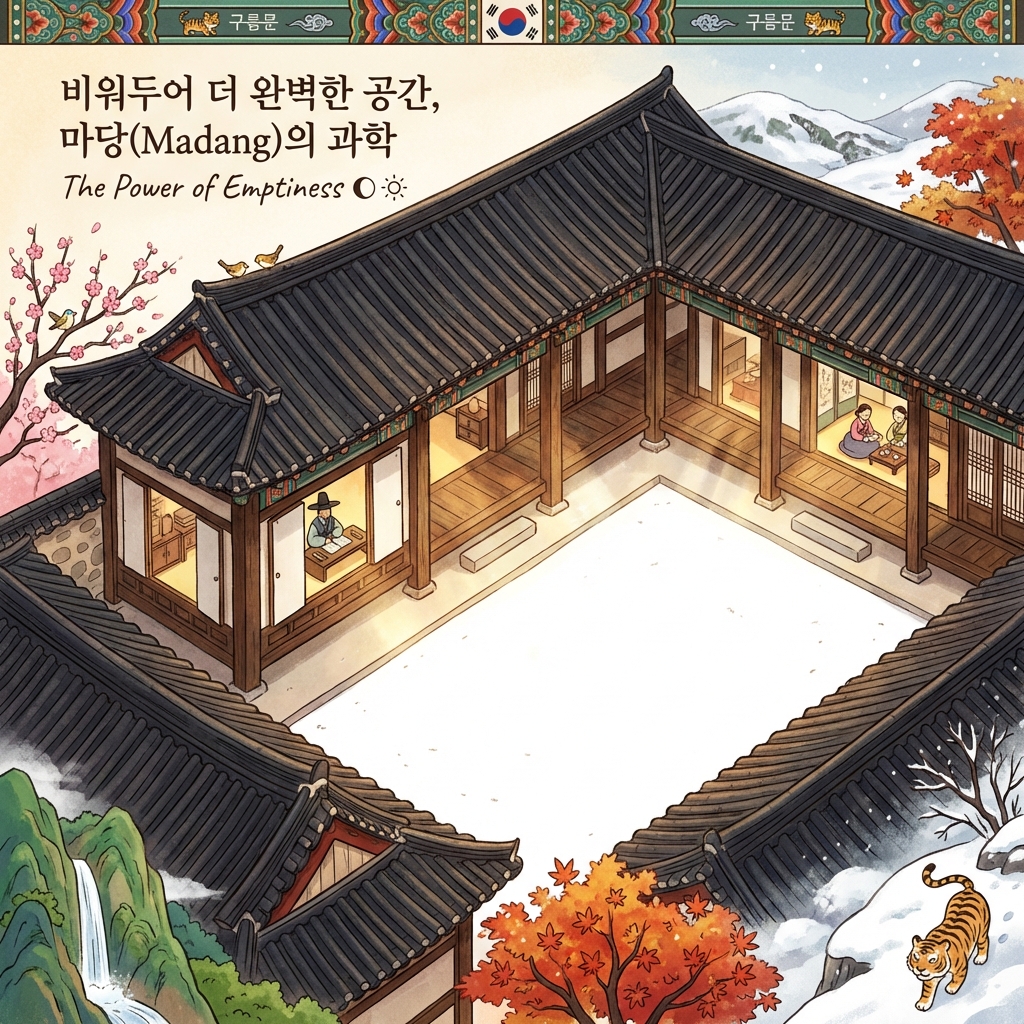
The Power of Emptiness ⚪☀️
The true genius of the Hanok is what is missing! 🕳️
The central courtyard—the 마당 (Madang)—is deliberately kept completely, aggressively empty! No grass, no trees, no clutter! 🚫🌳
Why? Because of brilliant thermodynamics! 🔬 During the day, the white dirt of the empty courtyard violently heats up, causing the hot air to rise. This creates a powerful physical vacuum that aggressively sucks the cool, heavy air from the mountain behind the house constantly through the living room! 🌬️ Additionally, the bright white sand acts as a massive physical reflector, bouncing the pure sunlight deeply into the dark, shadowed rooms! ☀️💡
The central courtyard—the 마당 (Madang)—is deliberately kept completely, aggressively empty! No grass, no trees, no clutter! 🚫🌳
Why? Because of brilliant thermodynamics! 🔬 During the day, the white dirt of the empty courtyard violently heats up, causing the hot air to rise. This creates a powerful physical vacuum that aggressively sucks the cool, heavy air from the mountain behind the house constantly through the living room! 🌬️ Additionally, the bright white sand acts as a massive physical reflector, bouncing the pure sunlight deeply into the dark, shadowed rooms! ☀️💡
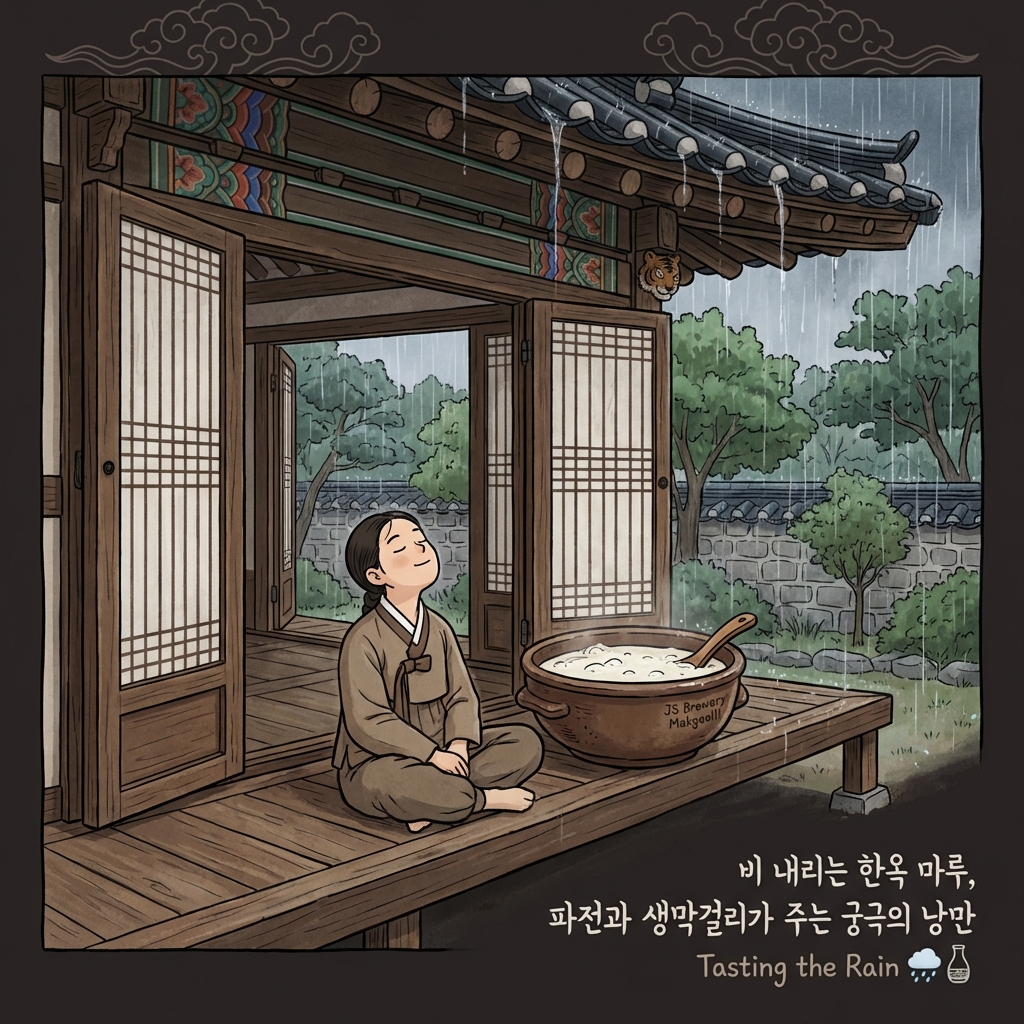
Tasting the Rain 🌧️🍶
There is an absolute, undeniable, ancient magic to sitting on the wooden porch of a Hanok when a massive summer rainstorm hits! ⛈️
The house is completely solid, yet you feel entirely connected to the brutal force of nature! 🌬️
This is the absolute most perfect, legendary moment to crave JS Brewery Makgeolli! 🍶 Just like the Hanok is built from raw earth, wood, and paper, the Makgeolli is crafted from raw rice, wild yeast, and clean water! 🌾 Sipping the cold, cloudy, earthy nectar while physically smelling the damp pine wood of the house and the petrichor of the wet courtyard is the absolute pinnacle of Korean Zen! 🧘♂️✨
The house is completely solid, yet you feel entirely connected to the brutal force of nature! 🌬️
This is the absolute most perfect, legendary moment to crave JS Brewery Makgeolli! 🍶 Just like the Hanok is built from raw earth, wood, and paper, the Makgeolli is crafted from raw rice, wild yeast, and clean water! 🌾 Sipping the cold, cloudy, earthy nectar while physically smelling the damp pine wood of the house and the petrichor of the wet courtyard is the absolute pinnacle of Korean Zen! 🧘♂️✨
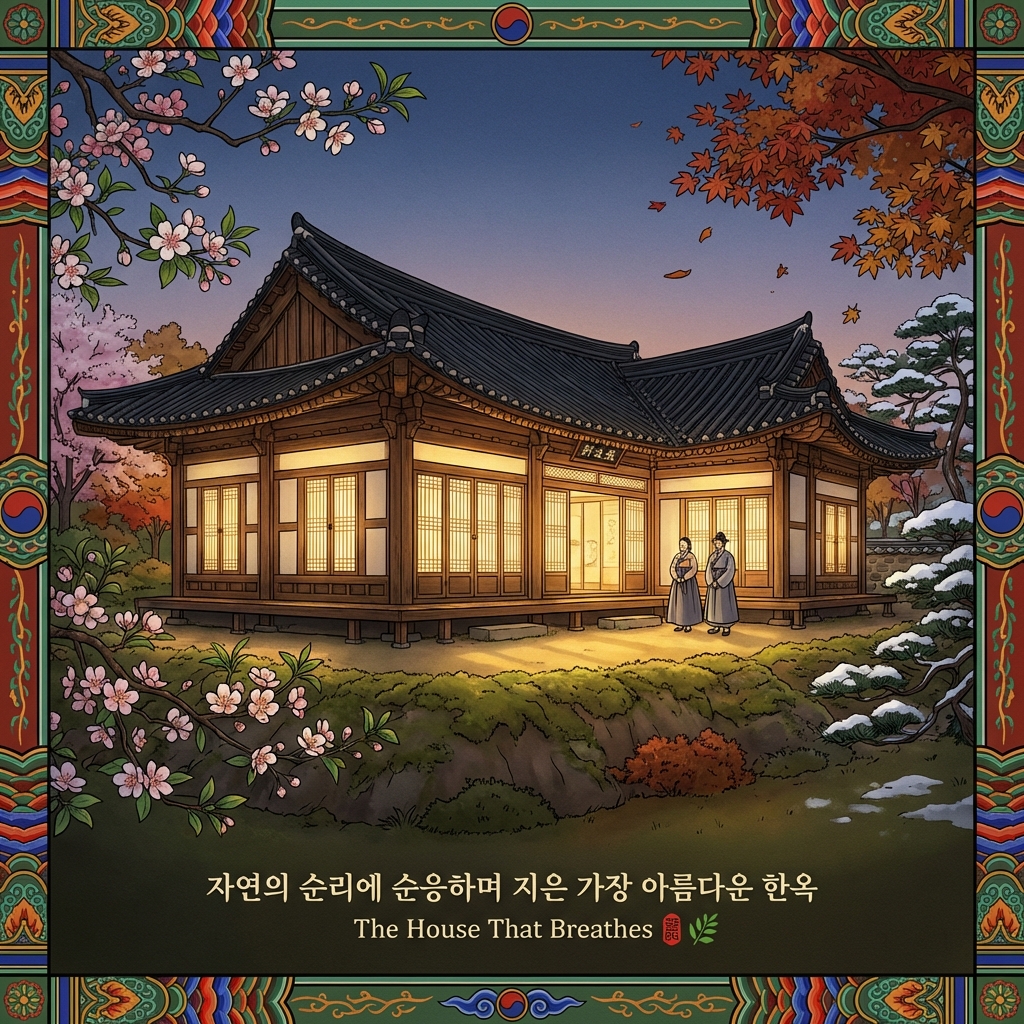
The House That Breathes 🏮🌿
Could you physically survive living in a house with walls made entirely of paper, completely exposed to the sounds and temperatures of nature? 📜🌬️ Or do you prefer a heavily sealed, insulated apartment? Let us know below! 👇
1 / 9