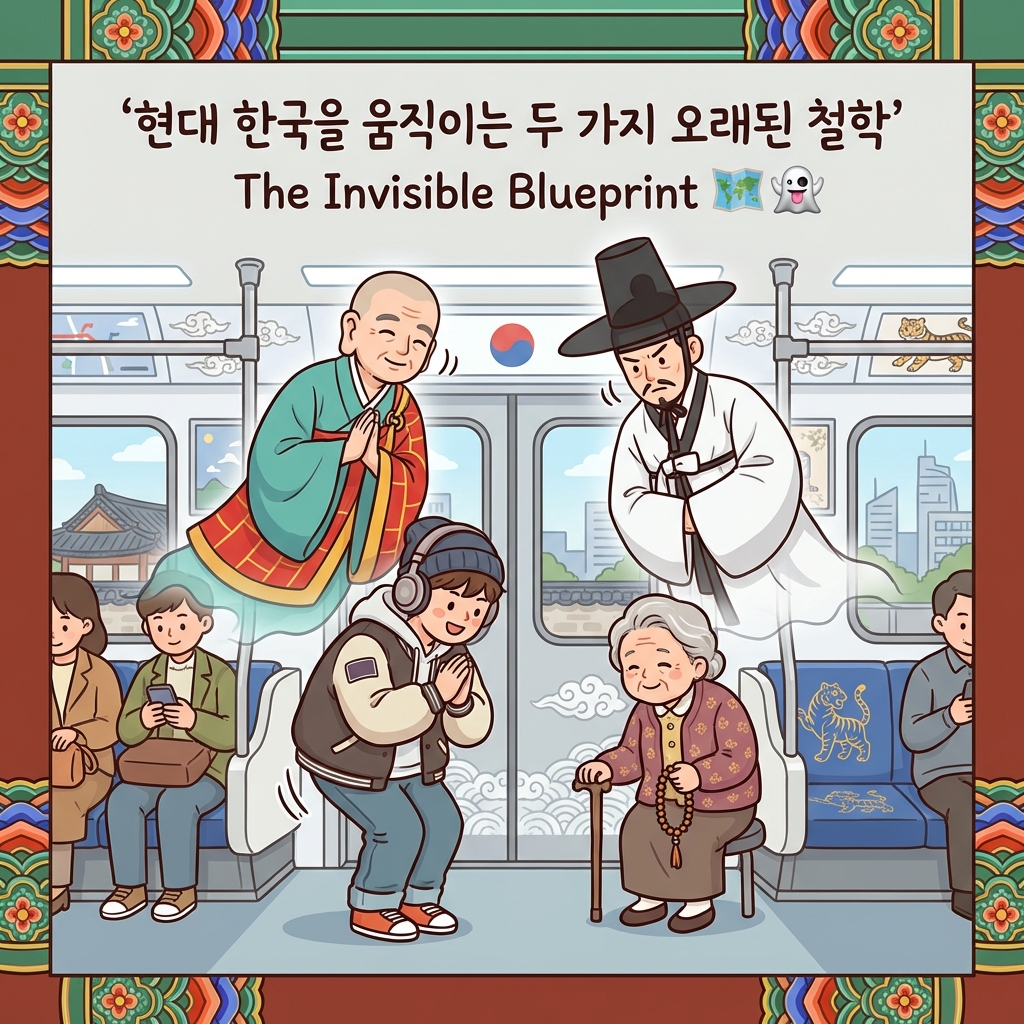
The Invisible Blueprint 🗺️👻
You can walk through the hyper-modern, neon-lit streets of Seoul 🏙️, but you cannot escape the invisible laws that govern every single interaction.
Beneath the K-Pop and the skyscrapers, the absolute DNA of Korean society is built upon two ancient, immensely powerful pillars: 불교 (Bulgyo / Buddhism) and 유교 (Yugyo / Confucianism)! ⛩️📜
Beneath the K-Pop and the skyscrapers, the absolute DNA of Korean society is built upon two ancient, immensely powerful pillars: 불교 (Bulgyo / Buddhism) and 유교 (Yugyo / Confucianism)! ⛩️📜
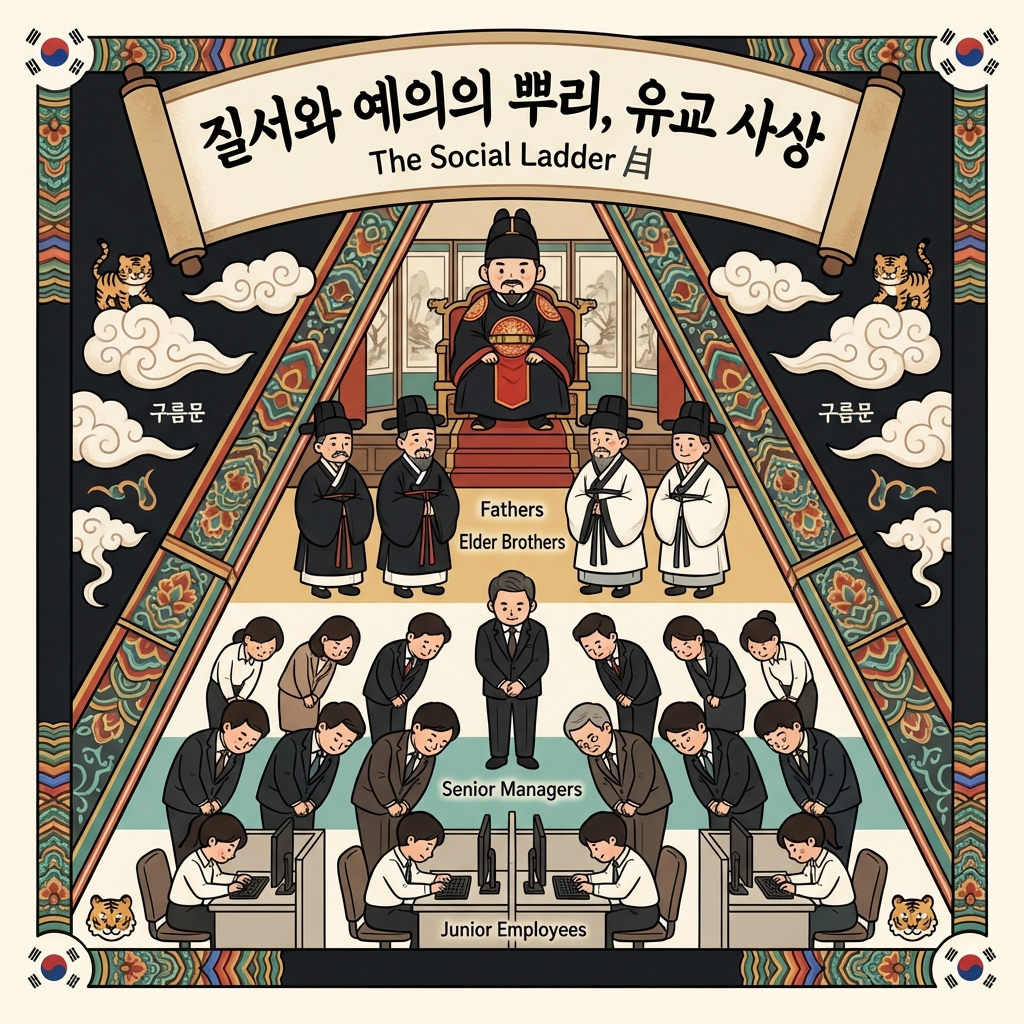
The Social Ladder 🪜
During the 500-year Joseon Dynasty, the government adopted strict Neo-Confucianism 📜.
It is not a religion with a god; it is a rigid operating system for society! ⚙️ It emphasizes extreme filial piety (respecting parents and ancestors), strict social hierarchy, and an absolute obsession with formal education. 📚
If you’ve ever wondered why Koreans bow to their bosses or speak different levels of language based on age (Jeondaetmal), you are seeing a 600-year-old Confucian software patch executing flawlessly! 🤝👔
It is not a religion with a god; it is a rigid operating system for society! ⚙️ It emphasizes extreme filial piety (respecting parents and ancestors), strict social hierarchy, and an absolute obsession with formal education. 📚
If you’ve ever wondered why Koreans bow to their bosses or speak different levels of language based on age (Jeondaetmal), you are seeing a 600-year-old Confucian software patch executing flawlessly! 🤝👔
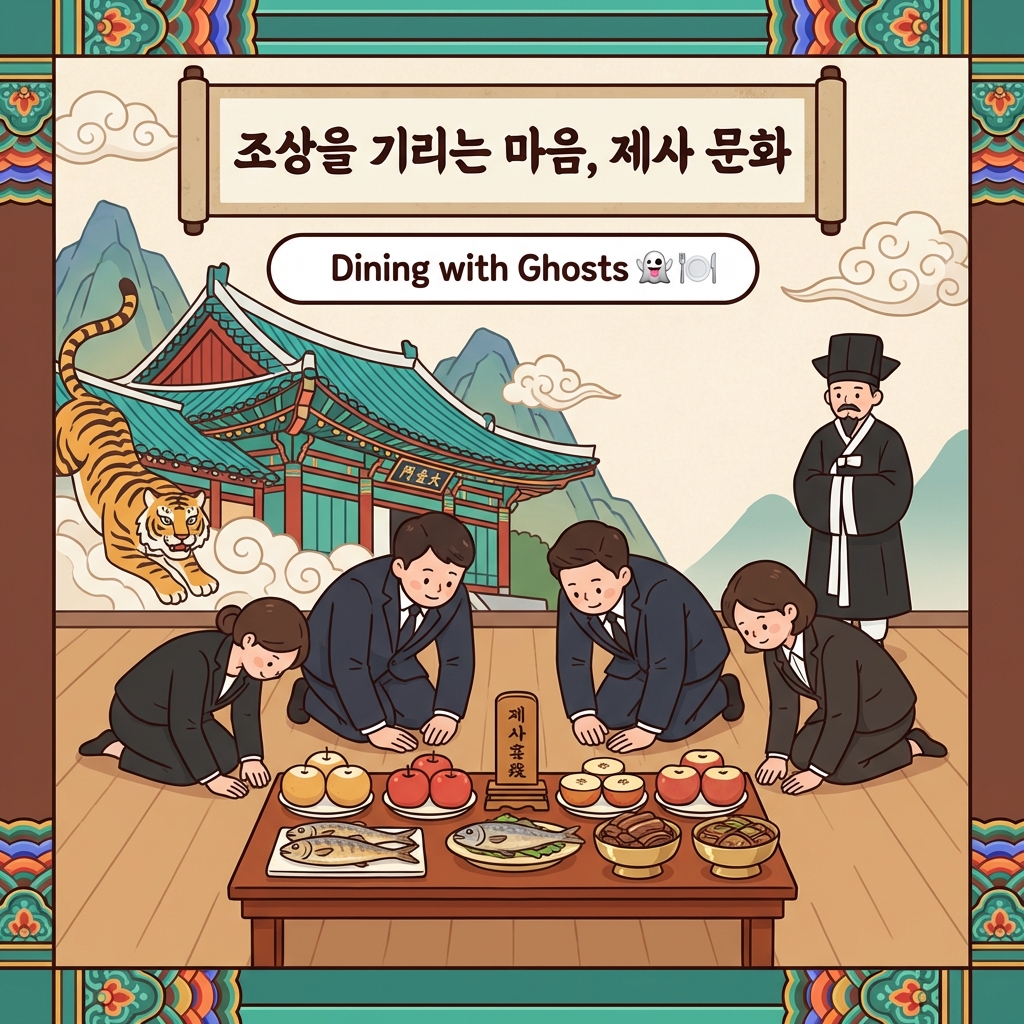
Dining with Ghosts 👻🍽️
The ultimate physical manifestation of Confucianism is 제사 (Jesa / Ancestral Rites) 🕯️.
On major holidays or death anniversaries, families construct a mathematically precise, lavish feast on a low table. They leave the doors open, pour alcohol, and bow deeply to invite the literal spirits of their dead ancestors to physically enter the room and eat the meal! 🍱
It proves that in Korea, family obligation absolutely transcends death! 🪦♾️
On major holidays or death anniversaries, families construct a mathematically precise, lavish feast on a low table. They leave the doors open, pour alcohol, and bow deeply to invite the literal spirits of their dead ancestors to physically enter the room and eat the meal! 🍱
It proves that in Korea, family obligation absolutely transcends death! 🪦♾️
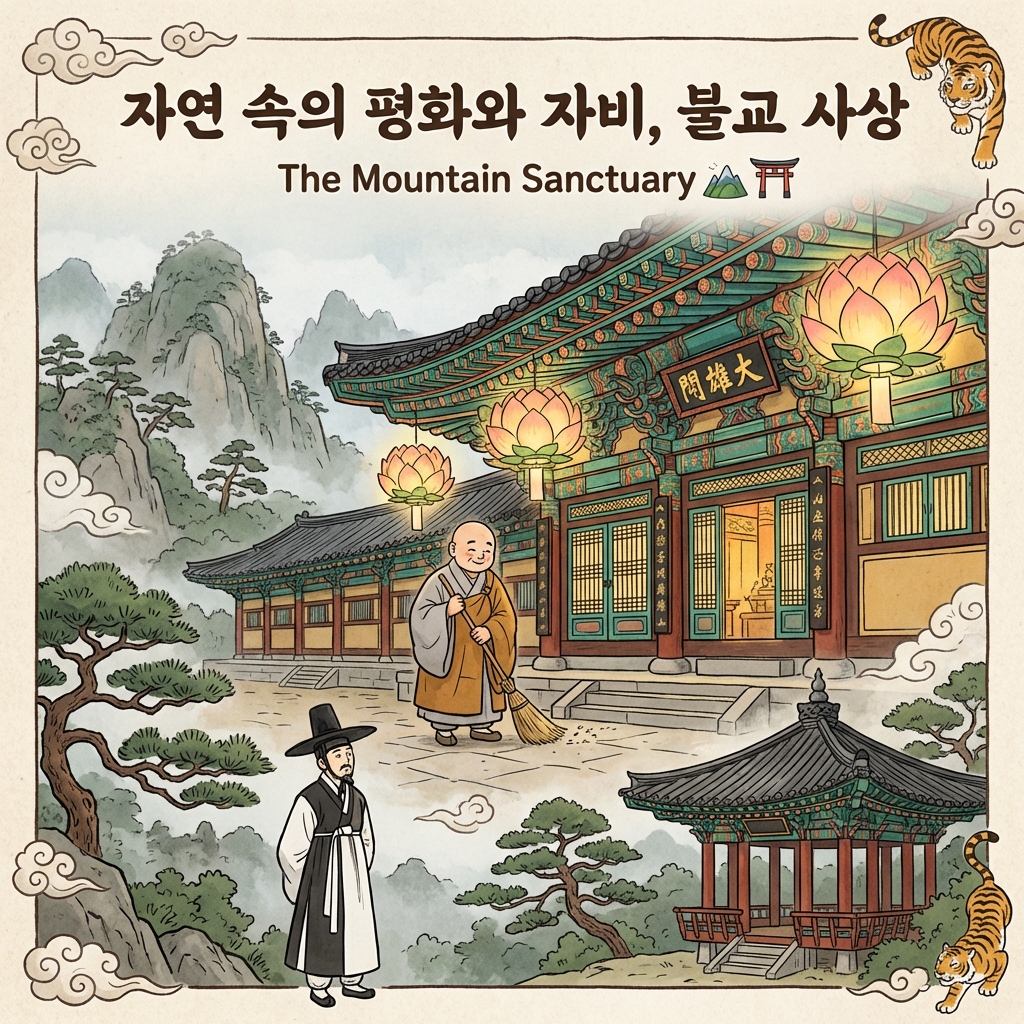
The Mountain Sanctuary 🏔️⛩️
Before Confucianism took over, Buddhism ruled the peninsula for over a thousand years! 🪷
While Confucianism built the rigid cities, Buddhism retreated into the high, misty mountains 🏔️.
Buddhism embedded the concept of Inyeon (인연 / Karmic Destiny) deep into the Korean psyche—the belief that every single human connection, even walking past a stranger, is the result of thousands of past lives! 🔄 It softens the rigid rules with deep, spiritual compassion. 💞
While Confucianism built the rigid cities, Buddhism retreated into the high, misty mountains 🏔️.
Buddhism embedded the concept of Inyeon (인연 / Karmic Destiny) deep into the Korean psyche—the belief that every single human connection, even walking past a stranger, is the result of thousands of past lives! 🔄 It softens the rigid rules with deep, spiritual compassion. 💞
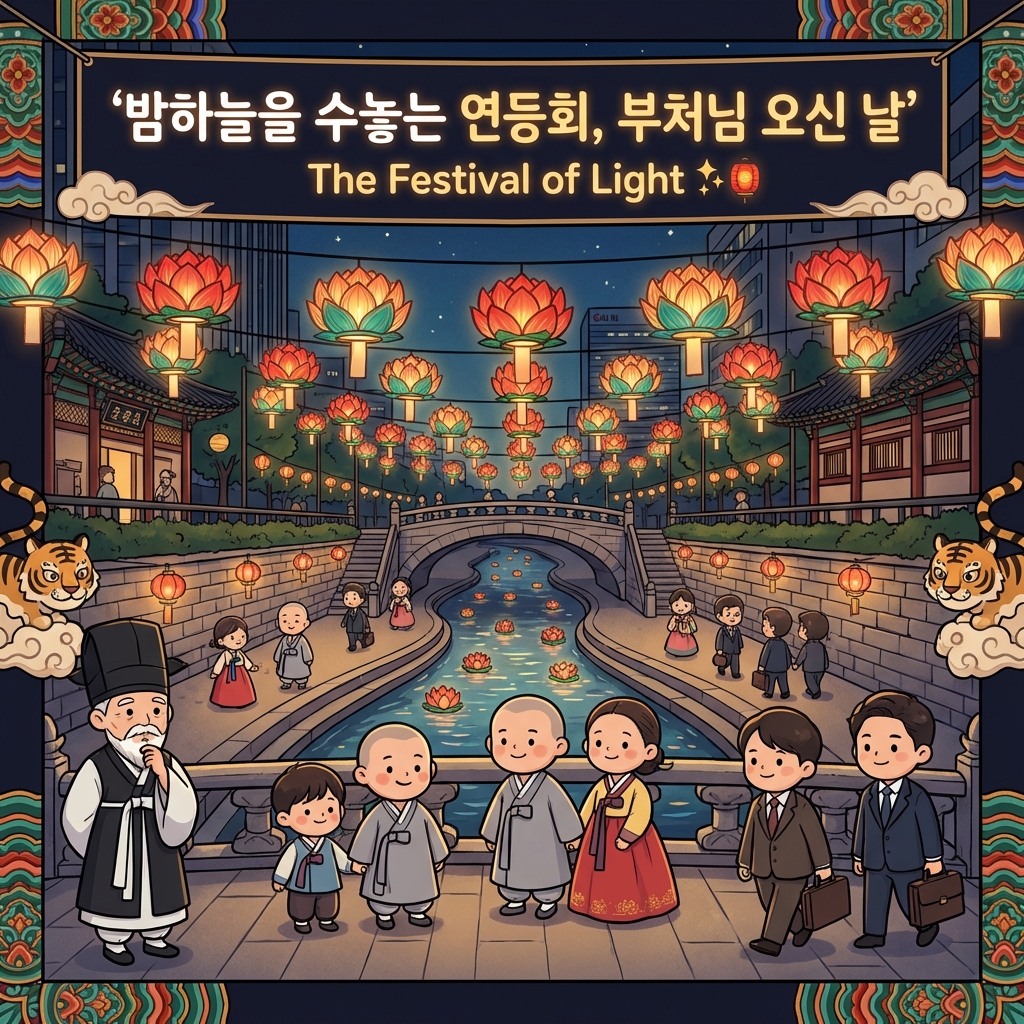
The Festival of Light ✨🏮
The greatest visual celebration of Buddhism is Seokga Tansin-il (Buddha’s Birthday) in the Spring 🌸.
For one month, strict modern cities are draped in tens of thousands of brilliantly colored, glowing paper lotus lanterns 🏮!
People write their deepest personal wishes on paper tags swinging from the lanterns, transforming the concrete jungles into a magical, glowing wish-granting sanctuary! 🌠🏙️
For one month, strict modern cities are draped in tens of thousands of brilliantly colored, glowing paper lotus lanterns 🏮!
People write their deepest personal wishes on paper tags swinging from the lanterns, transforming the concrete jungles into a magical, glowing wish-granting sanctuary! 🌠🏙️
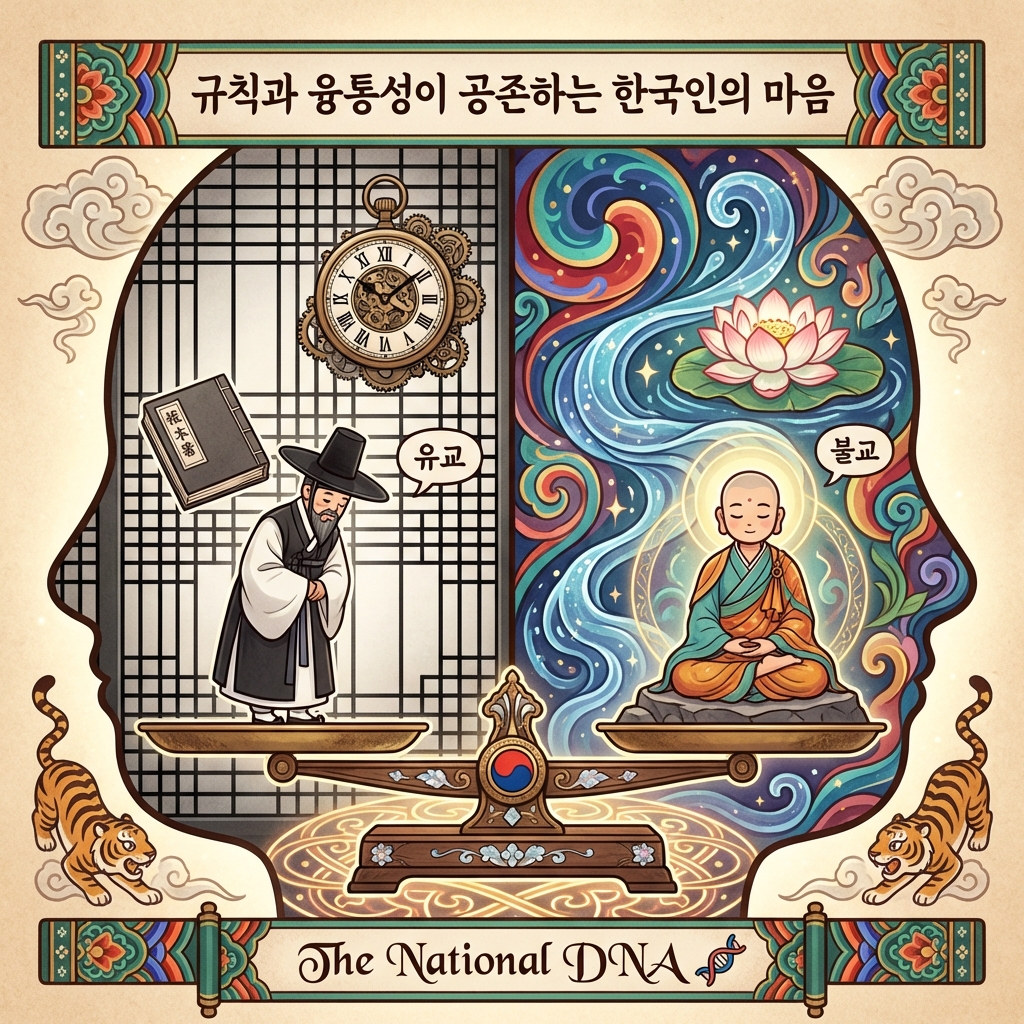
The National DNA 🧬
You do not have to “be” a Confucian or a Buddhist in Korea; you simply are one 🧬.
A modern Korean might go to a Christian church on Sunday ⛪, perform Confucian bowing rituals to a dead grandfather on Monday 🙇♂️, and visit a Buddhist mountain temple on Friday to clear their head 🪷!
It is a beautiful, deeply ingrained cultural software that tells Koreans how to act in public, and how to find peace in private. 🧘♂️👔
A modern Korean might go to a Christian church on Sunday ⛪, perform Confucian bowing rituals to a dead grandfather on Monday 🙇♂️, and visit a Buddhist mountain temple on Friday to clear their head 🪷!
It is a beautiful, deeply ingrained cultural software that tells Koreans how to act in public, and how to find peace in private. 🧘♂️👔
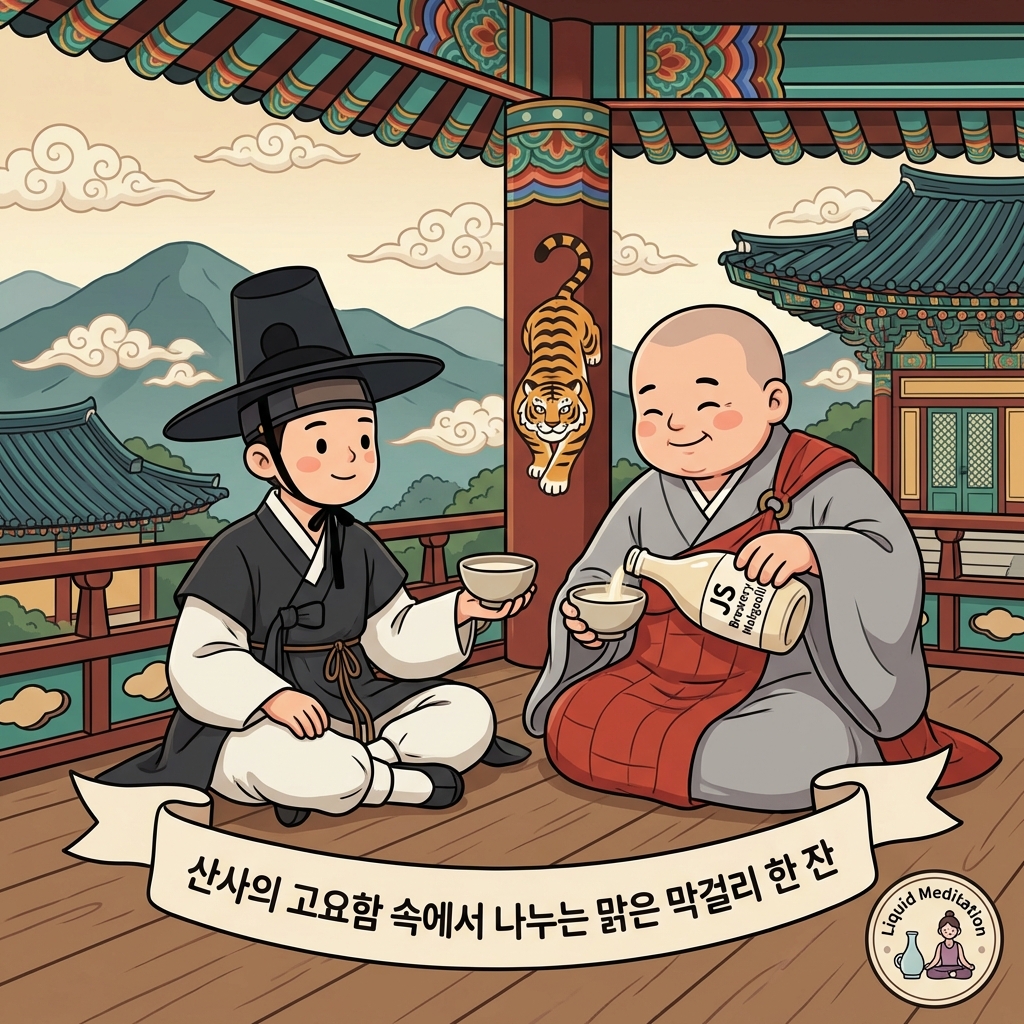
Liquid Meditation 🍶🧘♀️
There is profound spiritual history in Korean alcohol 🏺.
Ancient scholars drank to write poetry, and monks historically brewed “Grain Tea” (a covert name for Makgeolli) for sheer survival in the freezing mountains! ❄️🏔️
Today, drinking a perfectly unpasteurized, living, breathing bowl of JS Brewery Makgeolli 🍶 in absolute silence, surrounded by nature, is a deeply meditative, almost spiritual experience. It is the perfect harmony of nature, fermentation, and time! 🌾⏳
Ancient scholars drank to write poetry, and monks historically brewed “Grain Tea” (a covert name for Makgeolli) for sheer survival in the freezing mountains! ❄️🏔️
Today, drinking a perfectly unpasteurized, living, breathing bowl of JS Brewery Makgeolli 🍶 in absolute silence, surrounded by nature, is a deeply meditative, almost spiritual experience. It is the perfect harmony of nature, fermentation, and time! 🌾⏳
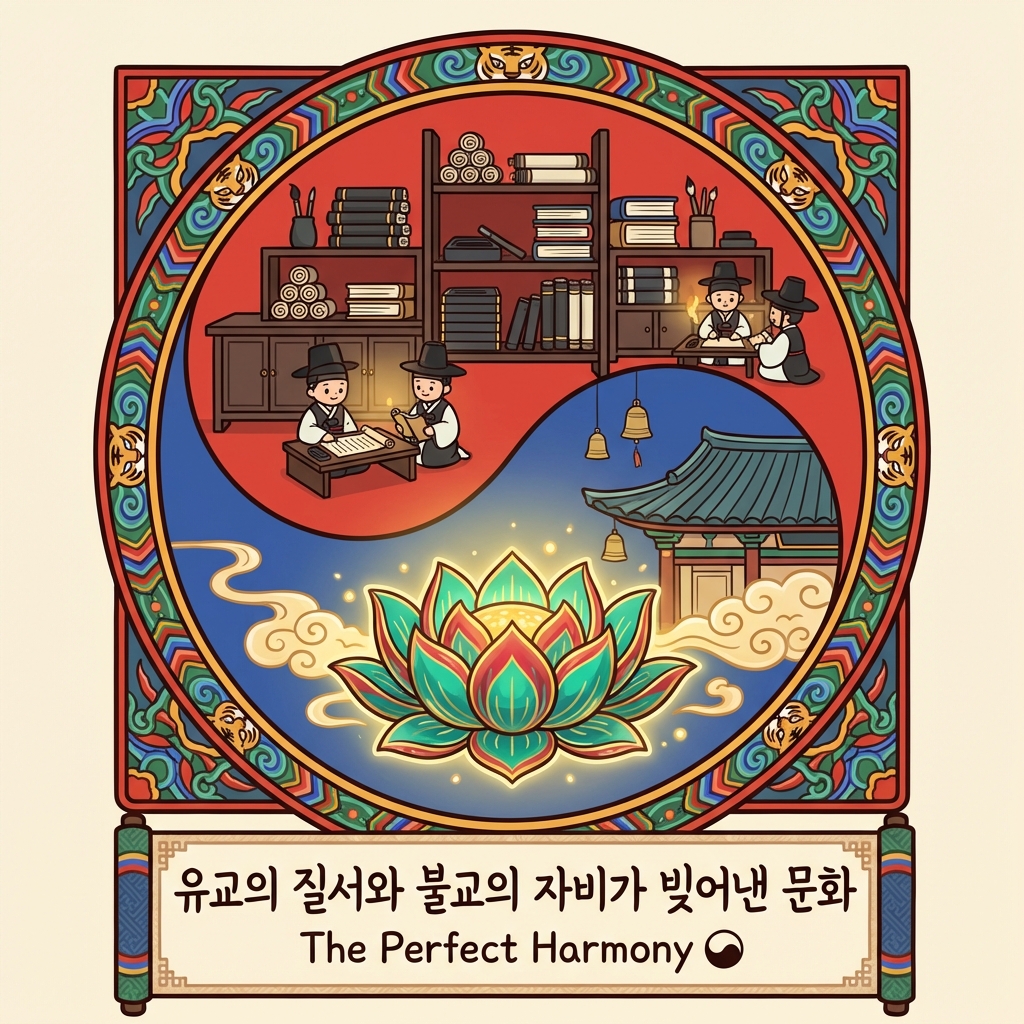
The Perfect Harmony ☯️
Do you prefer the highly structured, disciplined, academic order of Confucianism? 📚 Or the peaceful, nature-driven, karma-focused compass of Buddhism? 🪷 We think a bowl of Makgeolli requires a little bit of both! Let us know! 👇
1 / 8