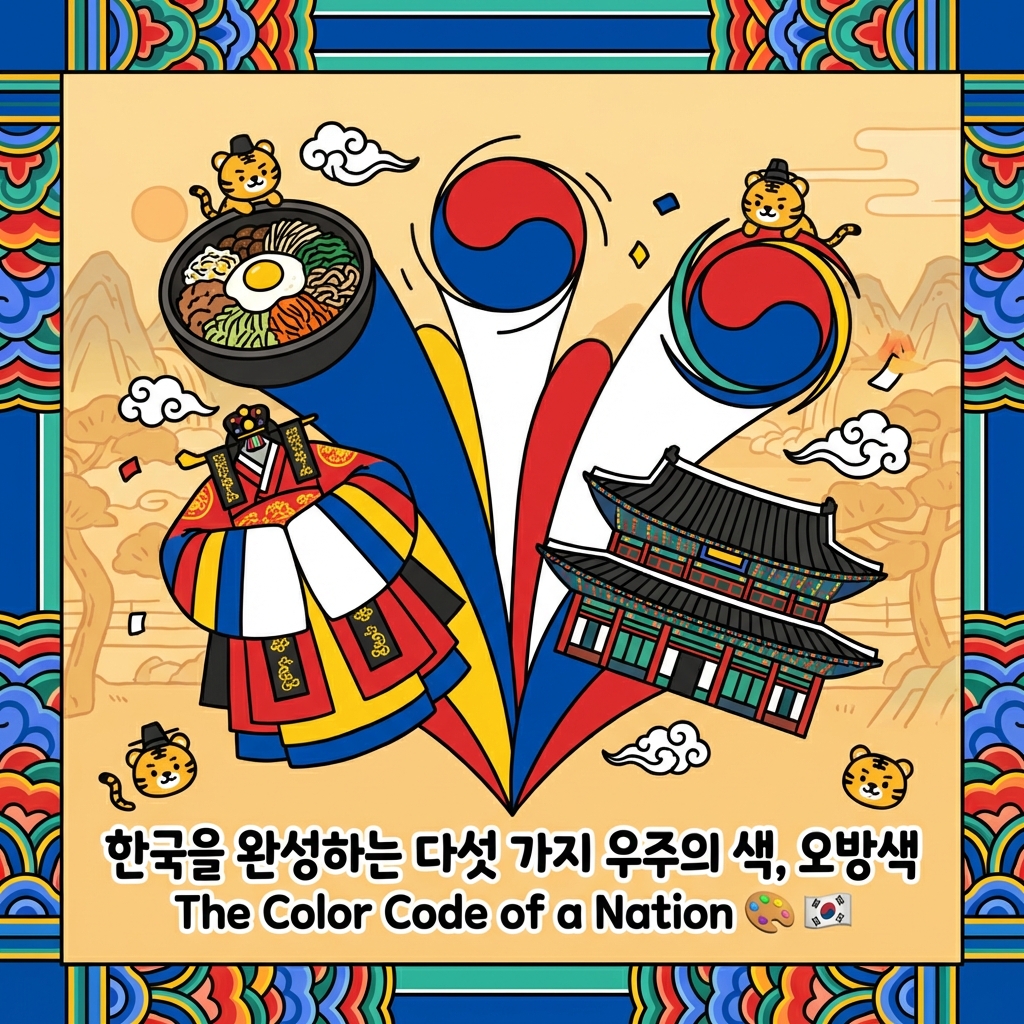
The Color Code of a Nation 🎨🇰🇷
Have you ever noticed that traditional Korean food, architecture, and clothing all seem to share the exact same, aggressively bold color palette? 🍲👘🏯
It is not a coincidence or a fashion trend! It is a 2,000-year-old cosmic philosophy! 🌌
Welcome to 오방색 (Obangsaek / The Five Directional Colors), the magical color theory that completely dictates how Korea is painted! 🖌️✨
It is not a coincidence or a fashion trend! It is a 2,000-year-old cosmic philosophy! 🌌
Welcome to 오방색 (Obangsaek / The Five Directional Colors), the magical color theory that completely dictates how Korea is painted! 🖌️✨
Painting the Universe 🌌
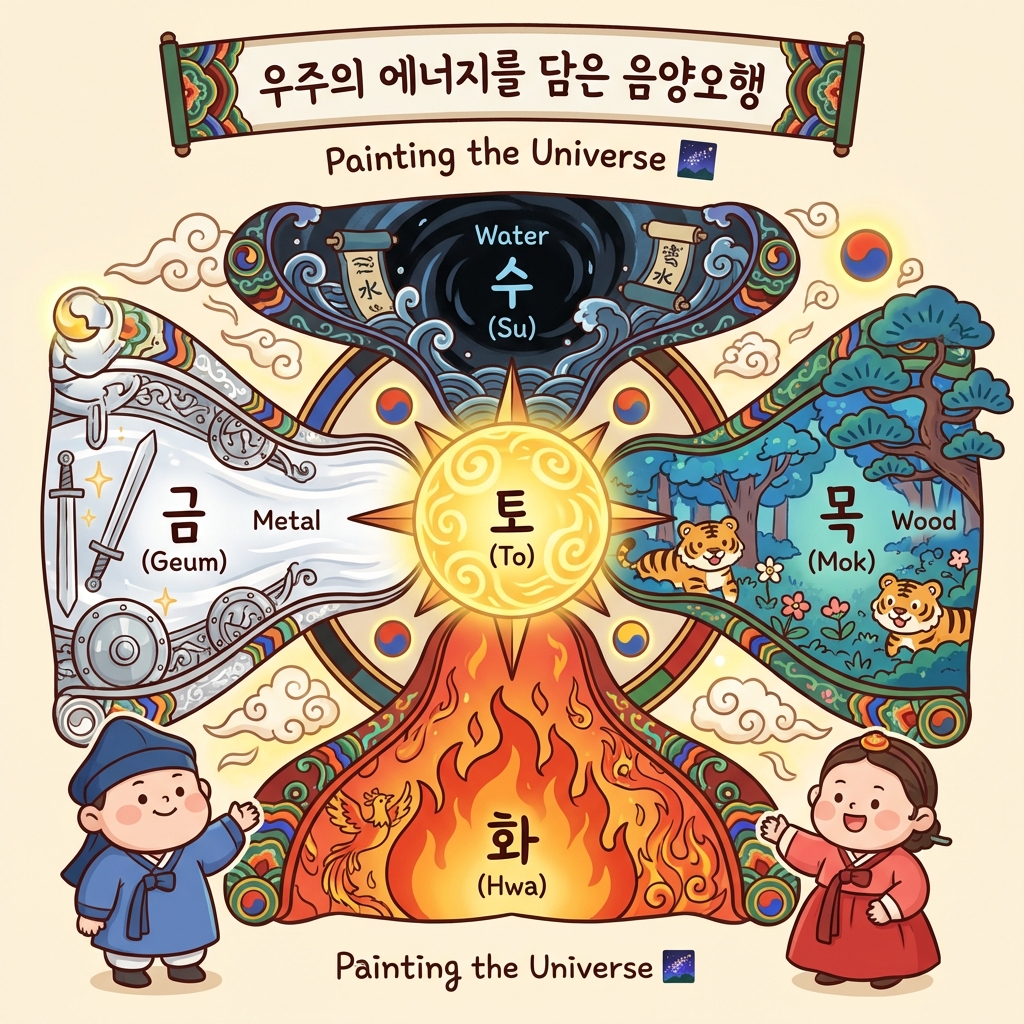
Obangsaek is deeply tied to ancient Yin-Yang and the Five Elements (Wu Xing) ☯️.
Each color is not just a hue; it is a literal cardinal direction, a physical element, a season, and a human organ!
🟡 Yellow (Center/Earth/Royalty)
🔵 Blue (East/Wood/Spring)
🔴 Red (South/Fire/Summer)
⚪ White (West/Metal/Autumn)
⚫ Black (North/Water/Winter)
To achieve perfection in life, you must actively balance these five cosmic forces! ⚖️
Each color is not just a hue; it is a literal cardinal direction, a physical element, a season, and a human organ!
🟡 Yellow (Center/Earth/Royalty)
🔵 Blue (East/Wood/Spring)
🔴 Red (South/Fire/Summer)
⚪ White (West/Metal/Autumn)
⚫ Black (North/Water/Winter)
To achieve perfection in life, you must actively balance these five cosmic forces! ⚖️
Edible Harmony 🍲
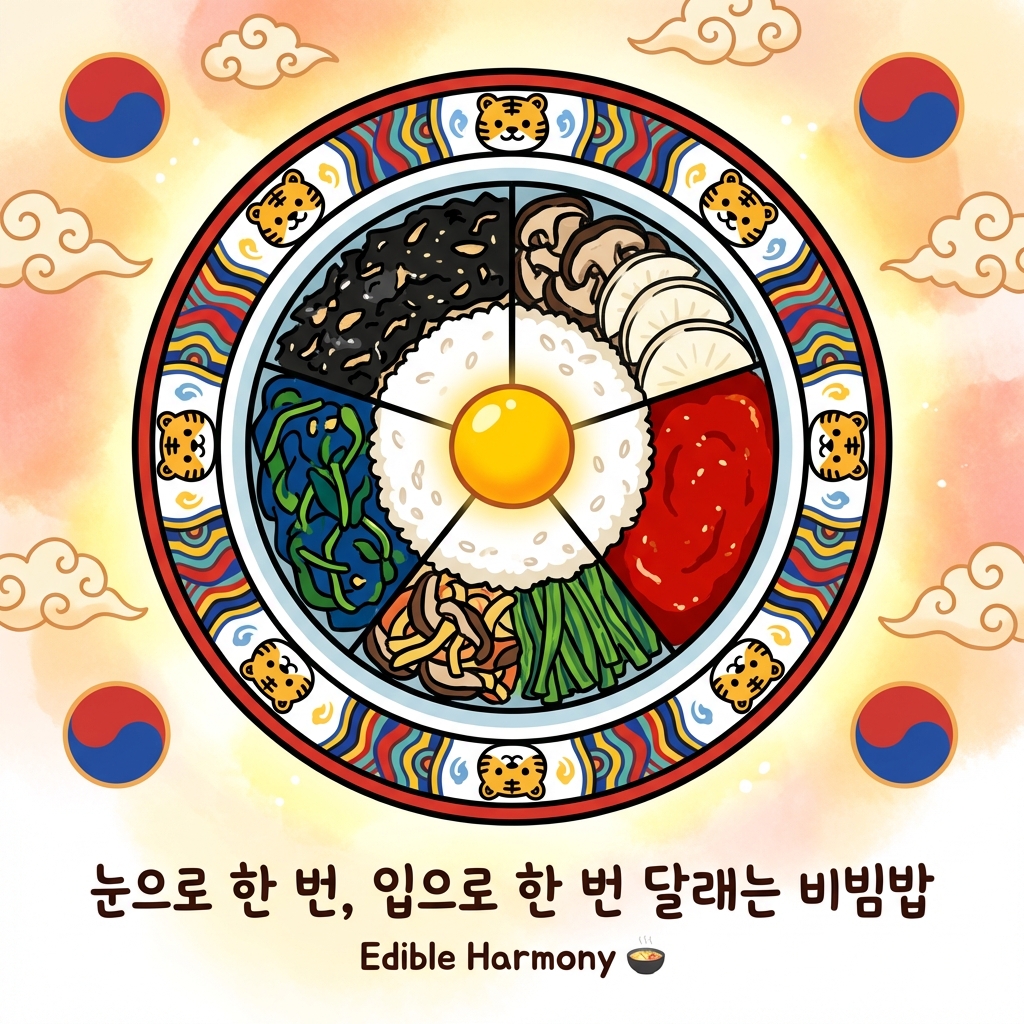
Why is Korean food so unbelievably photogenic? Because chefs are philosophically required to use the five colors! 🧑🍳
The legendary Bibimbap is the ultimate expression of Obangsaek! 🍚
By perfectly arranging Red (Chili), Green/Blue (Spinach), Black (Mushroom), White (Rice), and Yellow (Egg) in one bowl, you are not just getting vitamins; you are literally consuming the balanced energy of the entire universe to heal your body! 🌌🥄
The legendary Bibimbap is the ultimate expression of Obangsaek! 🍚
By perfectly arranging Red (Chili), Green/Blue (Spinach), Black (Mushroom), White (Rice), and Yellow (Egg) in one bowl, you are not just getting vitamins; you are literally consuming the balanced energy of the entire universe to heal your body! 🌌🥄
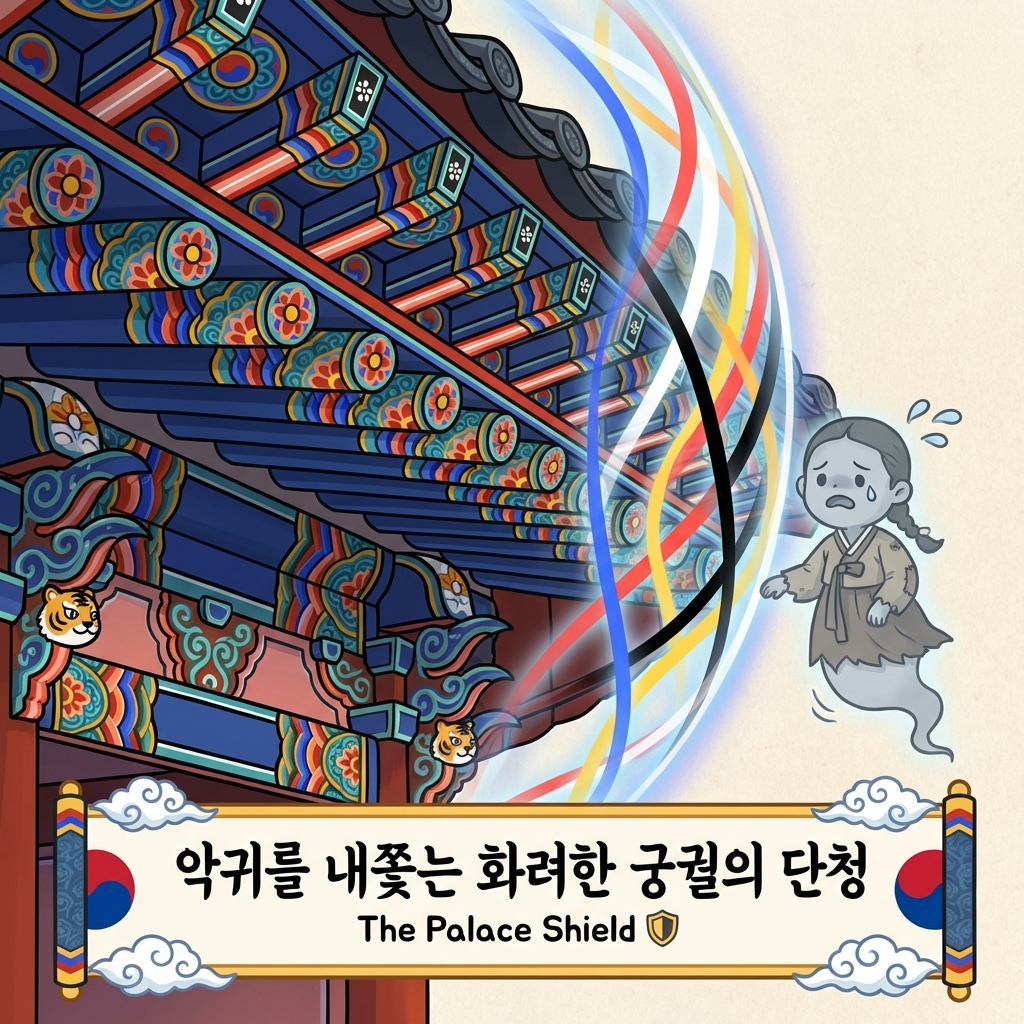
The Palace Shield 🛡️
Look up at any ancient Korean palace or temple 🏯. The incredibly complex, psychedelic paint on the roof is called 단청 (Dancheong).
It was exclusively created using the five Obangsaek colors! It wasn’t just decorative; it was highly functional! 🛠️
The vibrant, contrasting colors were believed to possess massive spiritual power, acting as an invisible supernatural shield to repel evil spirits, disease, and bad luck away from the King! 👑👻
It was exclusively created using the five Obangsaek colors! It wasn’t just decorative; it was highly functional! 🛠️
The vibrant, contrasting colors were believed to possess massive spiritual power, acting as an invisible supernatural shield to repel evil spirits, disease, and bad luck away from the King! 👑👻
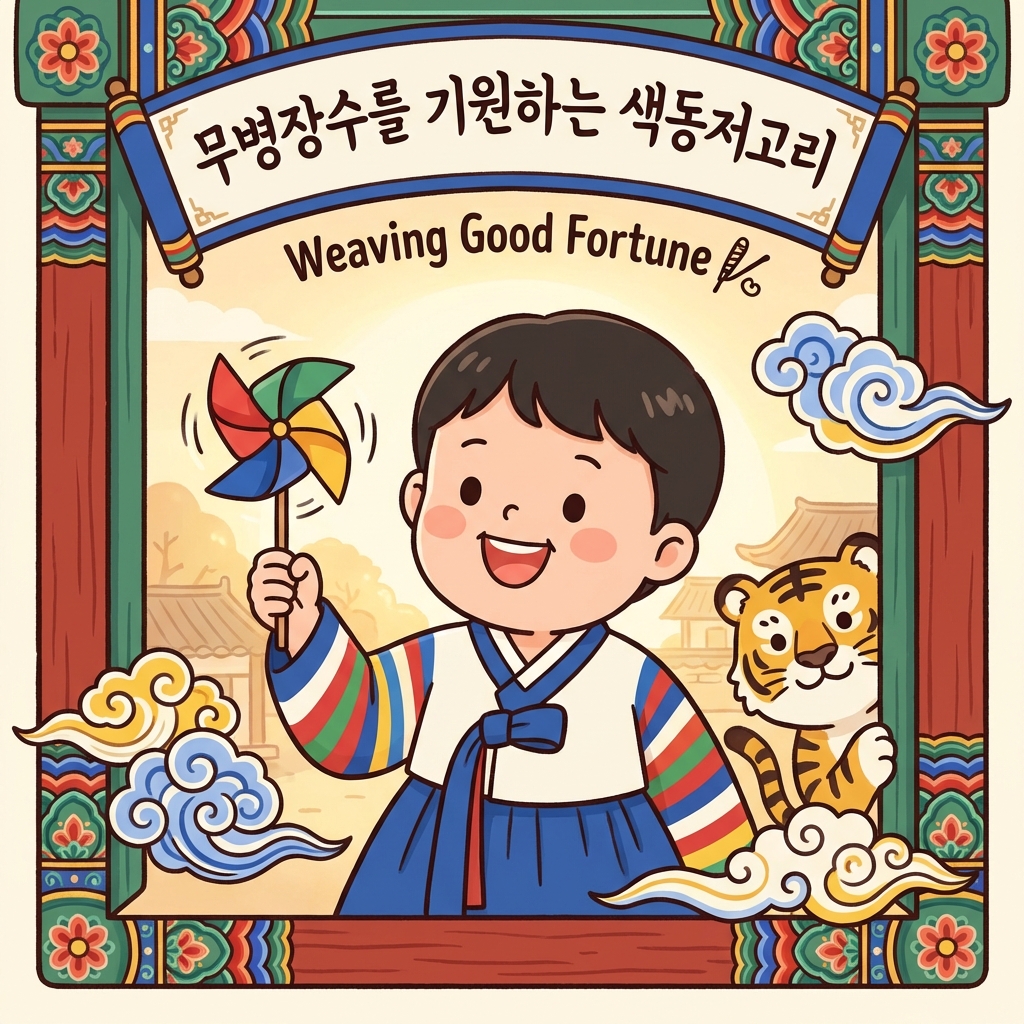
Weaving Good Fortune 🪡
When dressing children for massive holidays, or brides on their wedding day, they wear a 색동저고리 (Saekdong Jeogori)! 👘
The sleeves are a dazzling, hypnotic pattern of the five Obangsaek stripes! 🌈
Because children and brides were considered vulnerable to jealous ghosts, physically wrapping them in the colorful elements of the universe acted as a magical coat of armor, guaranteeing a long, disease-free, incredibly lucky life! 🛡️✨
The sleeves are a dazzling, hypnotic pattern of the five Obangsaek stripes! 🌈
Because children and brides were considered vulnerable to jealous ghosts, physically wrapping them in the colorful elements of the universe acted as a magical coat of armor, guaranteeing a long, disease-free, incredibly lucky life! 🛡️✨
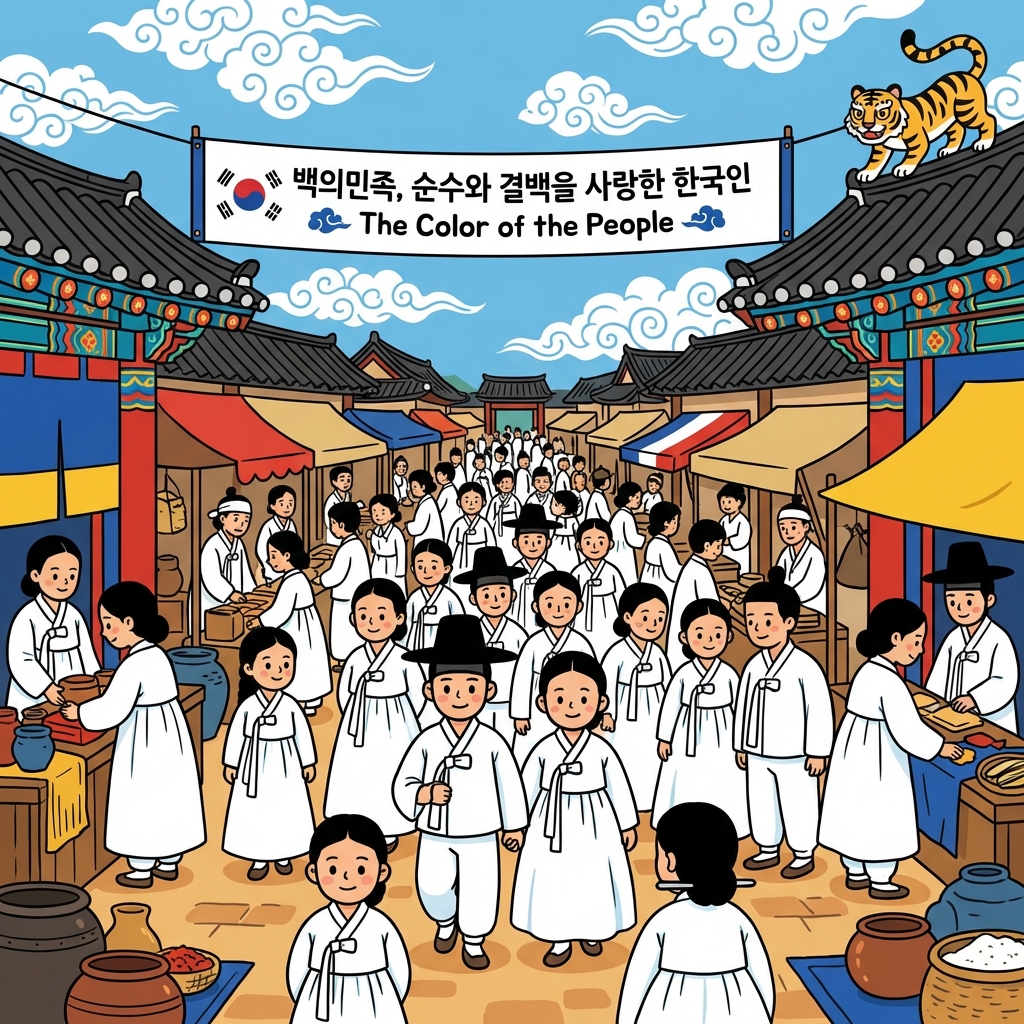
The Color of the People ☁️
White (Metal/West) is the most heavily dominant color in Korean history! ⚪
For thousands of years, Korean commoners almost exclusively wore pure, un-dyed white clothing, earning them the historical nickname “The White-Clad People” (백의민족 / Baeguiminjok). 🏳️
While the vibrant Red and Yellow was strictly reserved for Royalty 👑, White represented intense purity, innocence, peace, and truth! 🕊️
For thousands of years, Korean commoners almost exclusively wore pure, un-dyed white clothing, earning them the historical nickname “The White-Clad People” (백의민족 / Baeguiminjok). 🏳️
While the vibrant Red and Yellow was strictly reserved for Royalty 👑, White represented intense purity, innocence, peace, and truth! 🕊️
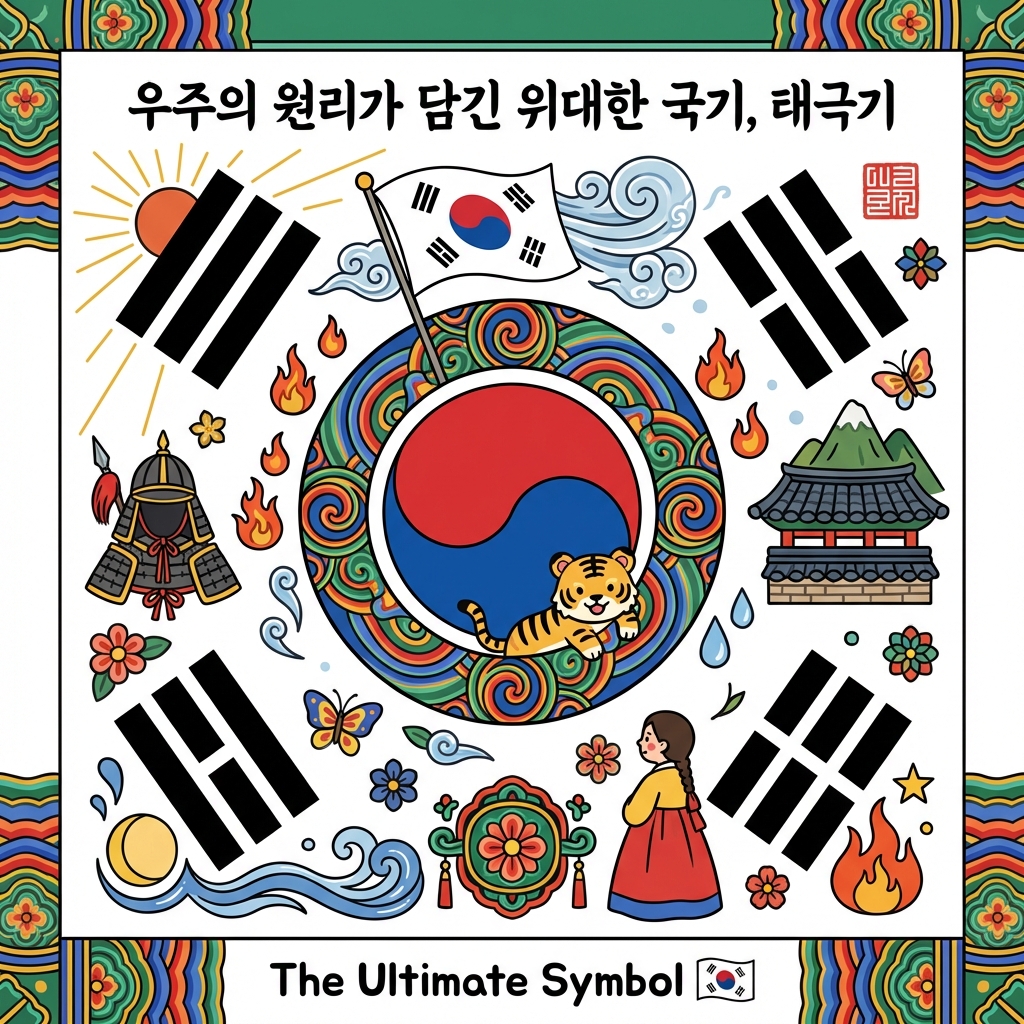
The Ultimate Symbol 🇰🇷
You can find the entire philosophy perfectly condensed on the modern South Korean Flag (태극기 / Taegeukgi)! 🇰🇷
The background is White ⚪ (Purity).
The center is Red and Blue 🔴🔵 (Fire and Water locked in perfect spinning harmony).
The corners are Black ⚫ (The four elements of Heaven, Earth, Water, and Fire).
It is a flag that literally visualizes the perfect mathematical balance of the universe! ⚖️🌌
The background is White ⚪ (Purity).
The center is Red and Blue 🔴🔵 (Fire and Water locked in perfect spinning harmony).
The corners are Black ⚫ (The four elements of Heaven, Earth, Water, and Fire).
It is a flag that literally visualizes the perfect mathematical balance of the universe! ⚖️🌌
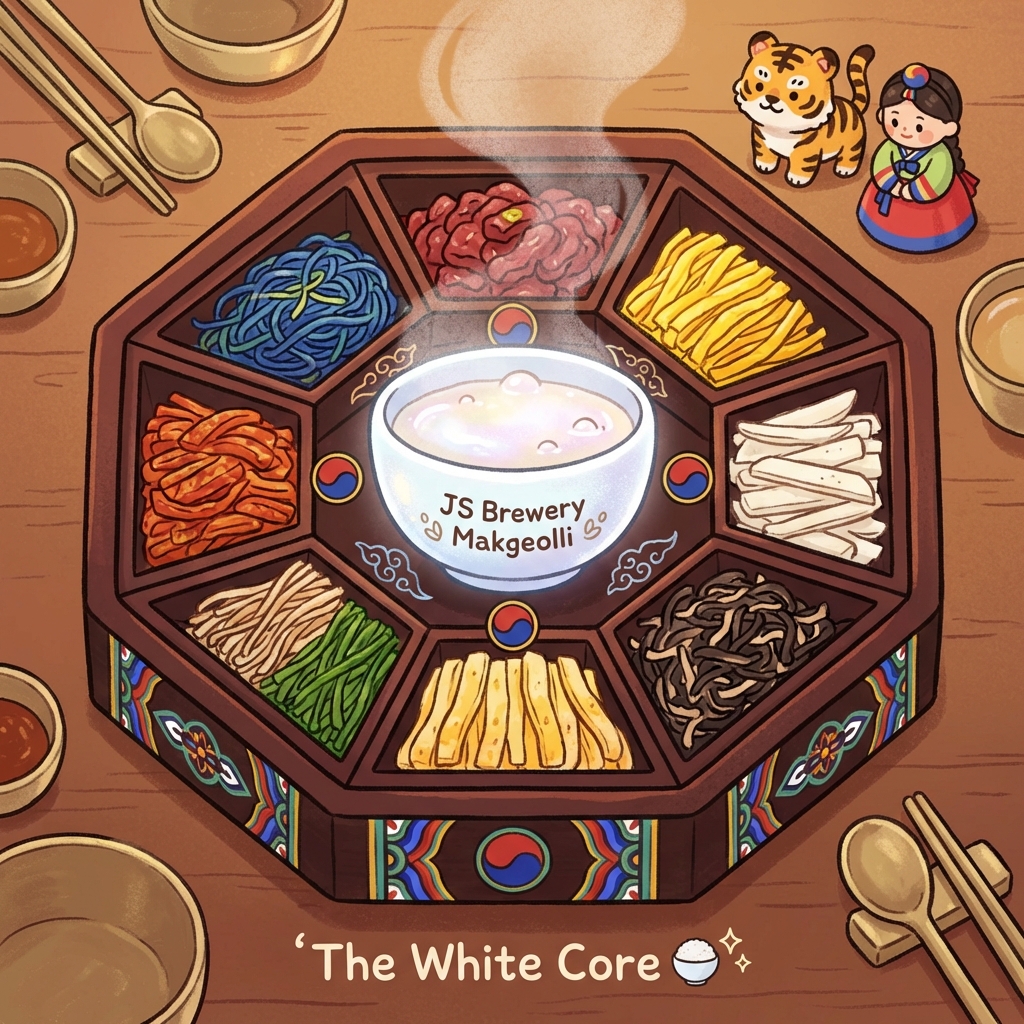
The White Core 🍚✨
In a world of incredibly bold, intensely spicy, vibrant Red and Green Korean food 🔥🥬, you need an anchor to bring balance! ⚓
This is the ultimate genius of traditional rice wine! 🍶
The snowy White, deeply pure, slightly sweet, earthy complexity of JS Brewery Makgeolli acts as the perfect, calming canvas! It mathematically balances the violent spice of the food, achieving absolute culinary Nirvana in your mouth! 🌾🧘♂️
This is the ultimate genius of traditional rice wine! 🍶
The snowy White, deeply pure, slightly sweet, earthy complexity of JS Brewery Makgeolli acts as the perfect, calming canvas! It mathematically balances the violent spice of the food, achieving absolute culinary Nirvana in your mouth! 🌾🧘♂️
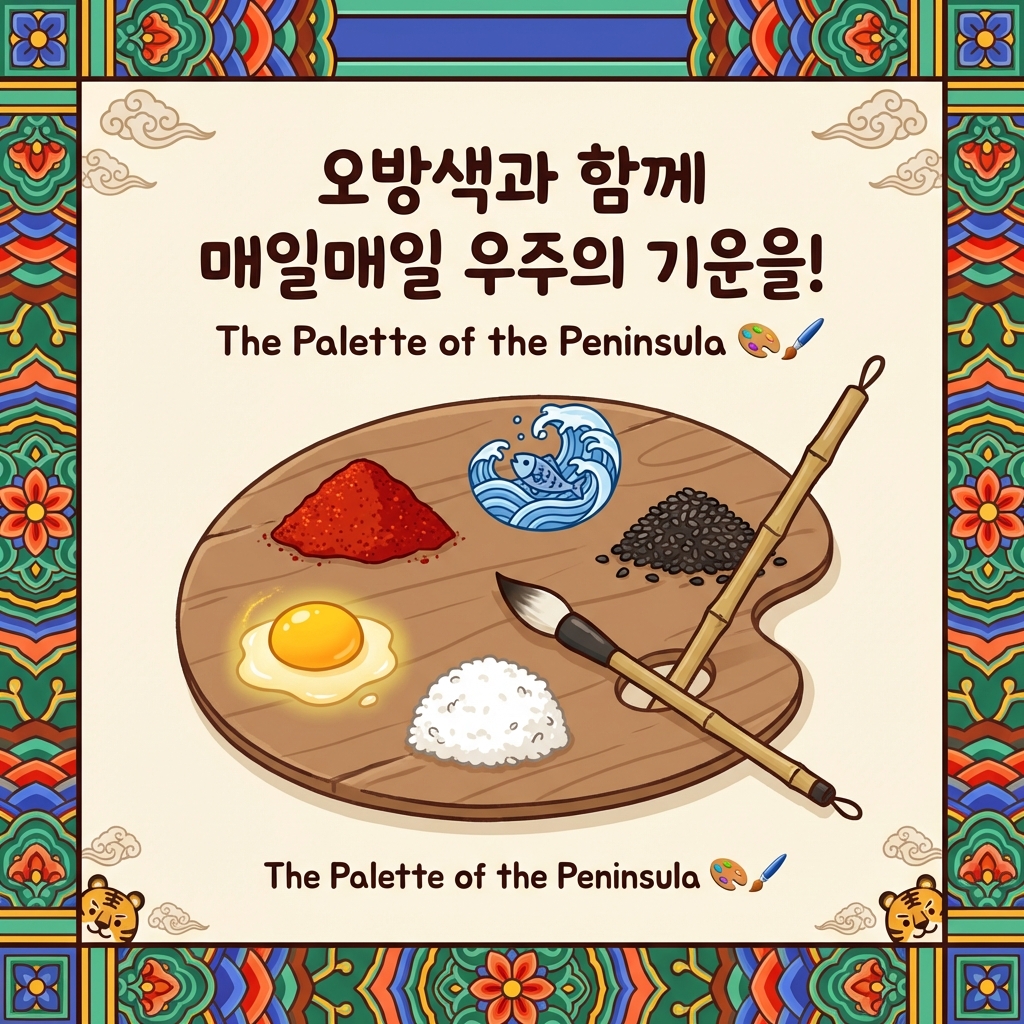
The Palette of the Peninsula 🎨🖌️
The next time you eat Bibimbap, will you notice the cosmic alignment of the five colors in your bowl? 🍲 Do you prefer the bold Reds of summer or the peaceful Whites of autumn? Let us know! 👇
1 / 9