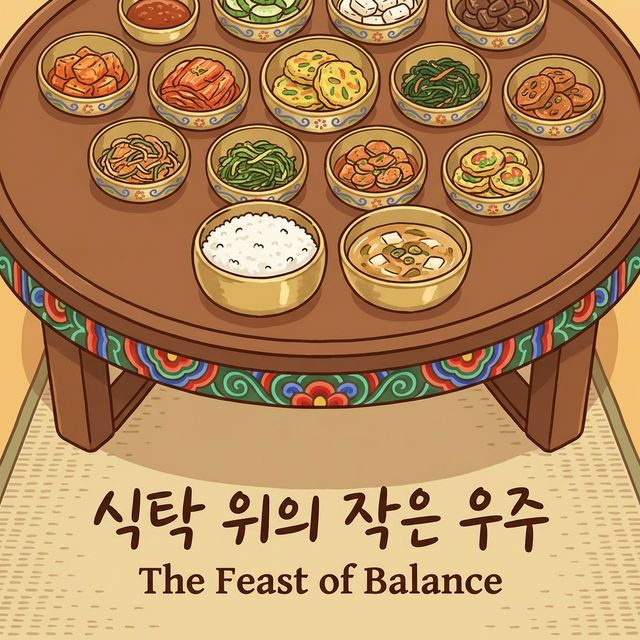
The Feast of Balance ⚖️
Unlike Western meals arriving in sequential courses 🍽️, a traditional Korean meal arrives all at once.
It is a vibrant, carefully orchestrated galaxy of flavors ✨ known as the Bansang (반상).
It is a vibrant, carefully orchestrated galaxy of flavors ✨ known as the Bansang (반상).
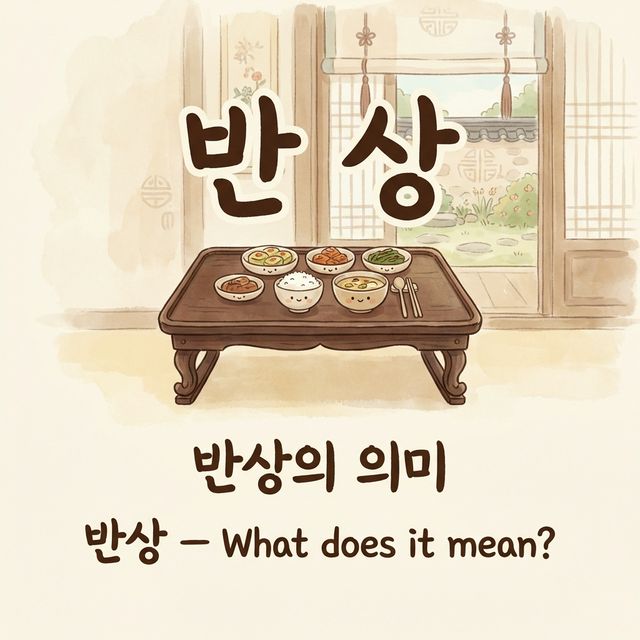
반상 — What does it mean? 🤔
반 (ban) = Rice / Meal 🍚
상 (sang) = Table 🪑
“A table with a meal.”
In Korean culture, the table setting is not just about eating; it is a philosophy of balance—combining five colors (Obangsaek) 🎨 and five tastes into a single harmonious spread.
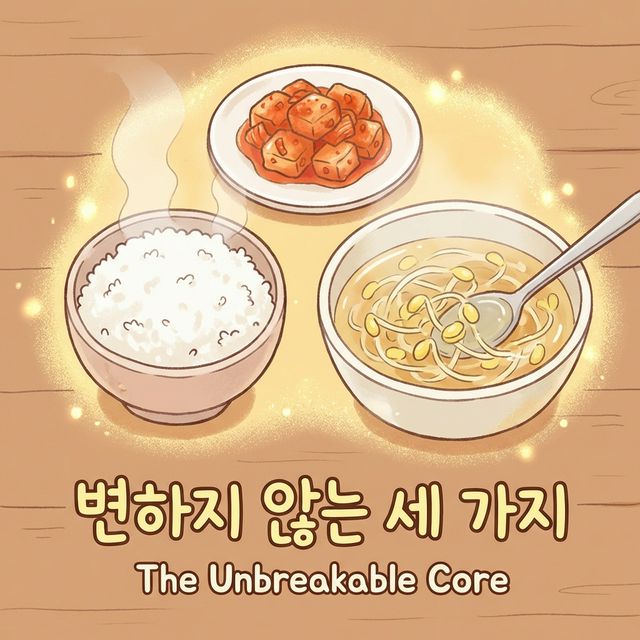
The Unbreakable Core 🛡️
No matter how poor or wealthy the household, every Bansang starts with these three absolute essentials:
1. Bap (Rice): The main event, placed on the left 🍚.
2. Guk (Soup): To wash it down, placed on the right 🍲.
3. Kimchi: The essential fermented side, clearing the palate 🥬.
Everything else is a bonus! 🎉
1. Bap (Rice): The main event, placed on the left 🍚.
2. Guk (Soup): To wash it down, placed on the right 🍲.
3. Kimchi: The essential fermented side, clearing the palate 🥬.
Everything else is a bonus! 🎉
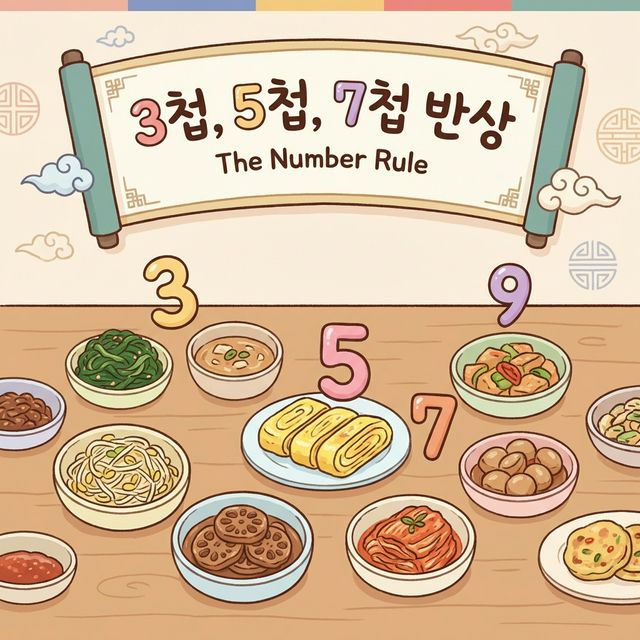
The Number Rule 🔢
The small side dishes are called Banchan (반찬) 🥗.
A Bansang is categorized by the number of Banchan served:
3-cheop: Everyday family meal 🏠.
5-cheop: A well-off household 💰.
7-cheop & 9-cheop: Banquet or wealthy noble (Yangban) status 🎩.
(Rice, soup, and kimchi don’t count toward the number!)
A Bansang is categorized by the number of Banchan served:
3-cheop: Everyday family meal 🏠.
5-cheop: A well-off household 💰.
7-cheop & 9-cheop: Banquet or wealthy noble (Yangban) status 🎩.
(Rice, soup, and kimchi don’t count toward the number!)
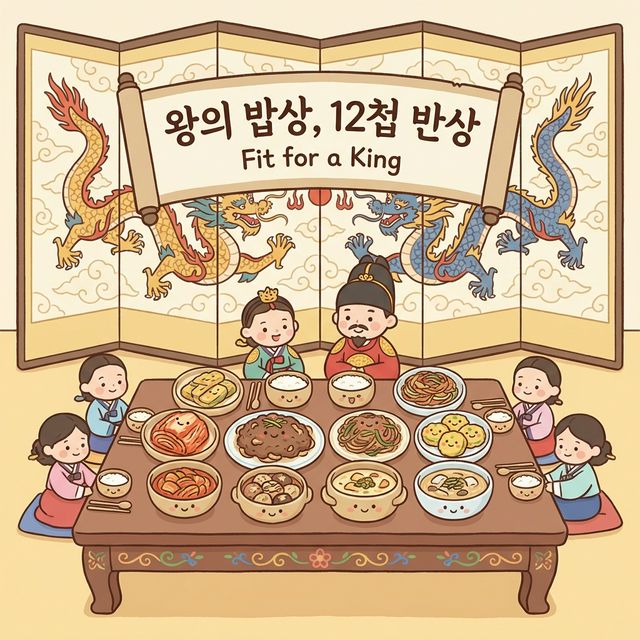
Fit for a King 🐉
The legendary 12-cheop Bansang (12첩 반상) was strictly reserved for the King of the Joseon Dynasty 🏯.
No commoner, regardless of their wealth, was legally allowed to serve 12 dishes 🚫. The King’s table was meant to represent the entire nation’s harvest in one seating 🌾.
No commoner, regardless of their wealth, was legally allowed to serve 12 dishes 🚫. The King’s table was meant to represent the entire nation’s harvest in one seating 🌾.
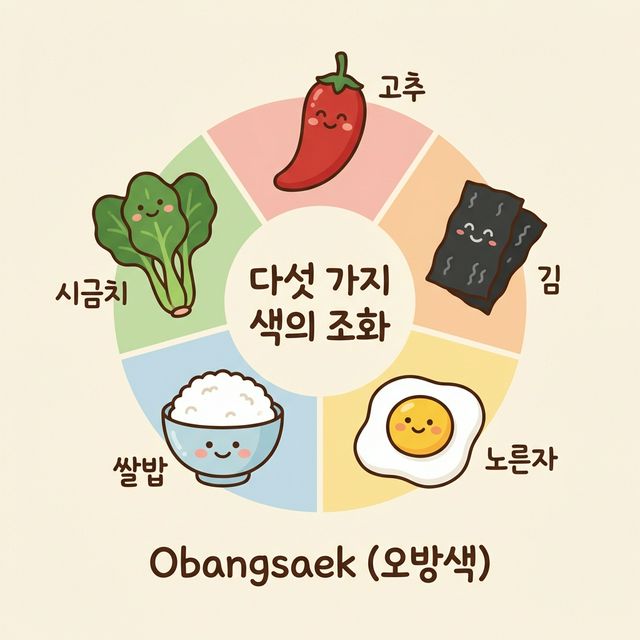
Obangsaek (오방색) 🎨
A proper Bansang adheres to Obangsaek—the five traditional Korean colors linked to the five elements 🌍.
A meal must visually balance Red, Black, Yellow, White, and Green 🔴⚫🟡⚪🟢. It ensures nutritional balance (meat, vegetables, grains, fermentation) and visual beauty.
A meal must visually balance Red, Black, Yellow, White, and Green 🔴⚫🟡⚪🟢. It ensures nutritional balance (meat, vegetables, grains, fermentation) and visual beauty.
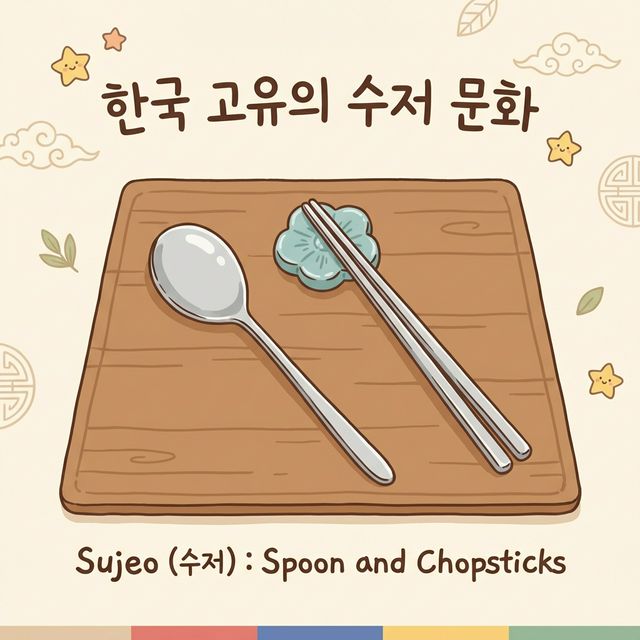
Sujeo (수저): Spoon and Chopsticks 🥄
Korea is unique in Asia for using both a spoon and chopsticks simultaneously for every meal 😲.
The spoon is for the all-important rice and soup 🍵.
The flat metal chopsticks (originally silver to detect poison for royals! ☠️) are for precisely picking up the slippery side dishes.
The spoon is for the all-important rice and soup 🍵.
The flat metal chopsticks (originally silver to detect poison for royals! ☠️) are for precisely picking up the slippery side dishes.
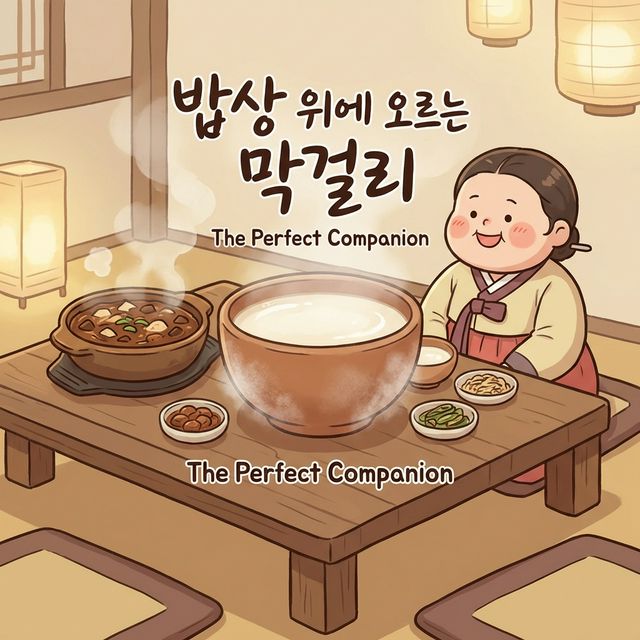
The Perfect Companion 🤝
While Bansang is the art of eating, Makgeolli (also known as Banju when served with a meal) acts as the perfect liquid side dish 🥂.
Its milky sweetness cuts through the salty, spicy 🌶️, and fermented profiles of the Banchan beautifully 🤤.
Its milky sweetness cuts through the salty, spicy 🌶️, and fermented profiles of the Banchan beautifully 🤤.
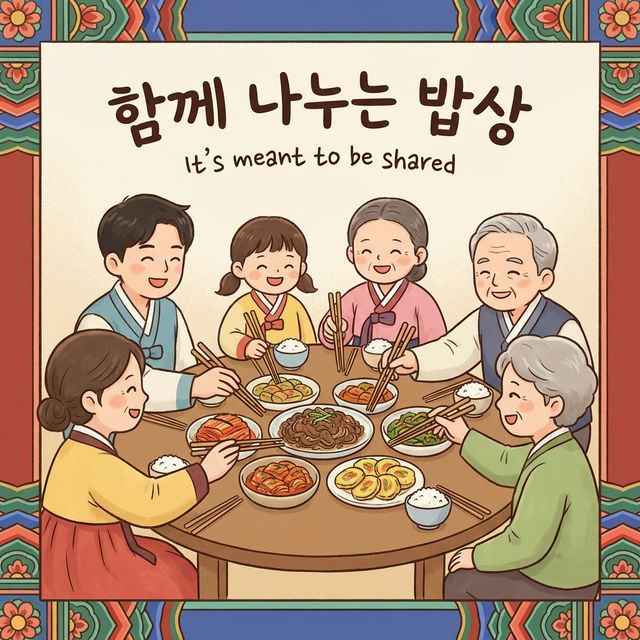
It’s meant to be shared 👨👩👧👦
What is your absolute favorite Korean Banchan (side dish)? Tell us! 👇🍚🥗
1 / 9