
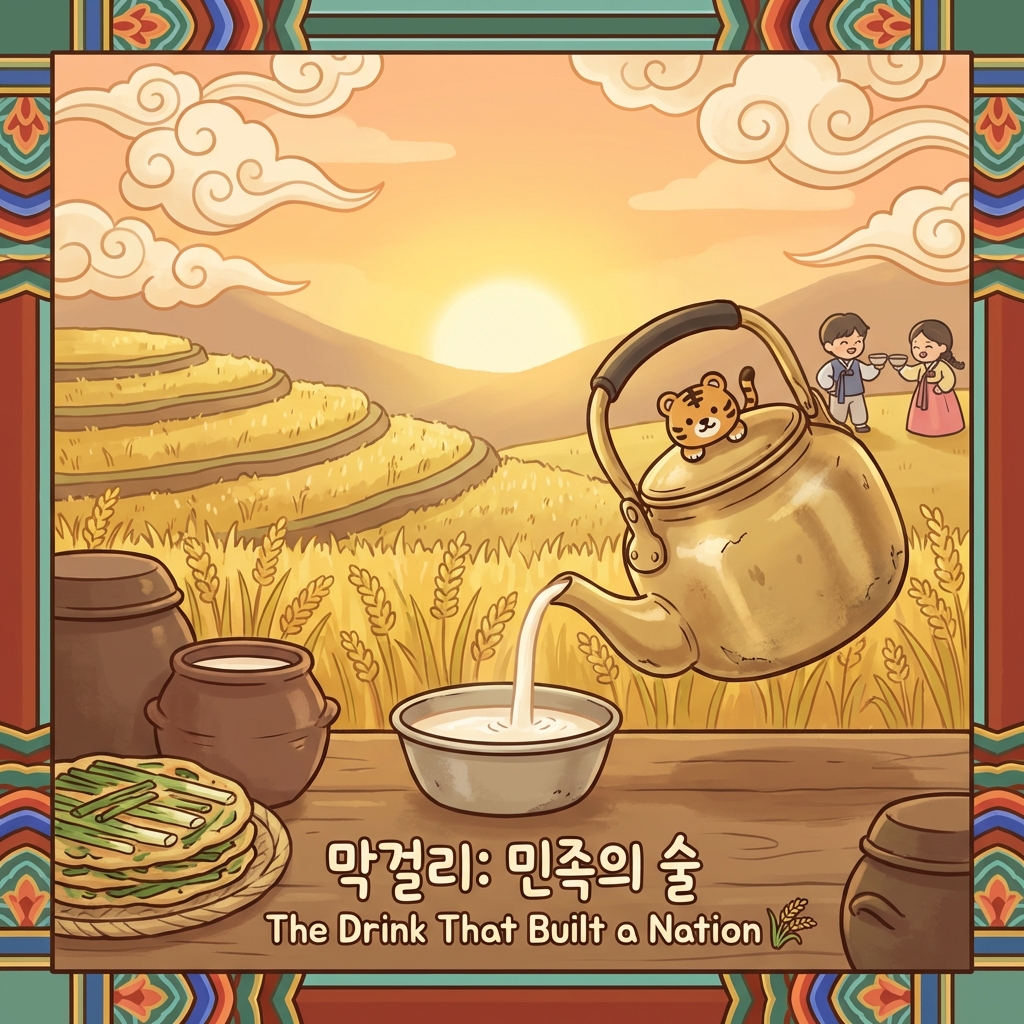
The Drink That Built a Nation 🌾
Makgeolli isn’t just alcohol 🍶; it’s the liquid lifeblood of Korean agricultural history. Let’s explore the science 🔬 and soul 🤍 of Korea’s oldest brew.
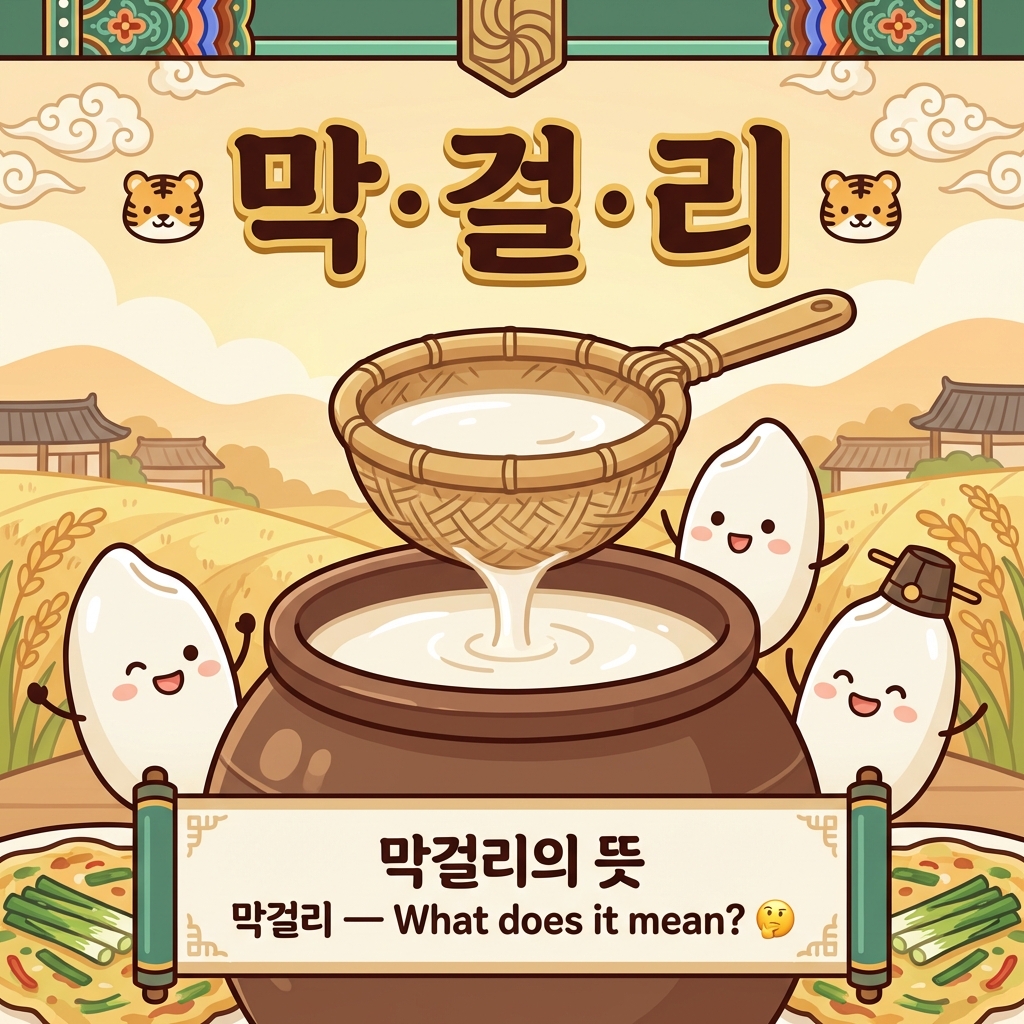
막걸리 — What does it mean? 🤔
The name reveals how it’s made:
막 (mak) = roughly, carelessly, or just now 🤷♂️
걸르다 (geolleuda) = to strain or filter 🕸️
“Roughly strained” — it’s an unfiltered, cloudy rice wine ☁️. The direct opposite of clear, highly-refined spirits!
막 (mak) = roughly, carelessly, or just now 🤷♂️
걸르다 (geolleuda) = to strain or filter 🕸️
“Roughly strained” — it’s an unfiltered, cloudy rice wine ☁️. The direct opposite of clear, highly-refined spirits!
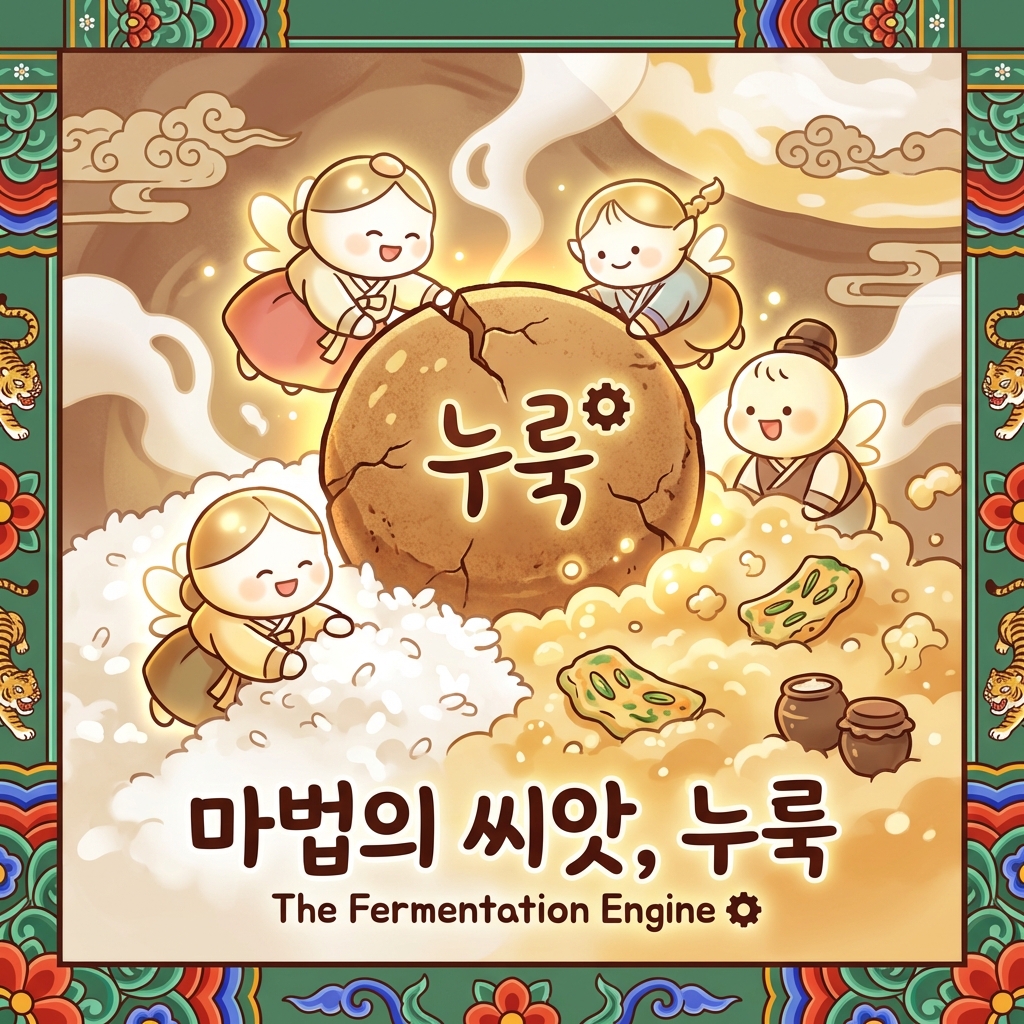
The Fermentation Engine ⚙️
누룩 (Nuruk) is the secret weapon 🗡️.
Unlike Western beers that use extracted yeast 🍺, Nuruk is a wild fermentation starter 🌿.
It invites multiple natural enzymes and yeasts from the air 🌬️ to break down the rice simultaneously. This double-fermentation creates Makgeolli’s signature complex, sweet-sour tang! 🤤
Unlike Western beers that use extracted yeast 🍺, Nuruk is a wild fermentation starter 🌿.
It invites multiple natural enzymes and yeasts from the air 🌬️ to break down the rice simultaneously. This double-fermentation creates Makgeolli’s signature complex, sweet-sour tang! 🤤
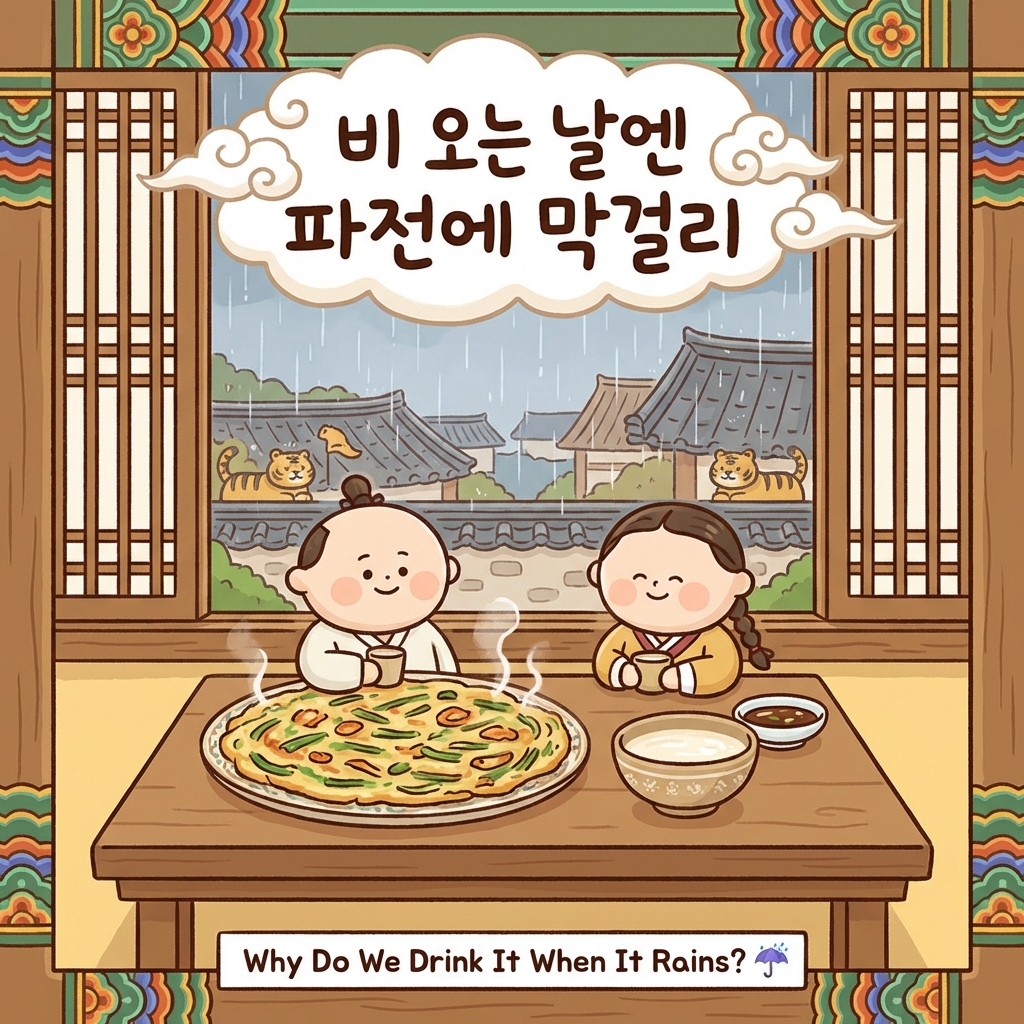
Why Do We Drink It When It Rains? ☔
In Korea, rain = Makgeolli and Pajeon (scallion pancakes) 🥞.
Why? The sound of rain sizzling against the pavement perfectly mimics the sound of batter sizzling in a hot pan 🍳.
Plus, the thick, unrefined carbs in Makgeolli are the ultimate comfort food for a gloomy day! 🛋️
Why? The sound of rain sizzling against the pavement perfectly mimics the sound of batter sizzling in a hot pan 🍳.
Plus, the thick, unrefined carbs in Makgeolli are the ultimate comfort food for a gloomy day! 🛋️
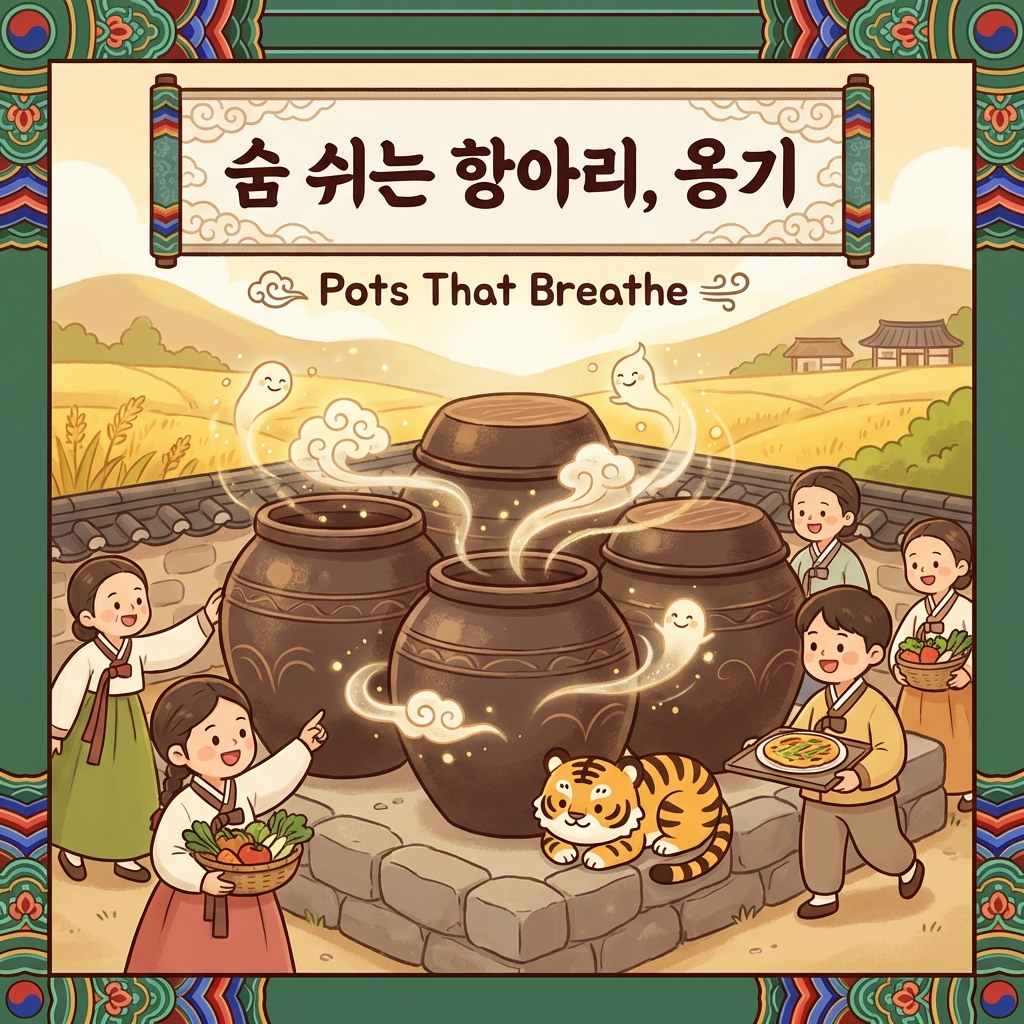
Pots That Breathe 🌬️
Traditionally, Makgeolli ferments in 옹기 (Onggi) — porous earthenware pots 🏺.
These pots actually breathe, allowing oxygen to enter and carbon dioxide to escape without letting water in 💧. This creates the perfect micro-environment for the wild yeast to thrive! 🌱
These pots actually breathe, allowing oxygen to enter and carbon dioxide to escape without letting water in 💧. This creates the perfect micro-environment for the wild yeast to thrive! 🌱
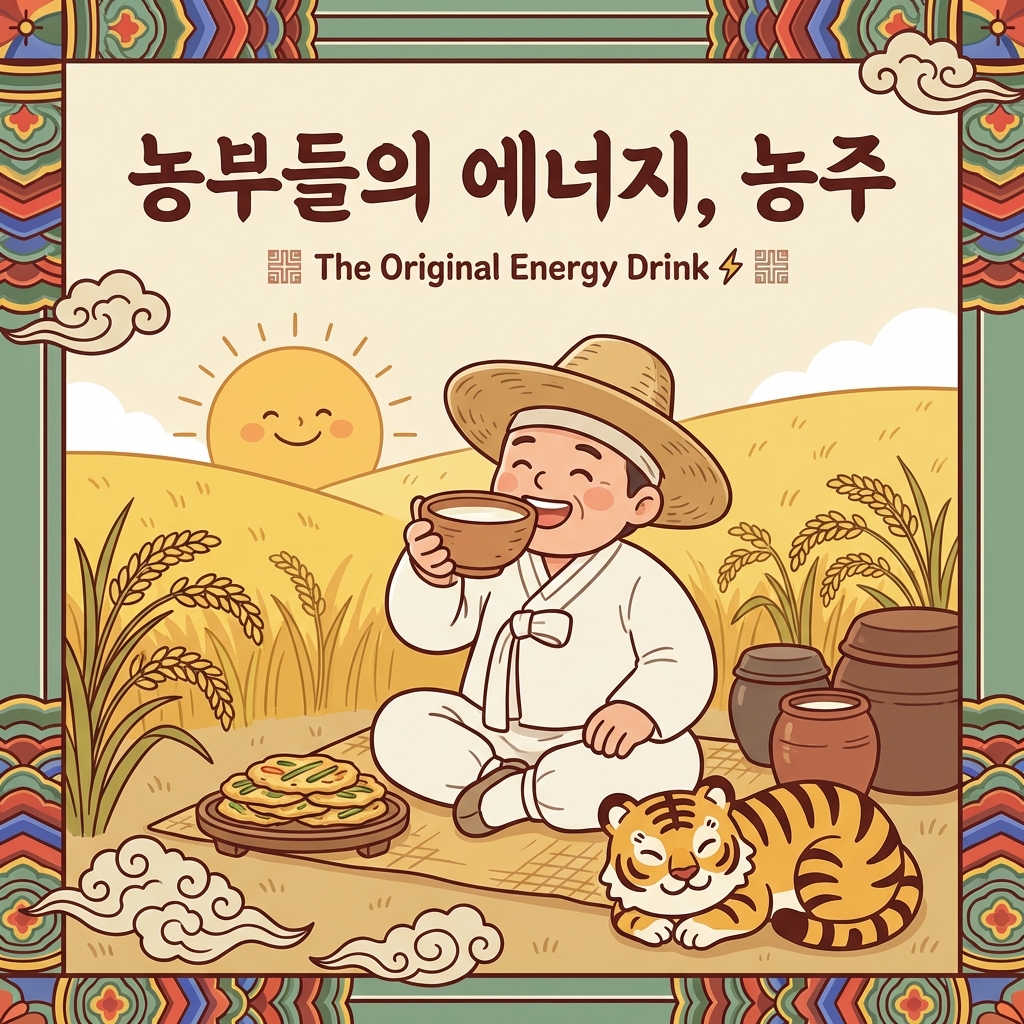
The Original Energy Drink ⚡
Historically, it was called 농주 (Nongju), meaning “Farmer’s Liquor” 🌾.
Because it is thick, low in alcohol (around 6%), and rich in lactic acid and carbohydrates 🔋, it served as a nutritional calorie boost to help farmers endure grueling days in the fields ☀️.
Because it is thick, low in alcohol (around 6%), and rich in lactic acid and carbohydrates 🔋, it served as a nutritional calorie boost to help farmers endure grueling days in the fields ☀️.
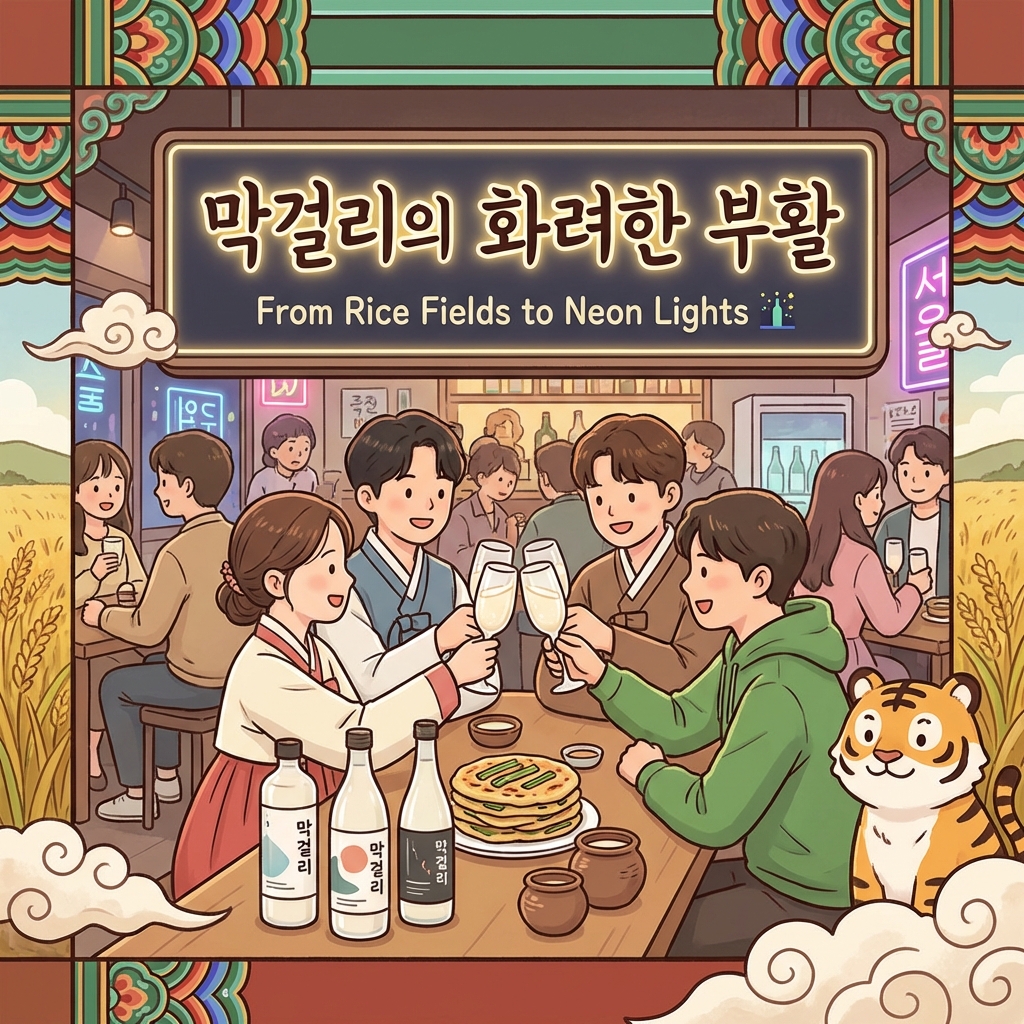
From Rice Fields to Neon Lights 🌃
For decades, it was considered an “old man’s drink” 👴.
Today, artisanal breweries (like JS Brewery! 🍻) have revolutionized the recipe. With premium ingredients, natural sweeteners, and champagne-like carbonation 🥂, Makgeolli is leading the craft liquor boom! 🎉
Today, artisanal breweries (like JS Brewery! 🍻) have revolutionized the recipe. With premium ingredients, natural sweeteners, and champagne-like carbonation 🥂, Makgeolli is leading the craft liquor boom! 🎉
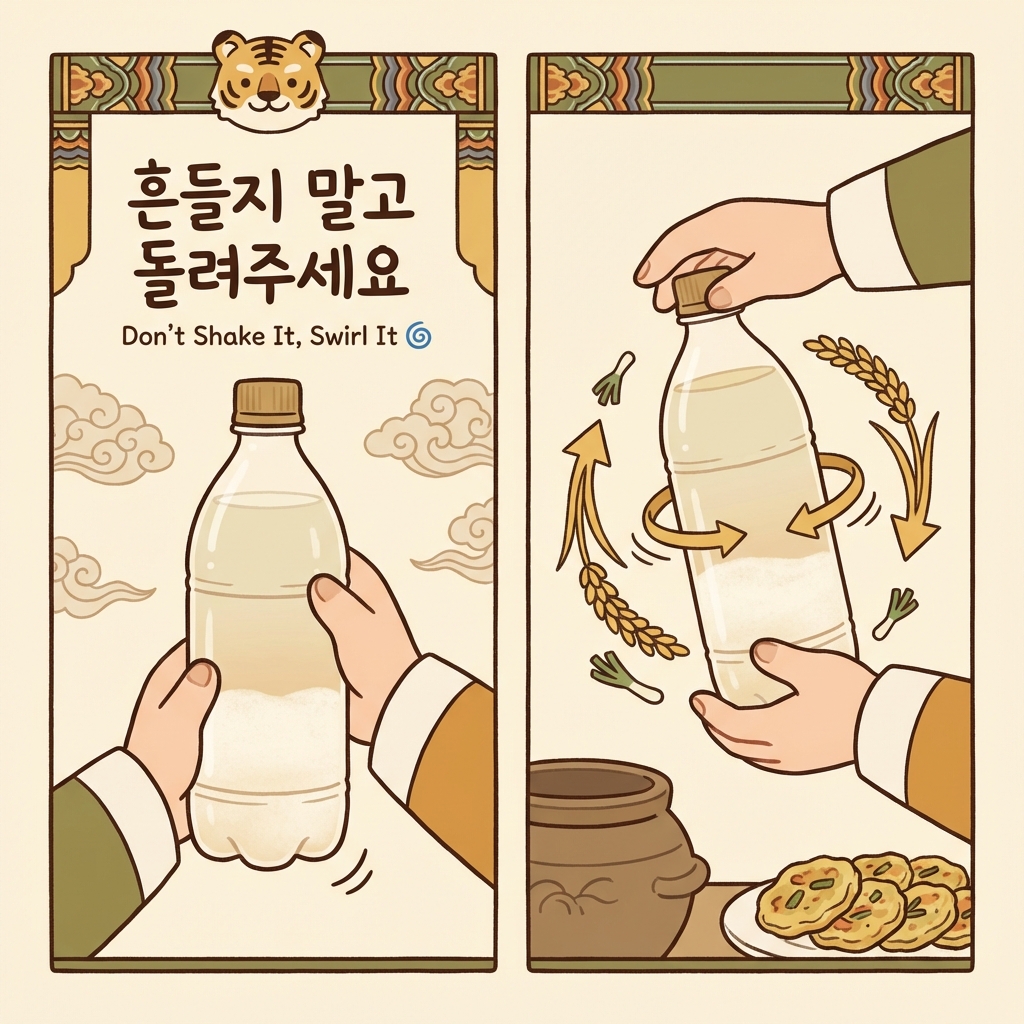
Don’t Shake It, Swirl It 🌀
Because it’s unfiltered, the rice sediment sinks to the bottom 👇.
To mix it without causing a carbonated explosion 💥 when you open the cap, you must gently swirl the bottle upside down 🔃, or roll it softly back and forth.
To mix it without causing a carbonated explosion 💥 when you open the cap, you must gently swirl the bottle upside down 🔃, or roll it softly back and forth.
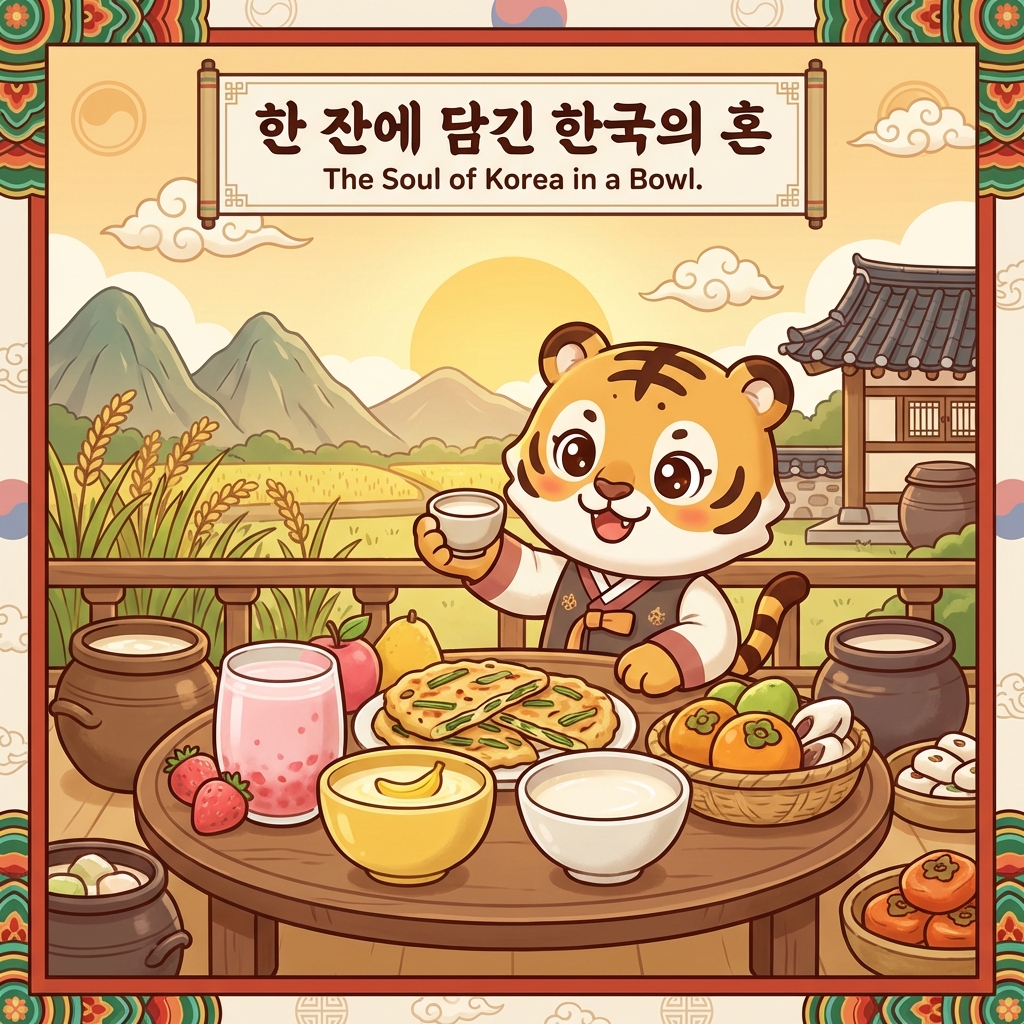
The Soul of Korea in a Bowl.
Are you a traditional pure Makgeolli purist, or do you love the modern fruit flavors? Let us know below! 👇🍶
1 / 9