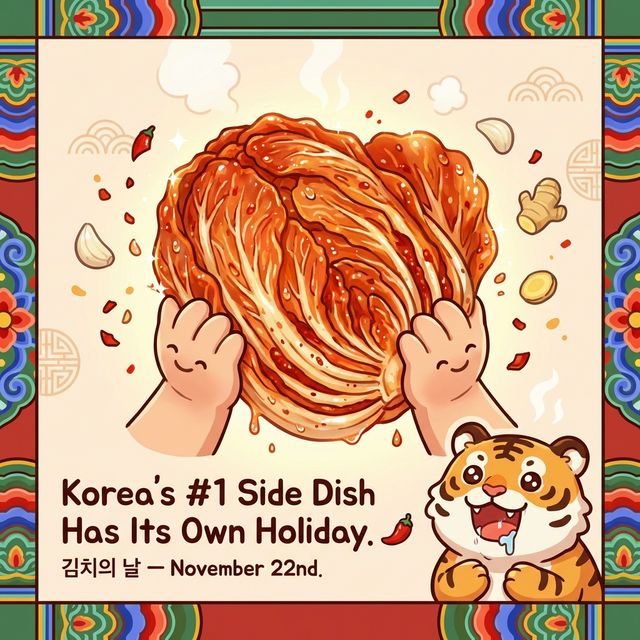
Korea’s #1 Side Dish Has Its Own Holiday. 🌶️
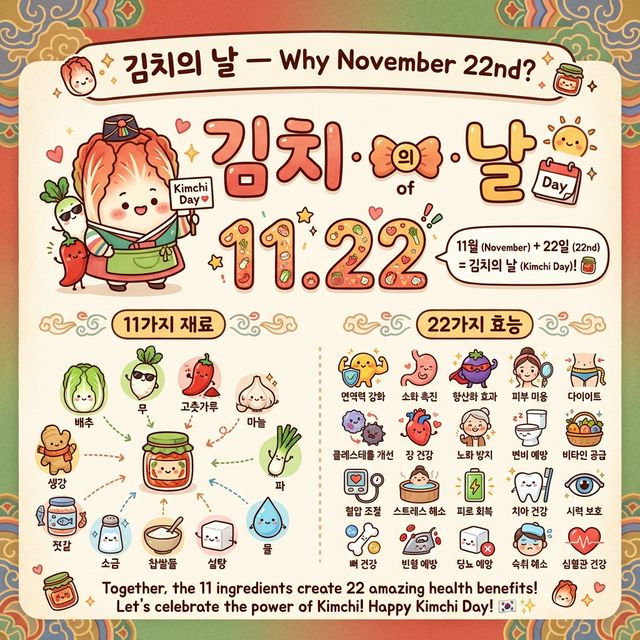
김치의 날 — Why November 22nd?
김치 (kimchi) = Korea’s iconic fermented vegetable dish. 의 (ui) = ’s (possessive). 날 (nal) = Day. Why November 22nd? The date is symbolic: 11 = the number of main ingredients in kimchi. 22 = the number of proven health benefits (immune support, antioxidants, digestion). Officially established as a legal anniversary in 2020. 🇰🇷
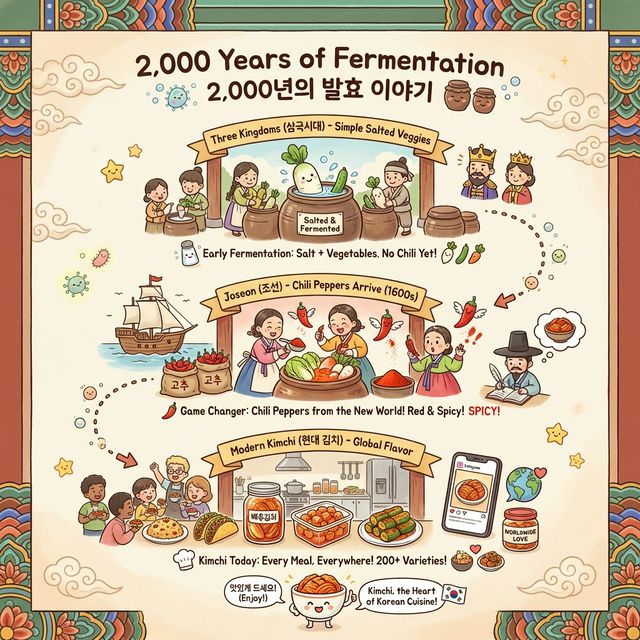
2,000 Years of Fermentation.
Kimchi’s history stretches back over 2,000 years: 🥬 Originally just salted vegetables — no chili peppers at all. 🌶️ Chili peppers arrived from the Americas via Japan in the 1600s — transforming kimchi into the fiery red icon we know today. ❄️ Gimjang (김장) — the tradition of making winter kimchi in bulk — was designated a UNESCO Intangible Cultural Heritage in 2013.
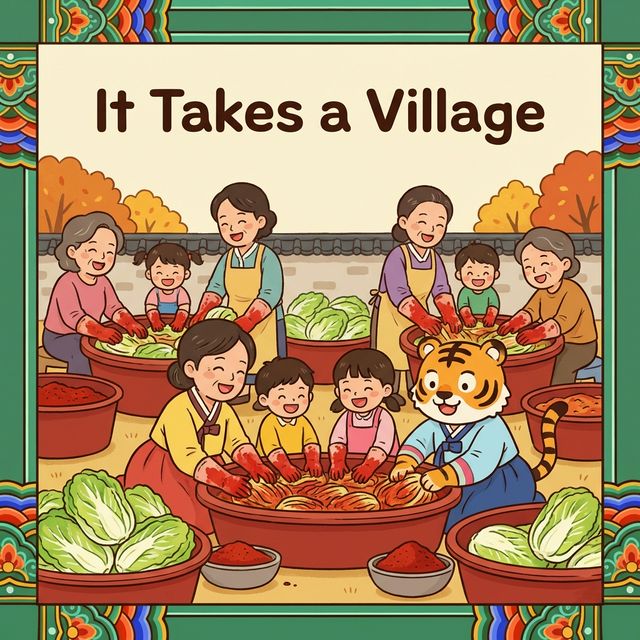
It Takes a Village.
김장 (gimjang) is Korea’s annual communal kimchi-making event. Every November, families gather to make hundreds of heads of cabbage into kimchi — enough to last the entire winter. It’s a massive operation: salting → seasoning → stuffing → storing. Neighbors help each other (품앗이), and the shared labor strengthens community bonds. UNESCO called it “a reaffirmation of Korean identity.” 🤝
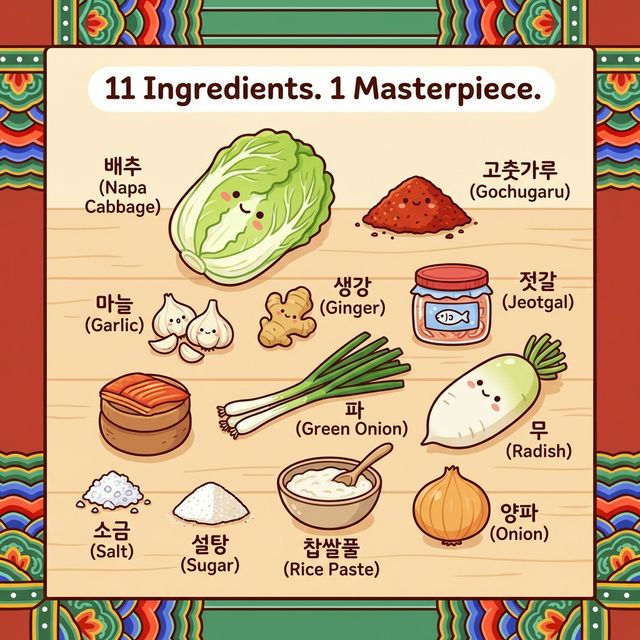
11 Ingredients. 1 Masterpiece.
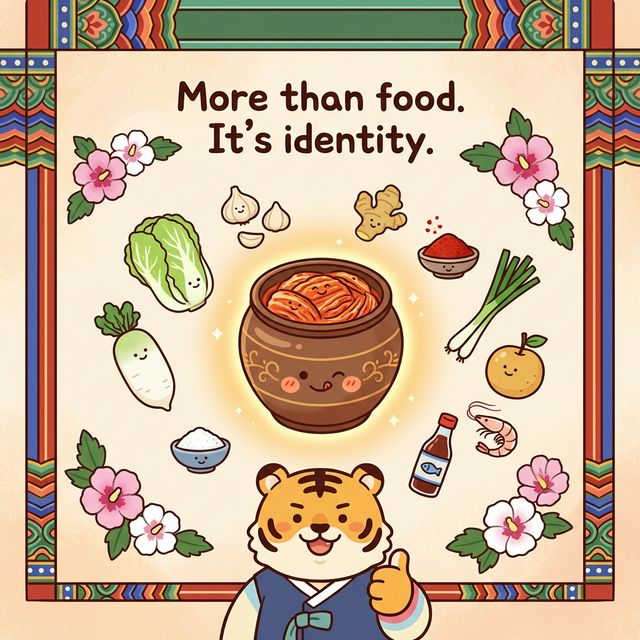
What goes into classic 배추김치: 🥬 배추 (napa cabbage) — the star 🌶️ 고춧가루 (gochugaru) — Korean chili flakes 🧄 마늘 (garlic) + 🫚 생강 (ginger) — the aromatics 🐟 젓갈 (jeotgal) — fermented seafood (the umami bomb) 🧅 파, 양파 (green onion, onion) — crunch and sweetness 🧂 소금 (salt) — the fermentation engine Plus rice paste, radish, and a touch of sugar. 🎨
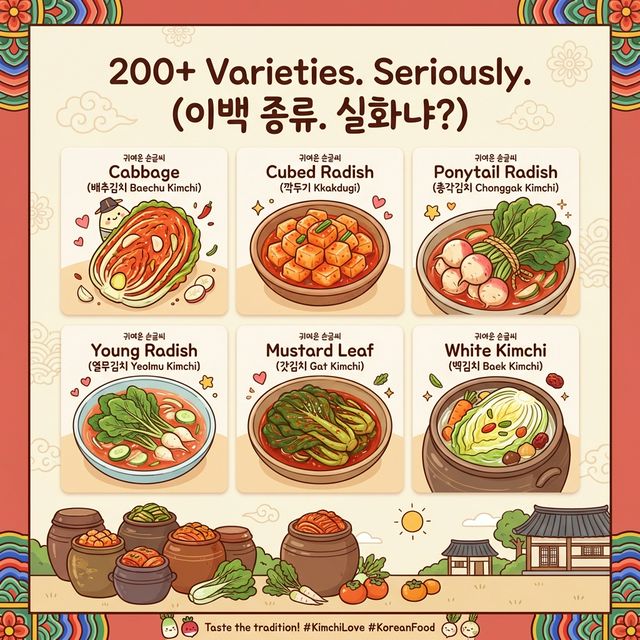
200+ Varieties. Seriously.
There are over 200 documented types of kimchi: 🟥 배추김치 — the classic. The queen. 🟧 깍두기 — crunchy cubed radish. Essential with 설렁탕. 🟩 총각김치 — whole baby radish with the stems on (“ponytail kimchi”). ⬜ 백김치 — white kimchi. All flavor, no spice. 🟪 갓김치 — mustard leaf. Southern specialty. Every region, season, and family has their own signature. 🗺️
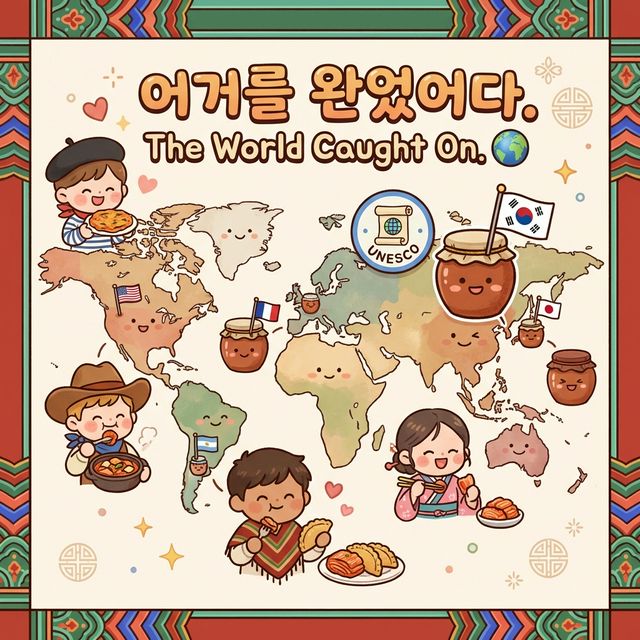
The World Caught On. 🌍
Kimchi has gone global: 📈 Korean kimchi exports hit $160M+ annually 🇺🇸 Several US states have declared their own “Kimchi Day” 🇦🇷 Argentina officially recognized Kimchi Day 🏆 TIME Magazine and others call it one of the world’s healthiest foods From side dish to global superfood — kimchi’s biggest chapter is still being written.
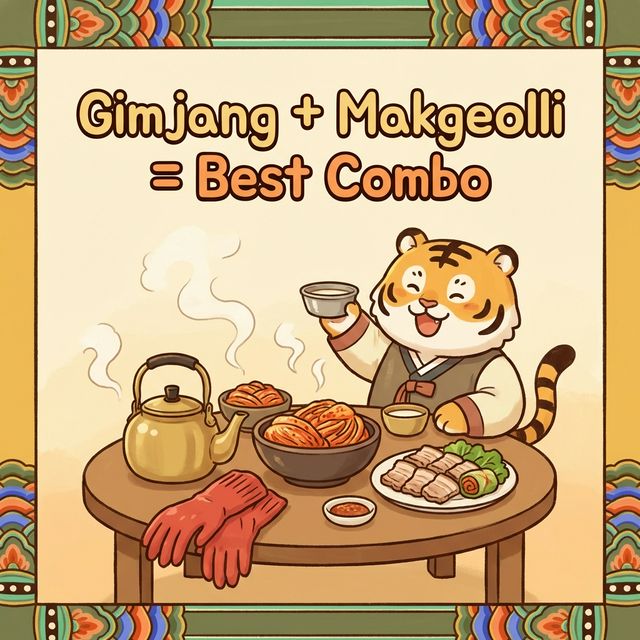
김장 + 막걸리 = 🤌
There’s an unwritten rule of 김장 season: After hours of communal kimchi-making, you must eat 보쌈 (boiled pork wraps) with freshly made kimchi — and wash it all down with Makgeolli. The tangy, fizzy Makgeolli cuts through the rich pork and spicy kimchi perfectly. It’s the reward. The ritual. The reason you showed up to help. 😄🍶
More than food. It’s identity.
What’s your kimchi spice level? Mild or 🔥🔥🔥? 👇
1 / 9