
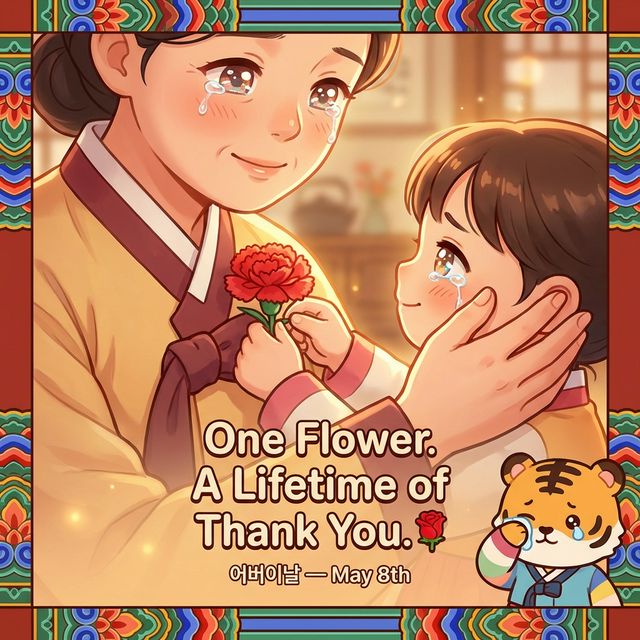
One Flower. A Lifetime of Thank You. 🌹
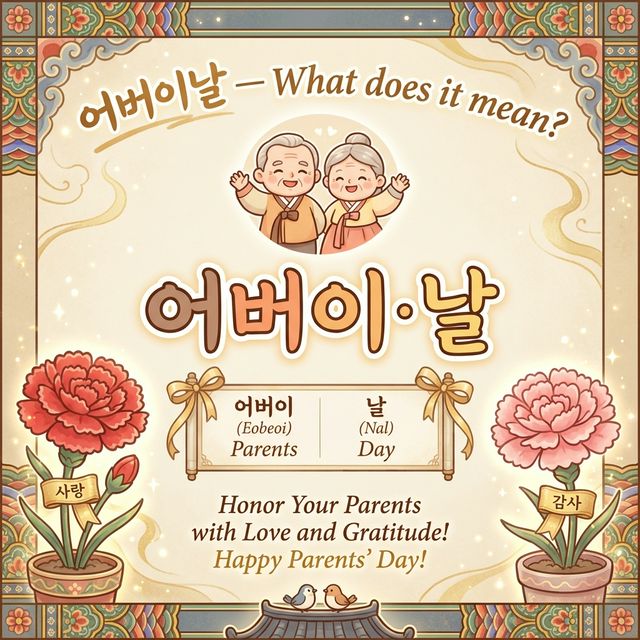
어버이날 — What does it mean?
A word only Korean has: 어버이 (eobeoyi) = Parents — a respectful, encompassing term for both mother and father together. 날 (nal) = Day. Unlike the West, Korea doesn’t separate Mother’s Day and Father’s Day. 어버이날 honors both parents on one day — May 8th. It’s not a public holiday, but it is one of the most emotionally important days in the Korean year. 🇰🇷
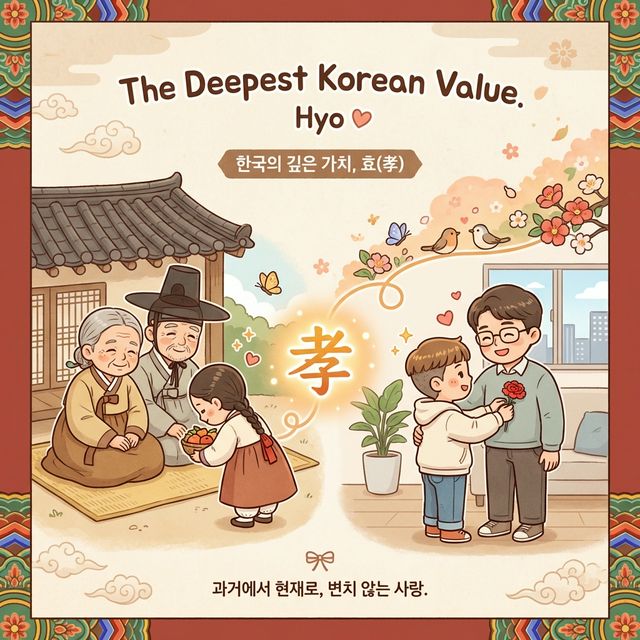
The Deepest Korean Value.
어버이날 is rooted in 효 (hyo / 孝) — filial piety. In Korean culture, there is no virtue higher than honoring your parents. 효 isn’t just respect — it’s lifelong devotion: 📖 One of the Five Relationships of Confucianism 🏠 Traditional Korean families lived multigenerally — caring for elders was duty and honor 🇰🇷 어버이날 was officially established on May 8, 1956 — originally as “어머니날” (Mother’s Day), expanded to both parents in 1973.
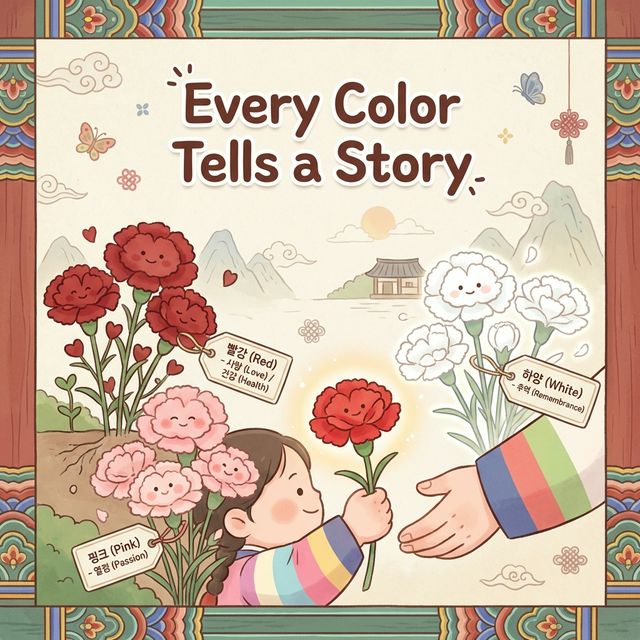
Every Color Tells a Story.
The 카네이션 (kanesyeon / carnation) is THE symbol of 어버이날: 🔴 빨간색 (Red) — Love, health, and gratitude for living parents 🩷 분홍색 (Pink) — Deep, passionate love ⬜ 하얀색 (White) — Remembrance and respect for parents who have passed Children pin carnations on their parents’ chests — or present them in bouquets. In schools, students make handmade paper carnations as gifts. ✂️🌹
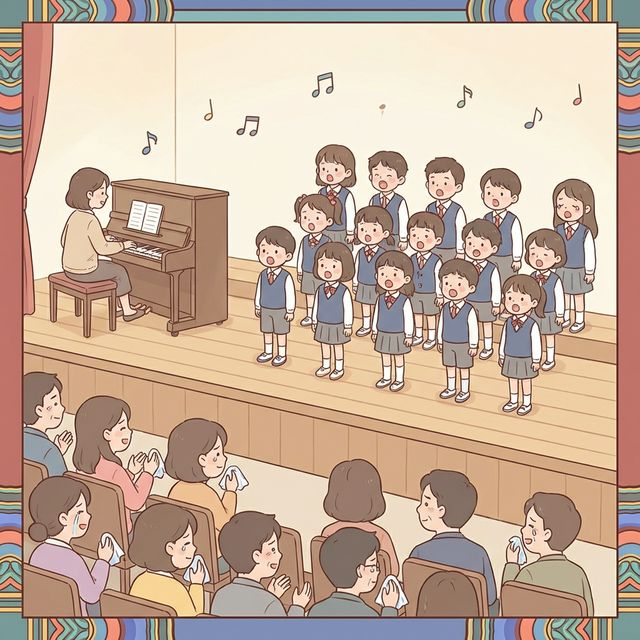
The Song That Makes Every Korean Cry.
Ask any Korean about 어머님 은혜 (“Mother’s Grace”) and watch their eyes water: 🎵 “높고 높은 하늘이라 말들 하지만, 나는 나는 높은 게 또 하나 있지…” (“They say the sky is the highest thing, but I know something even higher…”) Every Korean child learns this song. Every Korean parent has heard it. On 어버이날, schools hold assemblies where children sing it to their parents. Even tough Korean dads can’t hold it together. 😭🎶
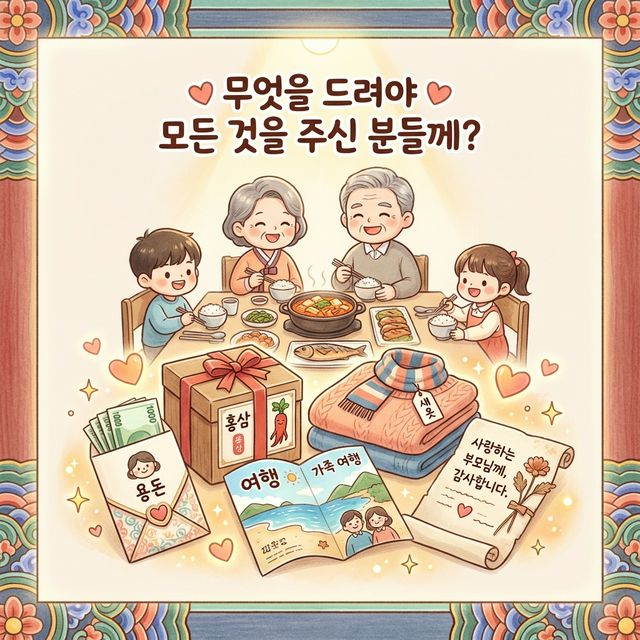
What Do You Give the People Who Gave Everything?
The most popular 어버이날 gift? 용돈 (yongdon) — spending money. 💰 It’s not impersonal — it’s practical Korean love: “Use this for whatever makes you happy.” Other popular gifts: 💊 홍삼 (hongsam) — red ginseng for health (the ultimate Korean care gift) 👔 New clothes — especially for parents who’d never buy for themselves ✈️ Travel — sending parents on a trip ✉️ 감사 편지 — a handwritten letter of gratitude (the one that hits hardest)
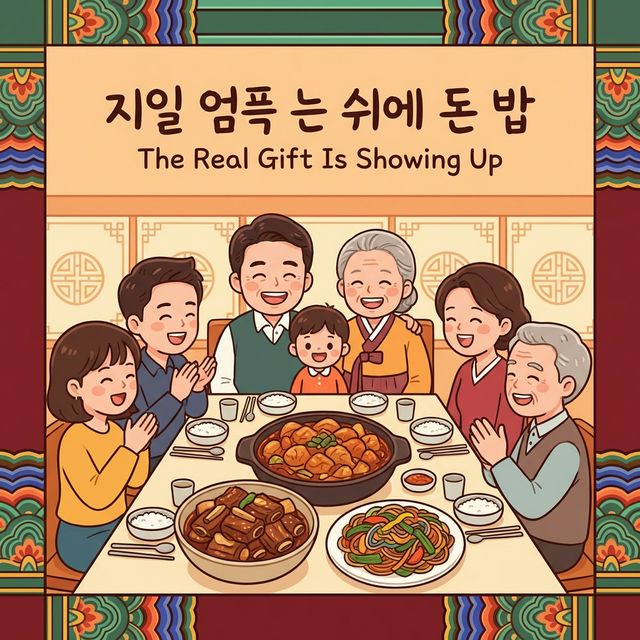
The Real Gift Is Showing Up.
For many Korean parents, the greatest gift is time: 🍽️ Adult children take parents out for a special dinner — the parents’ favorite restaurant 🏠 For those who live far away, a phone call or video call is expected 👨👩👧👦 The whole family gathers — siblings, spouses, grandchildren 📸 Family photos are taken — often the only time all year everyone’s together 어버이날 is less about things and more about presence. ❤️
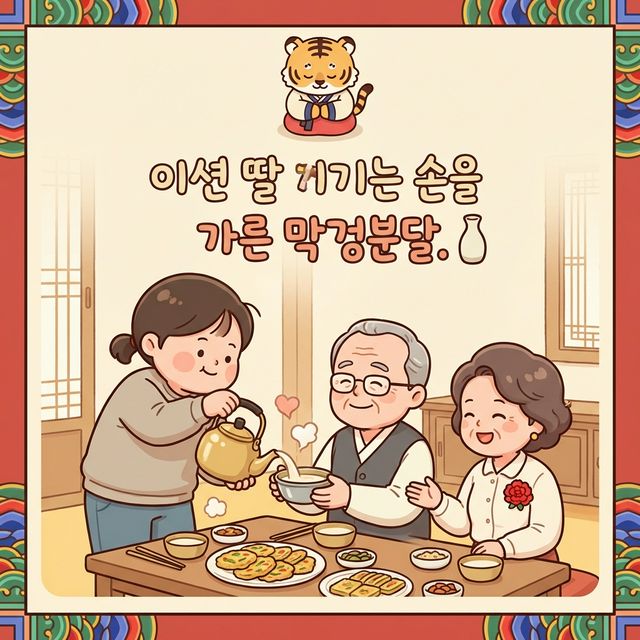
A Bowl for the Hands That Raised You. 🍶
In Korean tradition, you always pour for your elders — and receive with both hands. On 어버이날, pouring your parent a bowl of Makgeolli is a small act with deep meaning: 🙏 The pour says: “I respect you.” 🍶 The drink shared says: “I’m here.” 🌹 The carnation says: “Thank you for everything.” Some things don’t need words. 🍶❤️
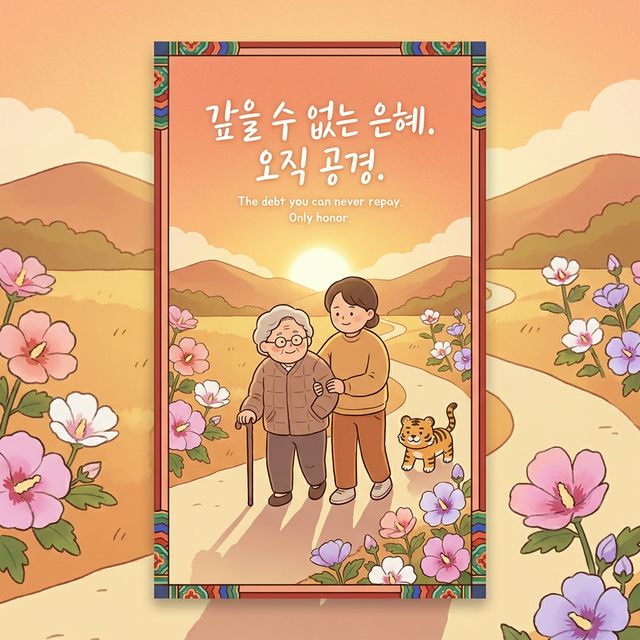
The debt you can never repay. Only honor.
Have you called your parents today? 🌹📞 👇
1 / 9