
The Admiral Who Never Lost a Battle. ⚓️
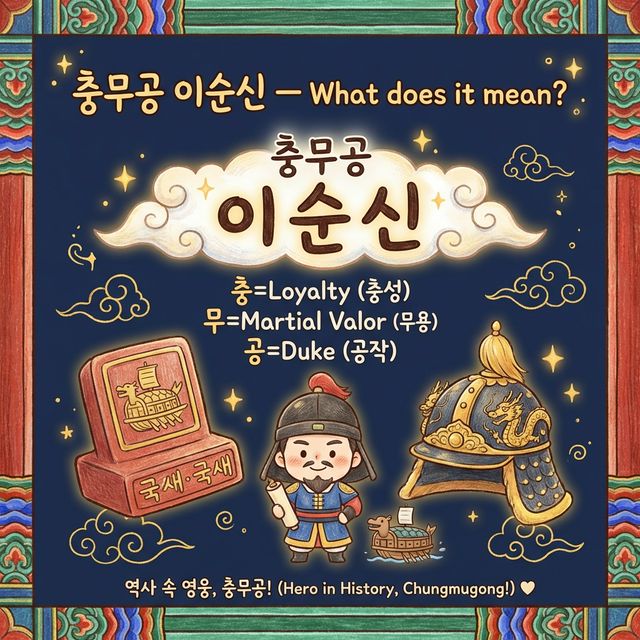
충무공 이순신 — What does it mean?
Breaking it down: 충무공 (Chungmugong / 忠武公) = His posthumous title: → 충 (chung) = Loyalty → 무 (mu) = Martial valor → 공 (gong) = Duke / Lord 이순신 (Yi Sun-sin / 李舜臣) = His personal name. “The Loyal and Valiant Lord Yi Sun-sin” — Korea’s greatest naval hero. Born: April 28, 1545 in Seoul (한양).
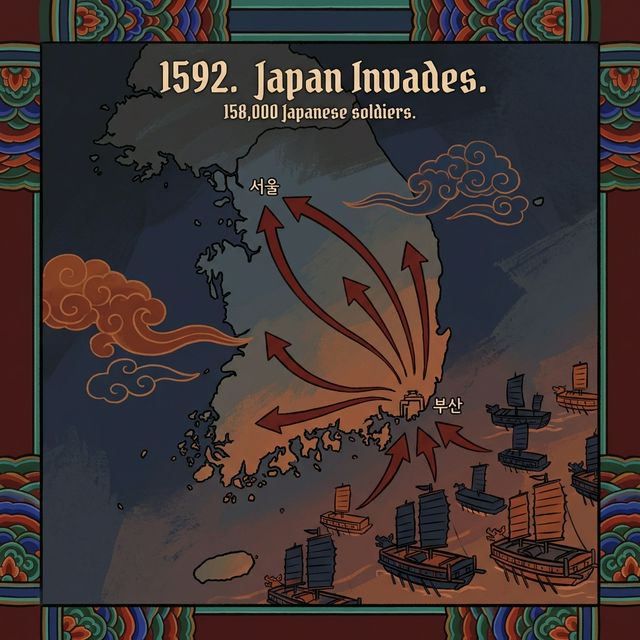
- Japan Invades.
In 1592, Toyotomi Hideyoshi launched a massive invasion of Korea — the 임진왜란 (Imjin War). 158,000 Japanese soldiers poured across the strait. Korea’s land army was overwhelmed. Seoul fell in just 20 days. But the sea? That was 이순신’s domain. With a tiny fleet and no military academy training, he would change the course of history.
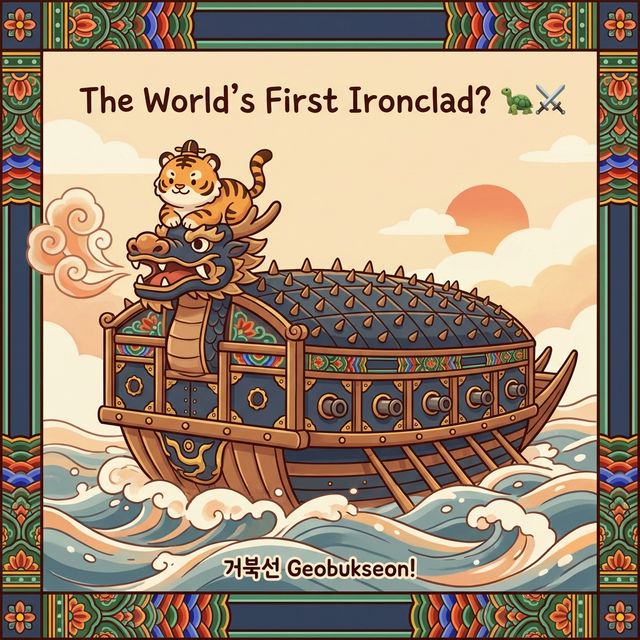
The World’s First Ironclad? 🐢⚔️
이순신’s secret weapon: the 거북선 (geobukseon / turtle ship). 🛡️ Spiked iron roof — boarding? Not today. 🐉 Dragon head prow — spewed smoke or fire to terrify enemies 💣 Cannons on all sides — no blind spots While debate continues on whether it was truly iron-plated, its design was centuries ahead of its time. It became a symbol of Korean ingenuity. 🇰🇷
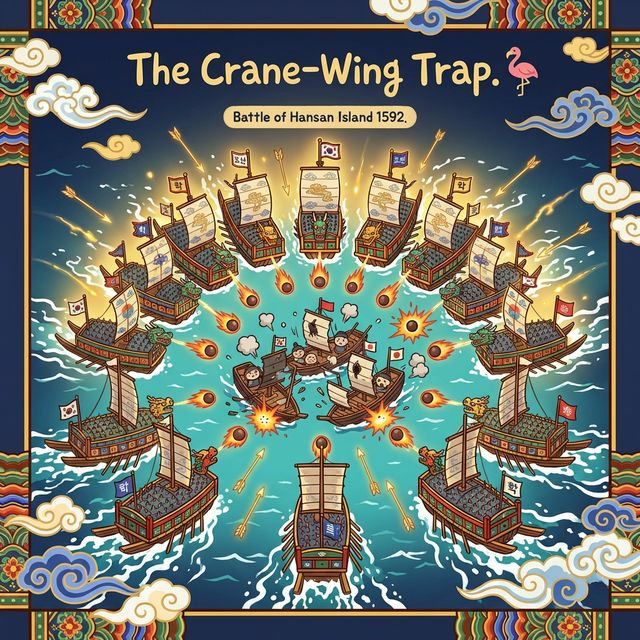
The Crane-Wing Trap. 🦩
이순신’s masterpiece: the Battle of Hansan Island (1592). He lured the Japanese fleet into open water, then sprung his 학익진 (hakikjin) — a crane-wing formation. Korean ships fanned out like the wings of a crane, surrounding the enemy fleet. Result: 47 Japanese ships destroyed. Korean losses: zero ships. It’s considered one of the greatest naval victories in world history.
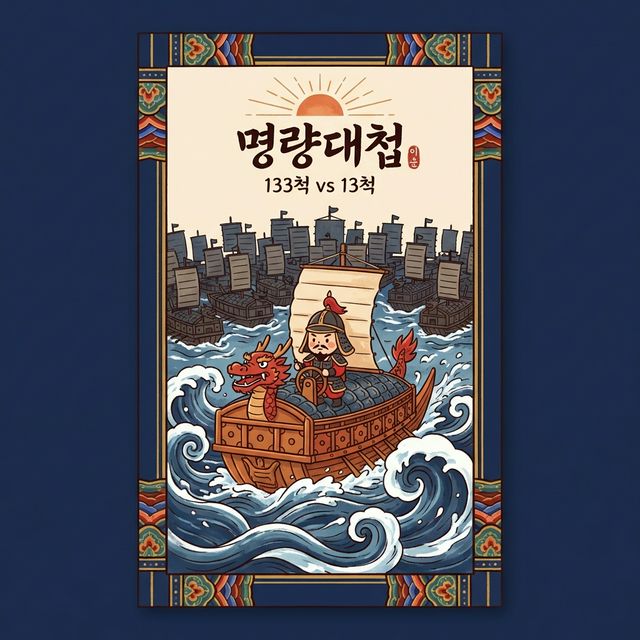
13 vs. 133.
His most legendary battle. After political betrayal left his fleet destroyed, 이순신 had only 13 ships against 133 Japanese warships. His famous diary entry: “신에게는 아직 12척의 배가 있습니다” — “I still have twelve ships.” Using the narrow strait and powerful currents of 명량해협 to his advantage, he destroyed 31 Japanese ships without losing a single vessel. It’s the battle immortalized in the 2014 film 명량 — the highest-grossing Korean film of all time.
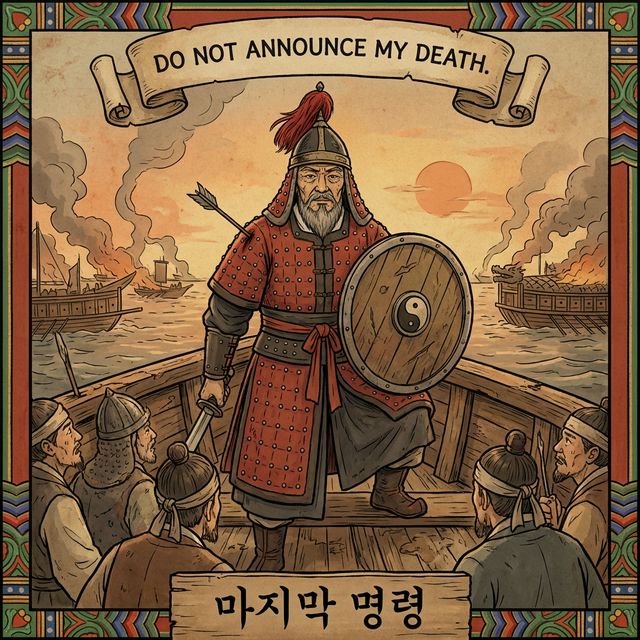
“Do Not Announce My Death.”
On December 16, 1598, in the final battle of the war, a stray bullet struck 이순신. His last words: “전쟁이 급하니 나의 죽음을 알리지 마라” — “The battle is at its height — do not announce my death.” His men fought on, believing their admiral still commanded. Korea won. He died as he lived: putting the mission above himself.
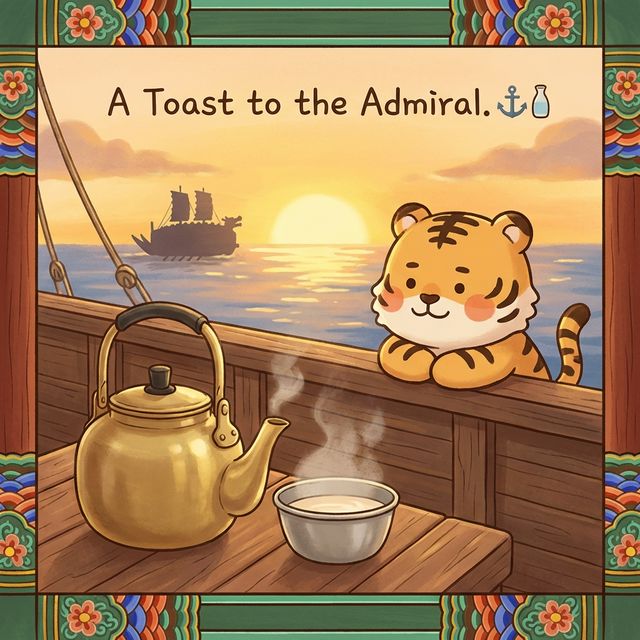
A Toast to the Admiral. ⚓🍶
이순신 was also known for deeply caring about his sailors’ well-being. His war diary, 난중일기 (Nanjung Ilgi), is a UNESCO Memory of the World — filled with military strategy, but also worries about food, morale, and his mother. Today, 통영 (Tongyeong) — the city named after his headquarters — is famous for its seafood and traditional Makgeolli. Pour one for the admiral. ⚓🍶
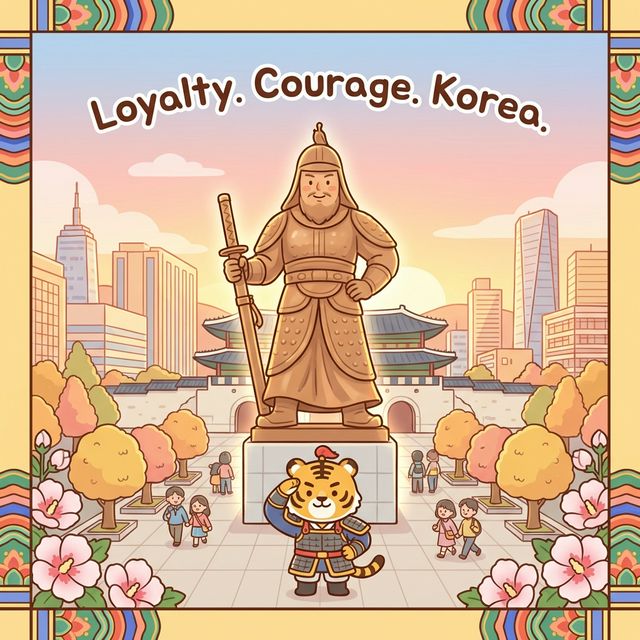
Loyalty. Courage. Korea.
Have you visited his statue in Gwanghwamun? 🗡️ 👇
1 / 9