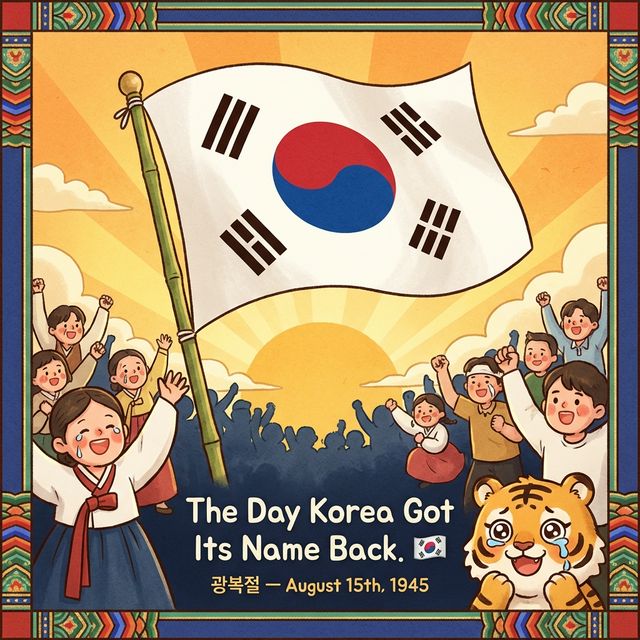
The Day Korea Got Its Name Back. 🇰🇷
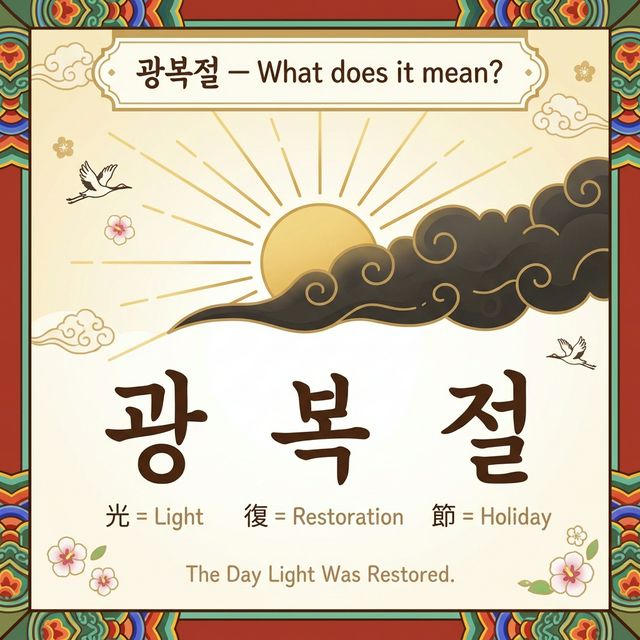
광복절 — What does it mean?
The name is deeply poetic: 광 (gwang / 光) = Light. 복 (bok / 復) = Restoration / Recovery. 절 (jeol / 節) = Holiday / Day. “The Day Light Was Restored” — the day Korea reclaimed its sovereignty after 35 years of Japanese colonial rule (1910–1945). Celebrated on August 15th — a national public holiday. 🌅
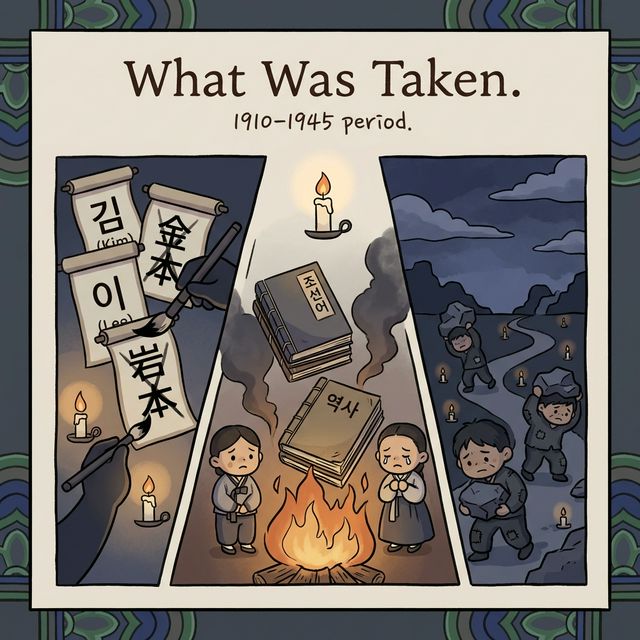
What Was Taken.
From 1910 to 1945, Japan colonized Korea: 🚫 Korean language banned in schools 📛 Koreans forced to adopt Japanese names (창씨개명) 📚 Korean history books destroyed 👷 Hundreds of thousands subjected to forced labor 🕊️ An estimated 200,000 women forced into sexual slavery (“comfort women”) Korea didn’t just lose territory — it nearly lost its identity.
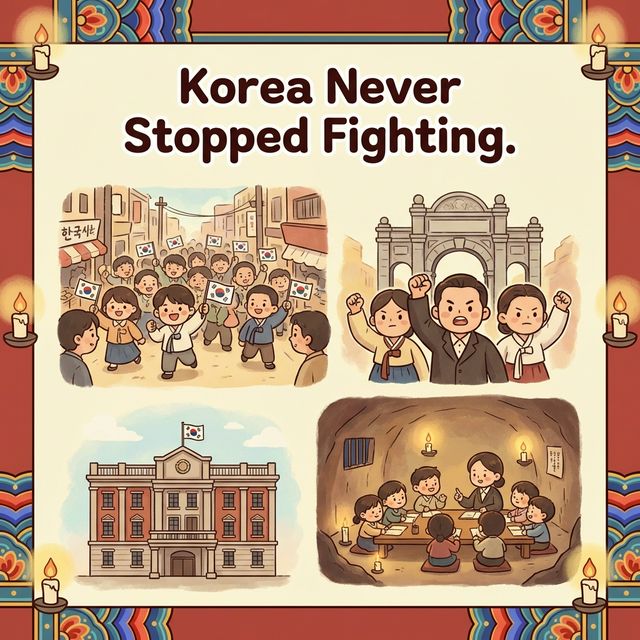
Korea Never Stopped Fighting.
Despite brutal suppression, Koreans resisted for 35 years: ✊ 삼일절 (1919) — 2 million Koreans in the streets 🏛️ 대한민국 임시정부 — Korean Provisional Government, established in Shanghai (1919) 📖 Underground Korean language schools kept 한글 alive 🗡️ Armed resistance groups fought across Manchuria and China The flame never went out. 🔥
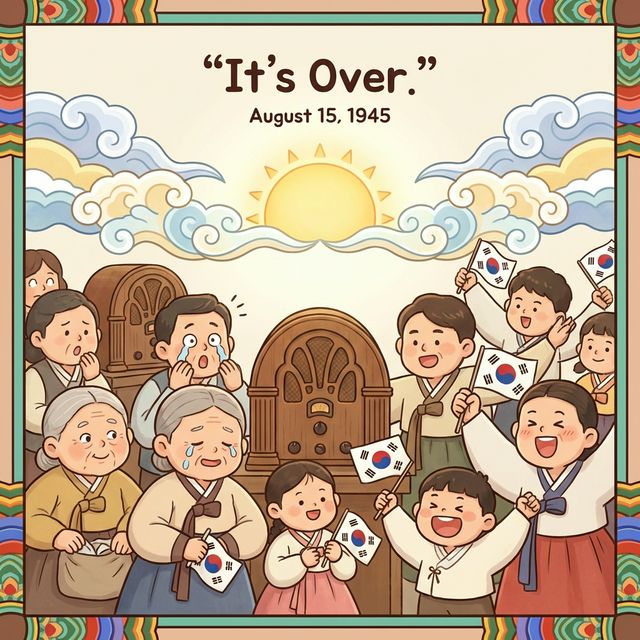
“It’s Over.”
On August 15, 1945, Japan surrendered to the Allied forces, ending World War II. Across Korea, people poured into the streets — laughing, crying, waving Taegeukgi they’d hidden for decades. Korean names were spoken aloud again. Korean songs were sung publicly. A nation of 25 million people exhaled — and began to breathe as Korea again.
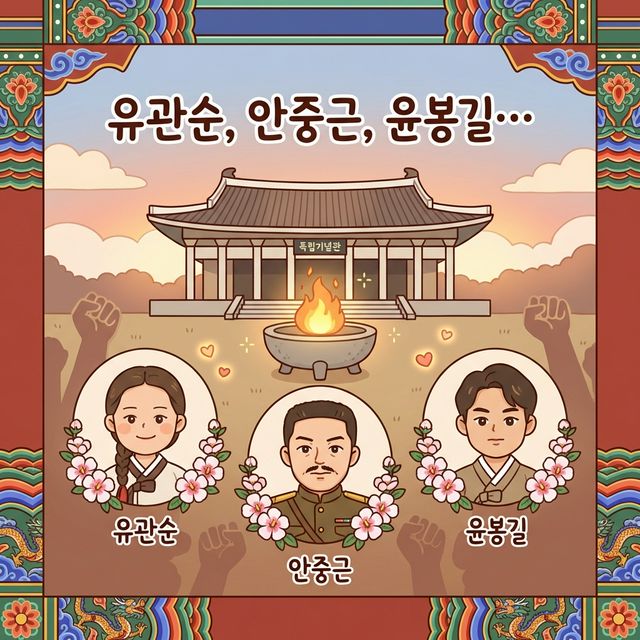
유관순, 안중근, 윤봉길…
Liberation came at an enormous price: 🕊️ 유관순 (Yu Gwan-sun) — died in prison at 17 🎯 안중근 (An Jung-geun) — assassinated Japanese leader Itō Hirobumi, executed at 30 💣 윤봉길 (Yun Bong-gil) — bombed a Japanese military ceremony in Shanghai, executed at 24 Thousands of named and unnamed heroes gave everything. 광복절 is their day, too. 🇰🇷
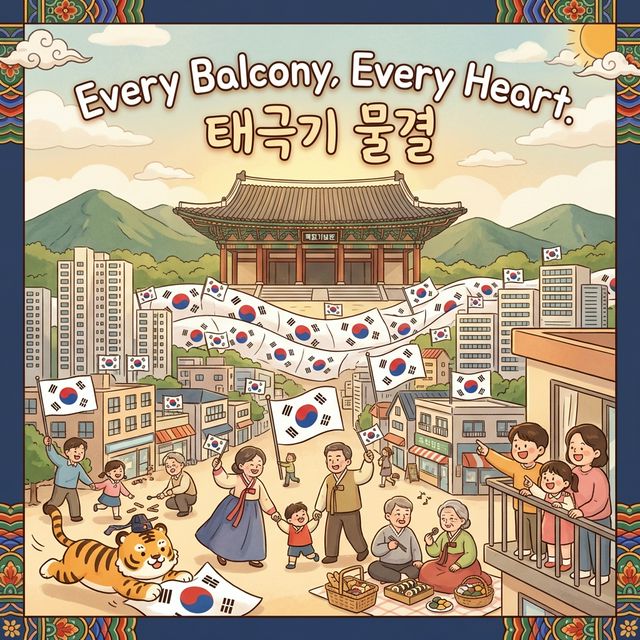
Every Balcony, Every Heart.
On 광복절, Korea lights up in red, white, and blue: 🏢 Taegeukgi hung from every home and building (by tradition and sometimes by law) 🎖️ Official ceremony at 독립기념관 (Independence Hall) in Cheonan 📺 TV specials, films, and documentaries about the independence movement 🚶 Families visit historical sites — 서대문 형무소 (Seodaemun Prison), memorials, and museums
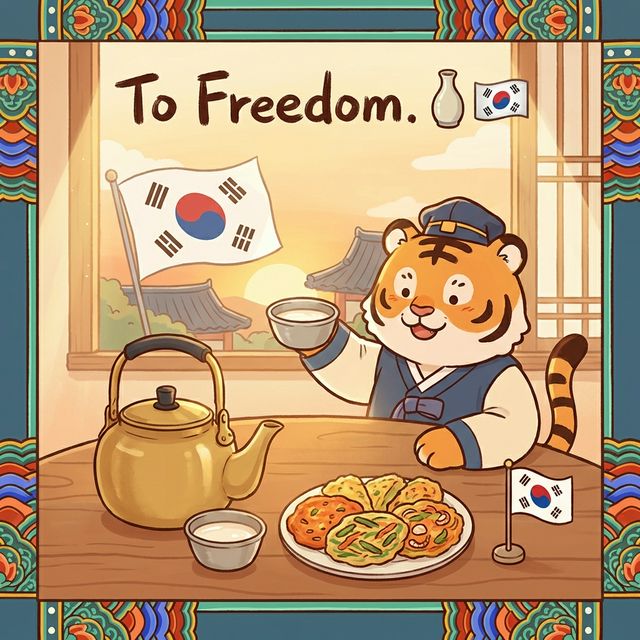
To Freedom. 🍶🇰🇷
Makgeolli is Korea’s oldest and most Korean drink — fitting for Korea’s most Korean holiday. During the occupation, Japanese authorities promoted their own alcohol over Makgeolli. The fact that Makgeolli survived, thrived, and is now a global symbol of Korean culture is its own form of 광복. Raise a bowl for the ancestors who fought to keep Korea Korean. 🍶
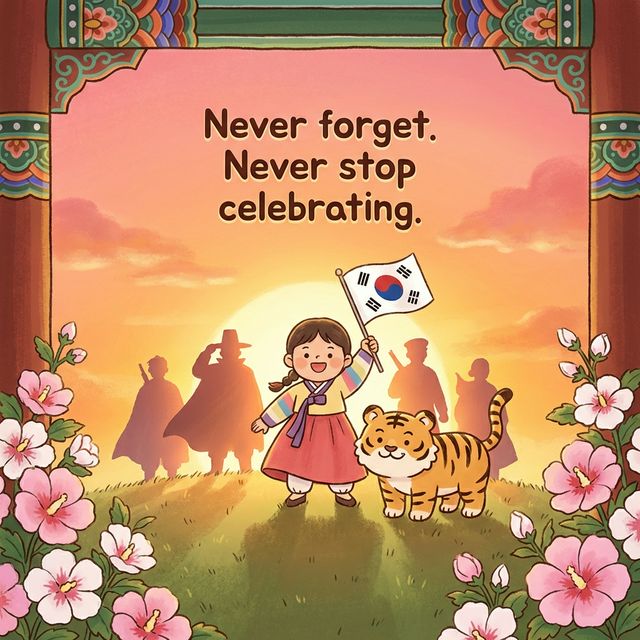
Never forget. Never stop celebrating.
What does freedom mean to you? 🇰🇷 👇
1 / 9