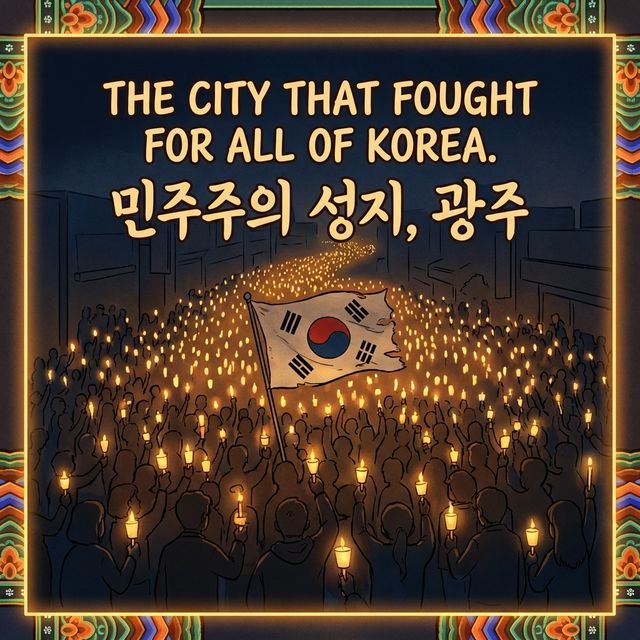
The City That Fought for All of Korea. 🕯️
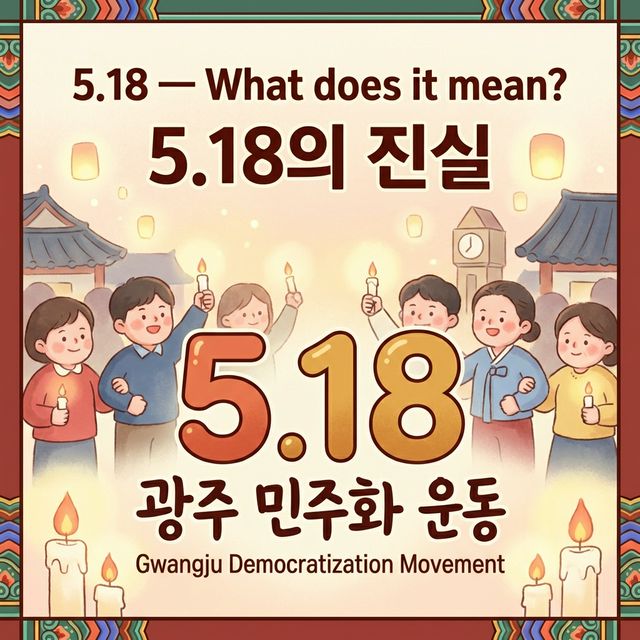
5.18 — What does it mean?
The date tells the story: 5.18 = May 18th — the day the uprising began. 광주 (Gwangju) = The city where it happened. 민주화 (minjuhwa / 民主化) = Democratization. 운동 (undong / 運動) = Movement. Now officially a national memorial day, honoring the citizens of Gwangju who stood up against military dictatorship in May 1980.
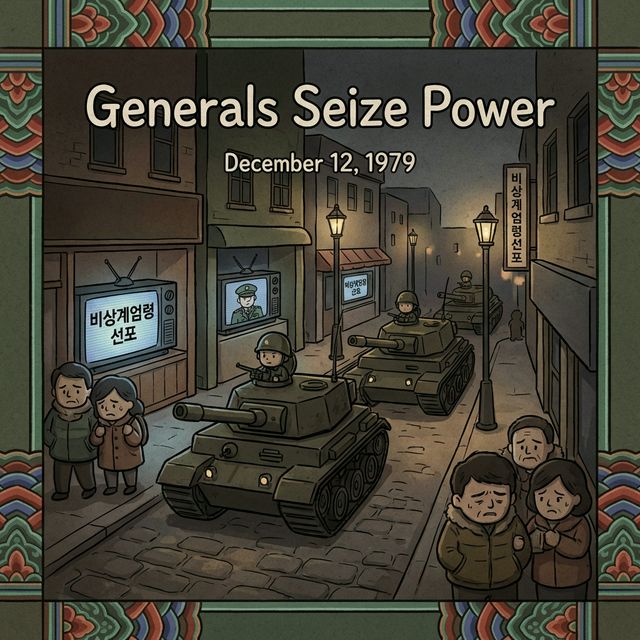
Generals Seize Power.
In December 1979, after President Park Chung-hee’s assassination, Korea hoped for democracy. Instead, General 전두환 (Chun Doo-hwan) staged a military coup on December 12, 1979. By May 1980, he expanded martial law nationwide — closing universities, banning political activity, and arresting opposition leaders. Gwangju said: No.
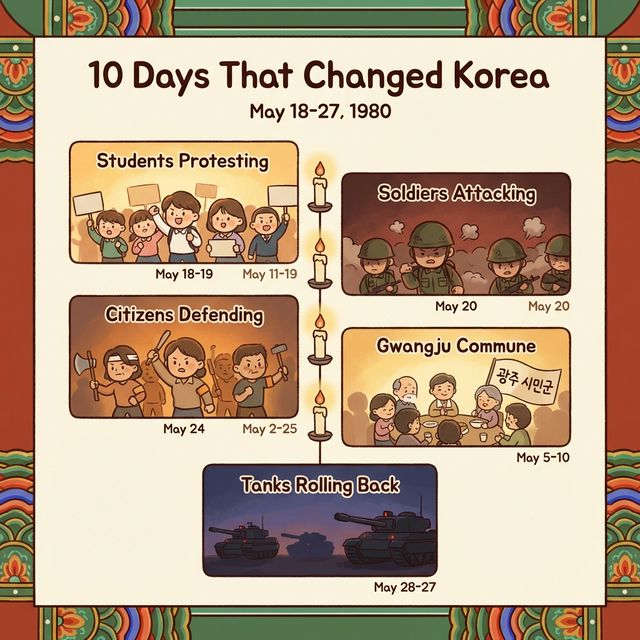
10 Days That Changed Korea.
May 18: Students protest martial law. Paratroopers attack with bayonets and batons. May 19–20: Outraged citizens join. Gwangju becomes a full civilian uprising. May 21–26: The military withdraws. Citizens self-govern in the “Gwangju Commune” — maintaining order, sharing food, caring for the wounded. May 27: Tanks roll back in. The uprising is crushed. Official death toll: ~165. Actual toll: believed to be much higher.
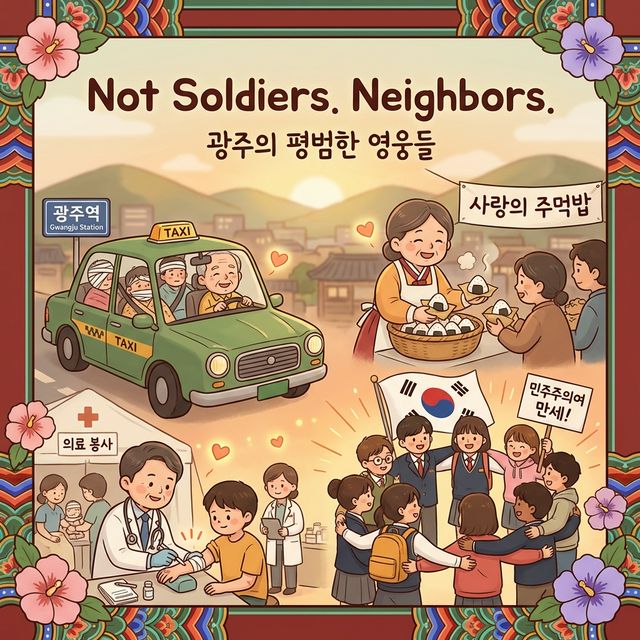
Not Soldiers. Neighbors.
The heroes of 5.18 weren’t politicians or generals — they were ordinary people: 🚕 Taxi drivers formed convoys to transport the wounded 🍙 Mothers made 주먹밥 (rice balls) to feed protesters 🩺 Doctors and nurses treated injuries despite personal risk 📸 Journalist 위르겐 힌츠페터 (Jürgen Hinzpeter) smuggled footage to the world An entire city chose conscience over safety.
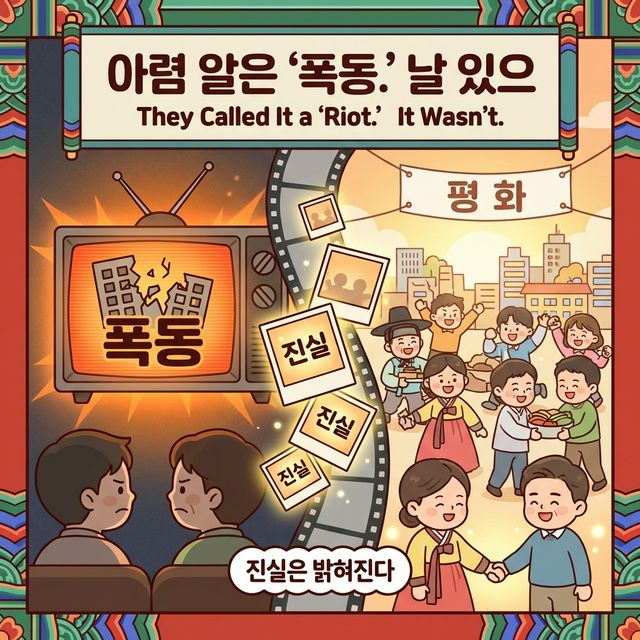
They Called It a “Riot.” It Wasn’t.
The military government censored everything: 📺 Media was ordered to call it a “communist riot” 🚫 Gwangju was sealed off — no phones, no press 🗑️ Evidence was destroyed, bodies hidden But the truth survived — in hidden photographs, smuggled film, and the memories of survivors. In 1996, Chun Doo-hwan was convicted of treason and insurrection, and May 18th became a national memorial day.
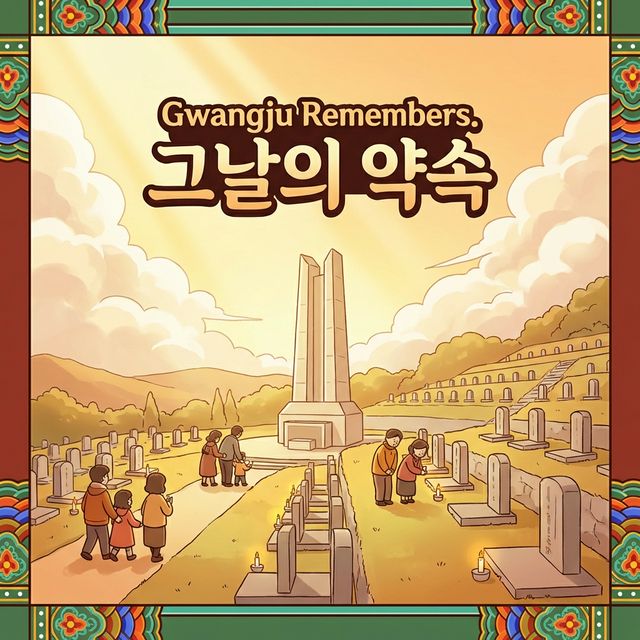
Gwangju Remembers.
The 국립 5.18 민주묘지 (5.18 National Cemetery) stands on Mudeungsan (무등산) hillside in Gwangju: 🪦 Those who fell are honored with the title 민주열사 (democratic martyrs) 🎖️ Every May 18th, a national ceremony is held 🎬 The 2017 film 택시운전사 (A Taxi Driver) brought the story to a global audience Gwangju’s sacrifice became the seed of Korean democracy. 🌱
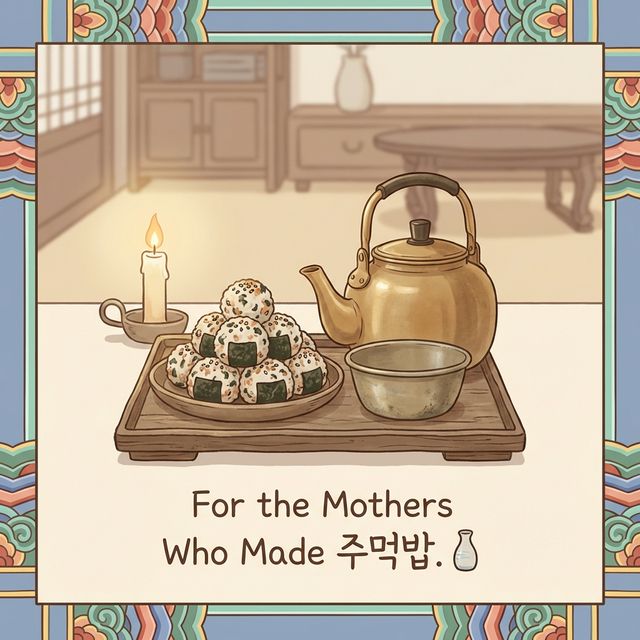
For the Mothers Who Made 주먹밥. 🍶
During the 10 days, Gwangju’s mothers made thousands of 주먹밥 — simple rice balls — to keep people fed. It was an act of defiance through nourishment. Today, 주먹밥 is a symbol of 5.18 — solidarity compressed into a fistful of rice. Share a bowl of Makgeolli for the city that fed a revolution. 🕯️🍶
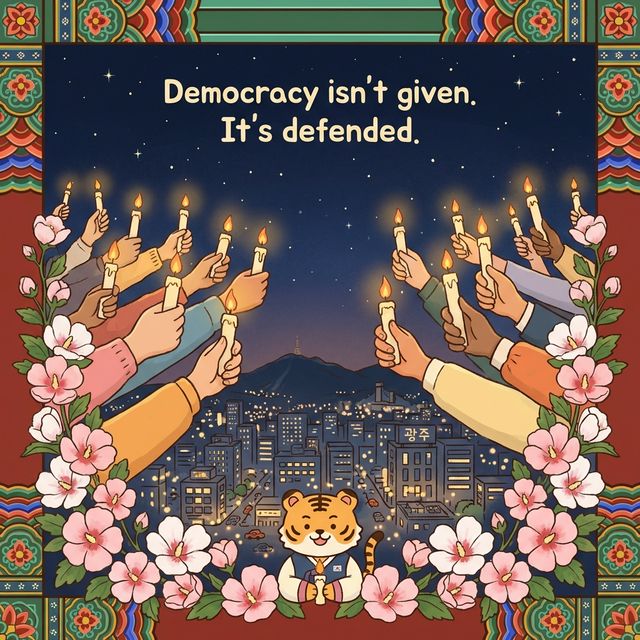
Democracy isn’t given. It’s defended.
What would you stand up for? 🕯️ 👇
1 / 9