
A King vs. His Own Court. For the People. 👑
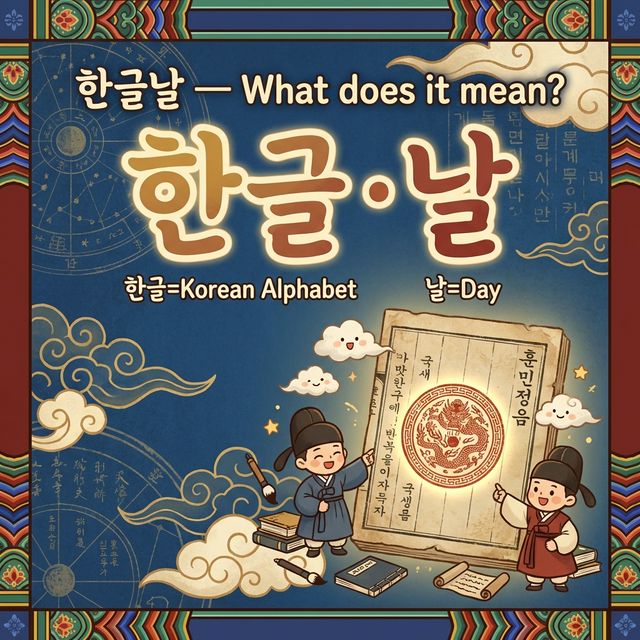
한글날 — What does it mean?
Simple and powerful: 한글 (Hangeul) = The Korean alphabet. 날 (nal) = Day. On October 9, 1446, King Sejong officially promulgated the 훈민정음 (Hunminjeongeum) — “The Correct Sounds for the Instruction of the People.” It was a revolutionary act: a king creating a writing system for commoners, against the wishes of his own elite scholars. 📜
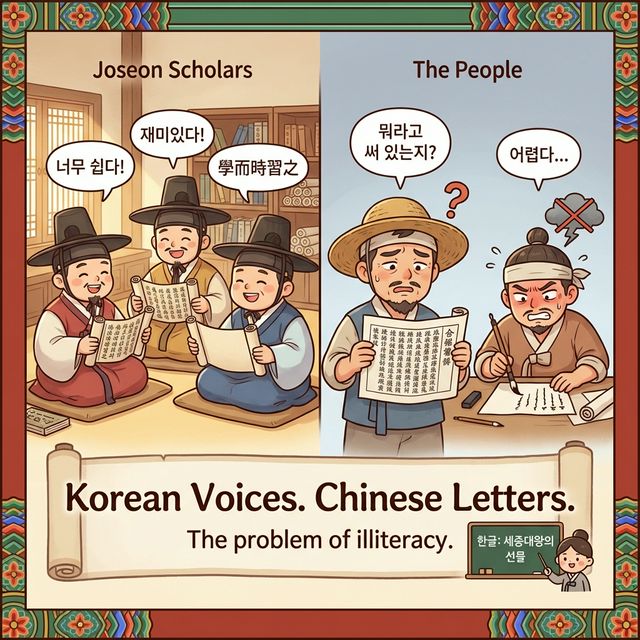
Korean Voices. Chinese Letters.
Before 1443, Korea had no native writing system. Everything was written in 한자 (hanja / Chinese characters): 📜 Laws, contracts, and court documents — inaccessible to most people 🎓 Only 양반 (yangban / aristocrats) could read — about 1% of the population 📵 Women, farmers, merchants, and soldiers were effectively voiceless Korea spoke Korean but wrote in someone else’s script. 🚫
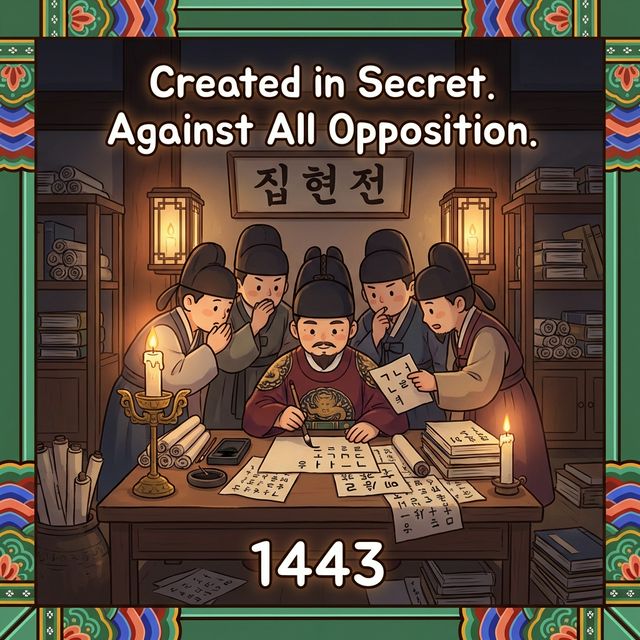
Created in Secret. Against All Opposition.
In 1443, King Sejong completed his new alphabet — developed it personally. But his own scholars were furious: 📣 최만리 (Choe Manri) led a formal protest: “Only barbarians create their own scripts!” 📣 The elite feared losing their monopoly on knowledge 📣 China might view it as an insult Sejong didn’t care. He’d made a promise to his people. 👑
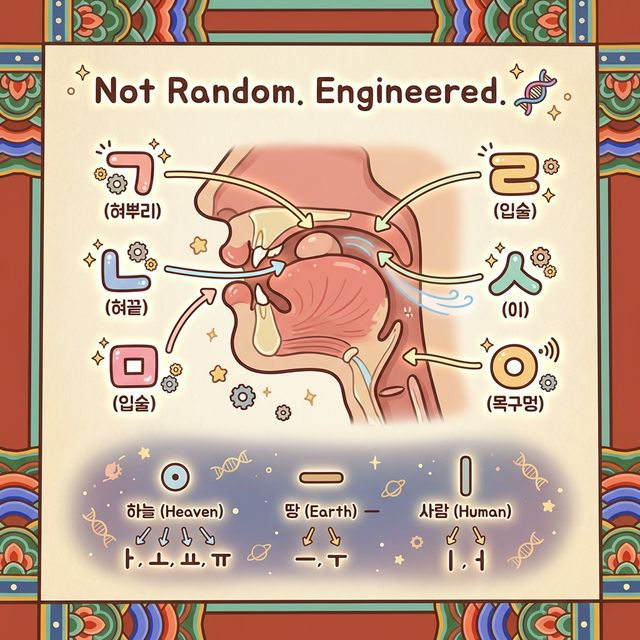
Not Random. Engineered. 🧬
Unlike most alphabets that evolved randomly over centuries, Hangul was deliberately engineered: 🗣️ Consonants are shaped like the mouth position that creates the sound 🌍 Vowels are based on three cosmic elements: · (human), ㅡ (earth), ㅣ (heaven) 📐 Letters combine into syllable blocks — compact and efficient Linguists worldwide call it one of the most scientifically designed writing systems ever created. 🏆
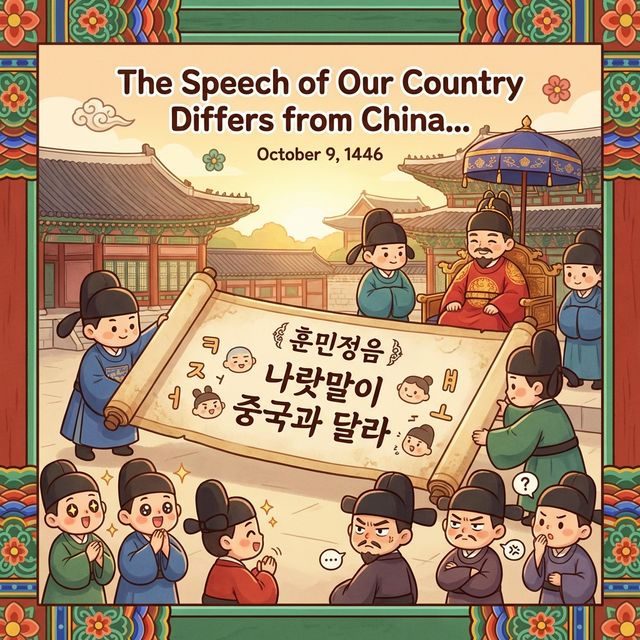
“The Speech of Our Country Differs from China…”
On October 9, 1446, Sejong published the 훈민정음 해례본 — the explanatory guide. The opening line is famous: “나랏말이 중국과 달라…” “Because the speech of this country is different from that of China, my new letters are for the people to express themselves easily in writing.” His promise: a “wise man can learn it in a morning; even a fool in ten days.” 📖
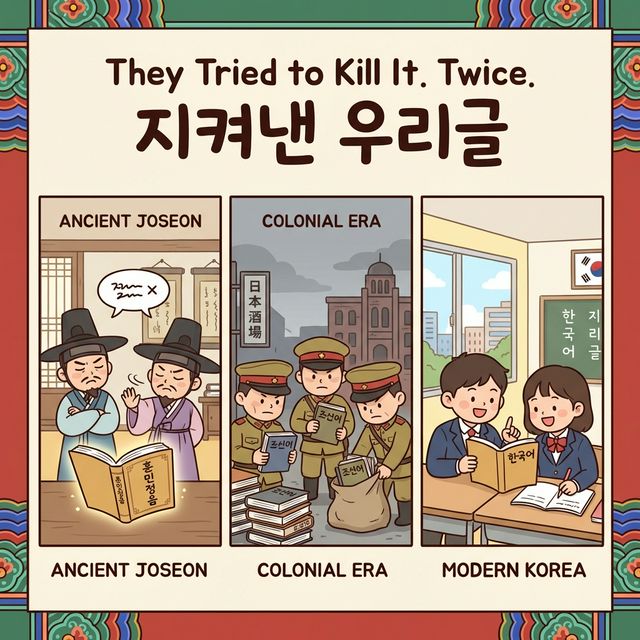
They Tried to Kill It. Twice.
Hangul’s road was not easy: ❌ Joseon elites dismissed it as 언문 (eonmun, “vulgar script”) for centuries 🔥 In 1504, King Yeonsangun banned Hangul after people used it to criticize him 🇯🇵 During Japanese occupation, teaching Hangul was criminalized — teachers were imprisoned ✊ But Korean independence activists and the 조선어학회 (Korean Language Society) kept it alive in secret Hangul survived because regular Koreans refused to let it die. 🔥
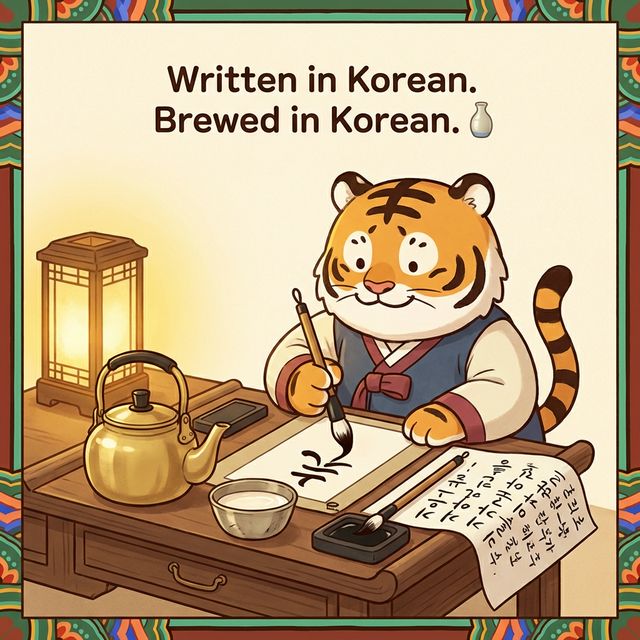
Written in Korean. Brewed in Korean. 🍶
막걸리 is a pure Korean word — 막 (roughly) + 거르다 (to filter). Not Chinese characters. Not borrowed from another language. Just Korean. Like Hangul itself, Makgeolli is humble, accessible, and deeply Korean. Pour one for the king who decided that everyone deserves a voice. 📝🍶
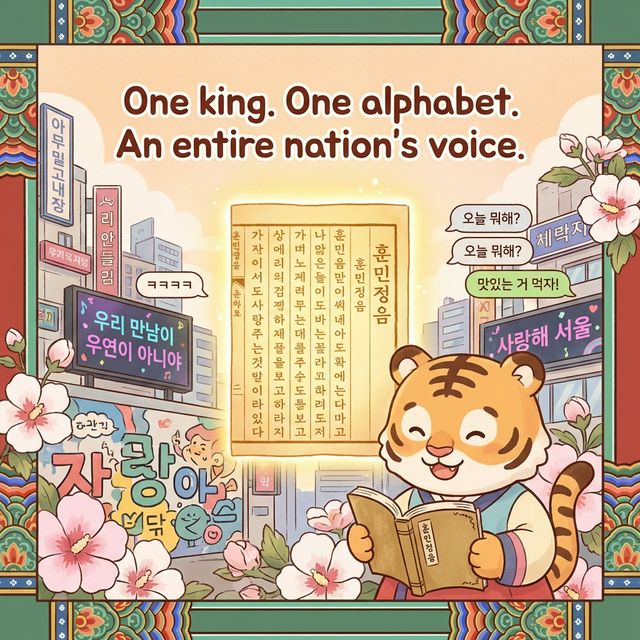
One king. One alphabet. An entire nation’s voice.
What would Korea be without Hangul? 🔤🇰🇷 👇
1 / 9