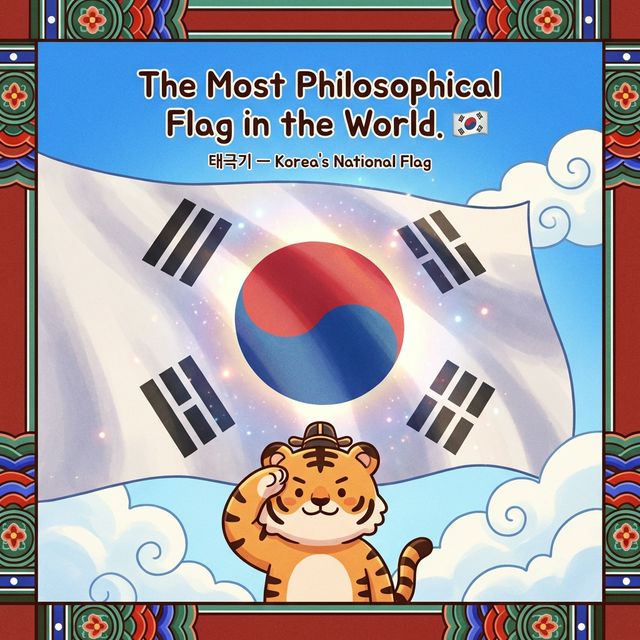
The Most Philosophical Flag in the World. 🇰🇷
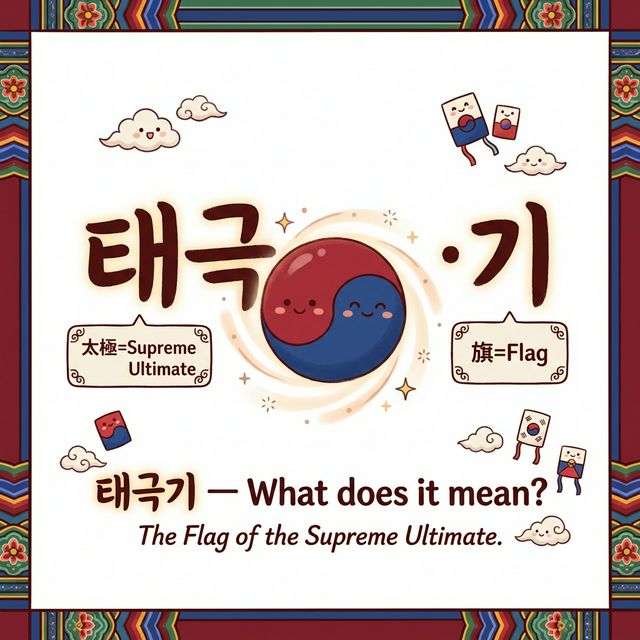
태극기 — What does it mean?
The name reveals the philosophy: 태극 (taegeuk / 太極) = The Supreme Ultimate — the origin of all things in East Asian cosmology. 기 (gi / 旗) = Flag. “The Flag of the Supreme Ultimate.” Most flags represent territory or power. Korea’s flag represents a cosmological worldview — the balance of all forces in the universe. 🌌
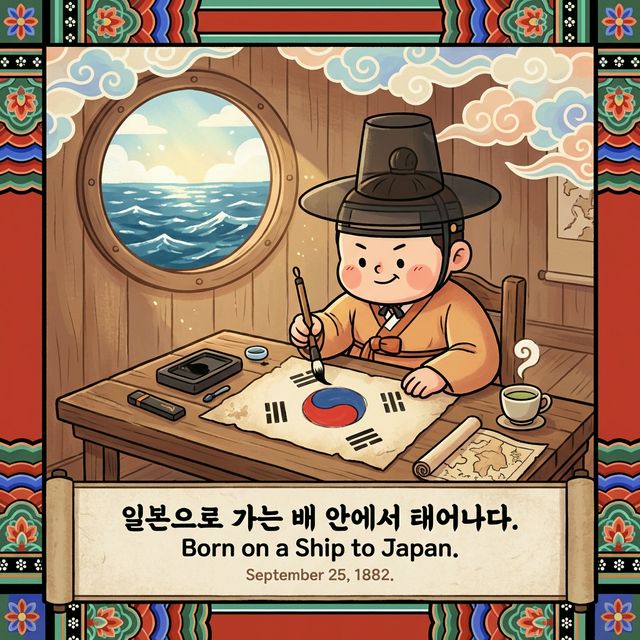
Born on a Ship to Japan.
In 1882, Korea needed a national flag for its first modern treaty — the 조미수호통상조약 (Korea-US Treaty). King 고종 (Gojong) ordered a flag to be created based on the 태극팔괘도 (Taegeuk and Eight Trigrams). 박영효 (Park Yeong-hyo), on a diplomatic mission to Japan, refined the design aboard a ship. On September 25, 1882, the Taegeukgi was first flown. On March 6, 1883, King Gojong officially proclaimed it the national flag. 🇰🇷
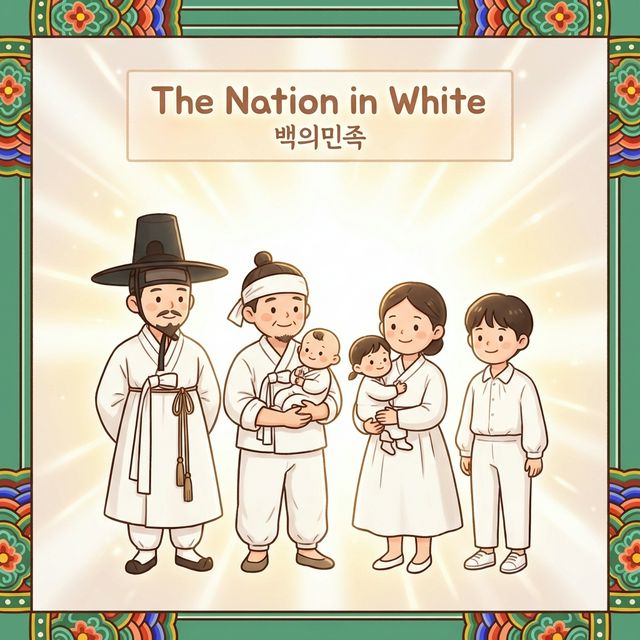
The Nation in White.
The white background (흰 바탕) isn’t empty — it’s everything: ⬜ Peace — Korea has called itself 평화 (peace)-loving since antiquity ⬜ Purity — clean intentions, untainted character ⬜ 백의민족 (baeguiminjok) — “The people who wear white” For centuries, Koreans wore white clothing as a cultural identity marker. The white background is the Korean spirit made visible. 🤍
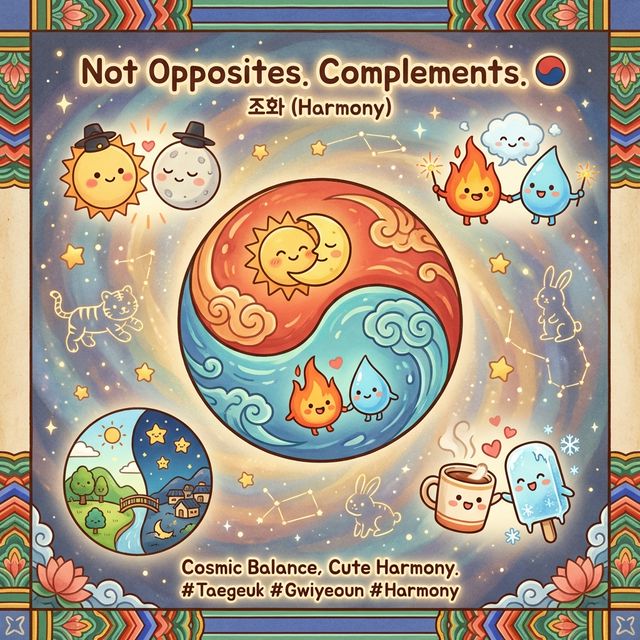
Not Opposites. Complements. ☯️
The central 태극 circle isn’t just decoration — it’s Korean philosophy: 🔴 빨강 (Red / 양) = Positive cosmic forces — fire, light, heat, creation 🔵 파랑 (Blue / 음) = Negative cosmic forces — water, darkness, cold, rest They’re not fighting — they’re dancing. Each contains a piece of the other. 음양 (yin-yang) in the Korean tradition: the universe exists in perpetual balance, and all life flows from this harmony. 🌊🔥
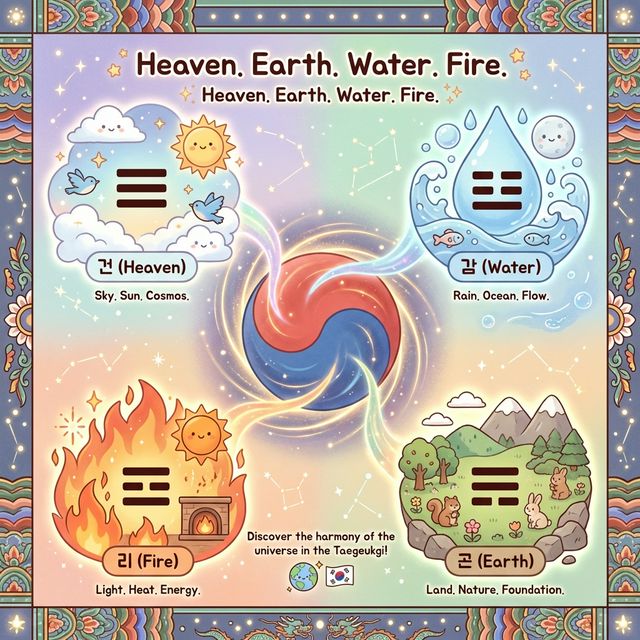
Heaven. Earth. Water. Fire.
The four 괘 (gwae / trigrams) in the corners are from the 역경 (I Ching): ☰ 건 (Geon) = Heaven — justice, fatherhood, spring ☷ 곤 (Gon) = Earth — vitality, motherhood, summer ☵ 감 (Gam) = Water — wisdom, the moon, winter ☲ 리 (Ri) = Fire — fruition, the sun, autumn Together, they represent the four fundamental elements of the universe, balanced around the Taegeuk. 🌏
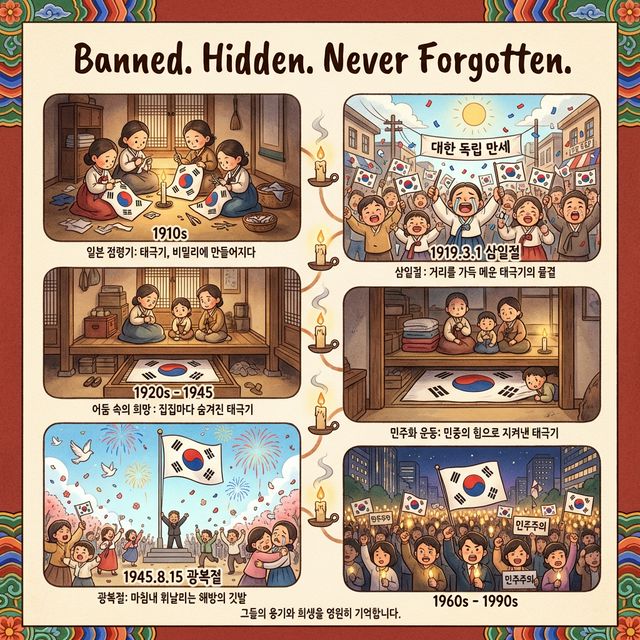
Banned. Hidden. Never Forgotten.
During Japanese occupation (1910–1945), the Taegeukgi was banned. But Koreans kept it alive: 🧵 Women secretly sewed flags at home ✊ 삼일절 (1919) — thousands pulled hidden flags from their clothes and waved them 🔥 Independence fighters carried it across Manchuria and Shanghai 🇰🇷 광복절 (1945) — Taegeukgi flooded the streets the moment liberation was announced The flag became more than a symbol — it became proof that Korea still existed. 🕊️
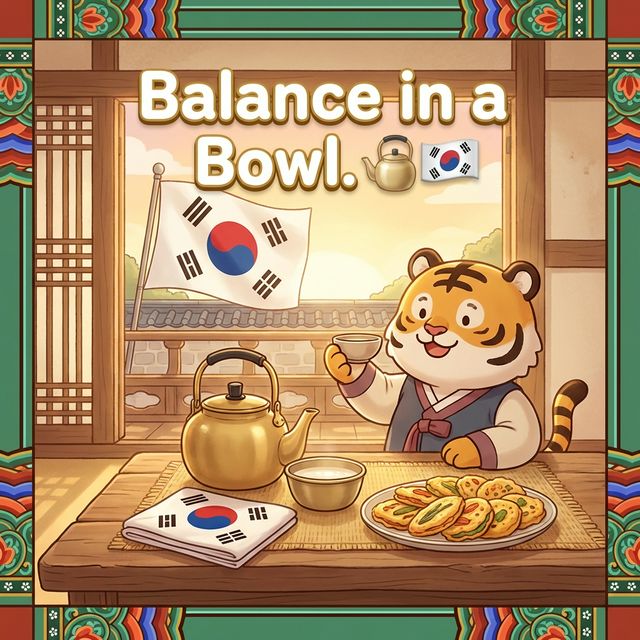
Balance in a Bowl. 🍶🇰🇷
The Taegeukgi is about balance — 음 and 양 in harmony. Makgeolli is the same: sweet and tangy, fizzy and smooth, earthy and refreshing. Both are uniquely, unmistakably Korean. On any flag day — 광복절, 현충일, 개천절, 삼일절, 한글날 — the Taegeukgi hangs outside every home. Raise a bowl to the flag. Raise a bowl to balance. 🍶☯️
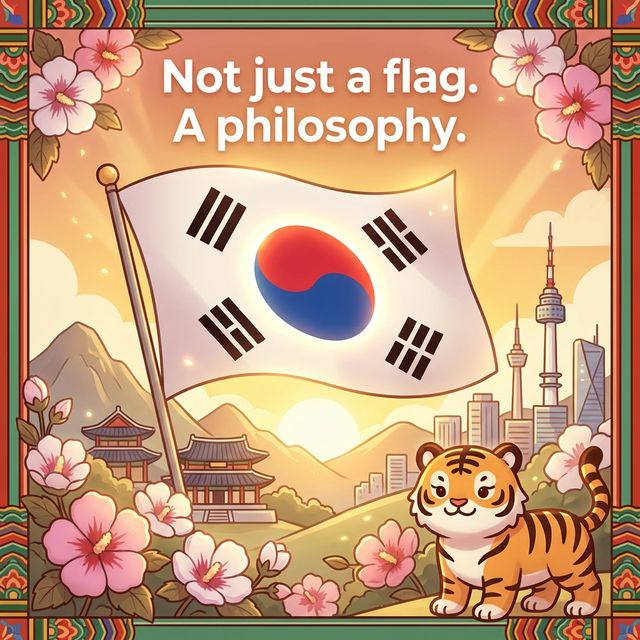
Not just a flag. A philosophy.
What does balance mean in your life? ☯️🇰🇷 👇
1 / 9