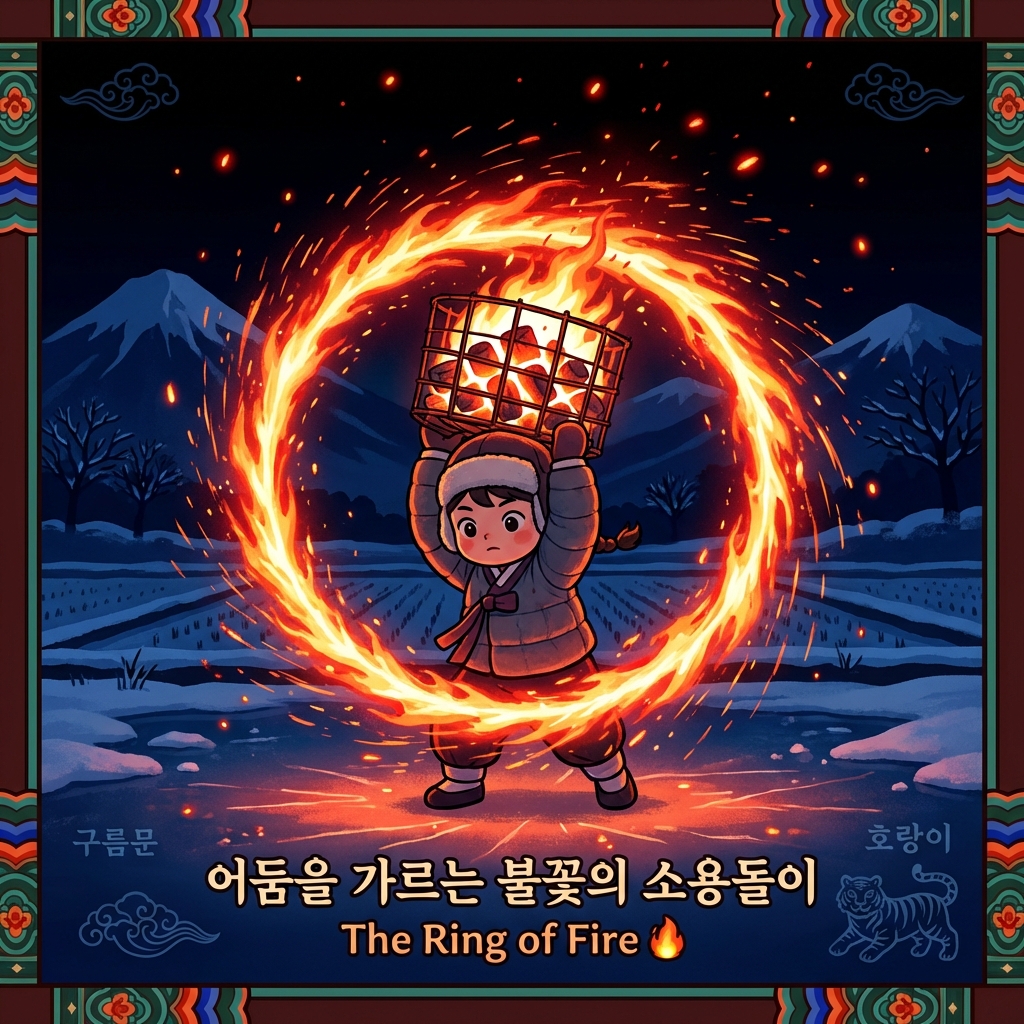
The Ring of Fire 🔥
What is the ultimate, most terrifyingly dangerous, most beautiful childhood game in Korea?
It isn’t a board game. It involves pure, unadulterated fire! 🔥
Welcome to 쥐불놀이 (Jwibulnori)—an incredibly ancient, mesmerizing festival where an entire village hands children literal cans of blazing charcoal and tells them to spin them as fast as humanly possible! 🧨🌪️
It isn’t a board game. It involves pure, unadulterated fire! 🔥
Welcome to 쥐불놀이 (Jwibulnori)—an incredibly ancient, mesmerizing festival where an entire village hands children literal cans of blazing charcoal and tells them to spin them as fast as humanly possible! 🧨🌪️
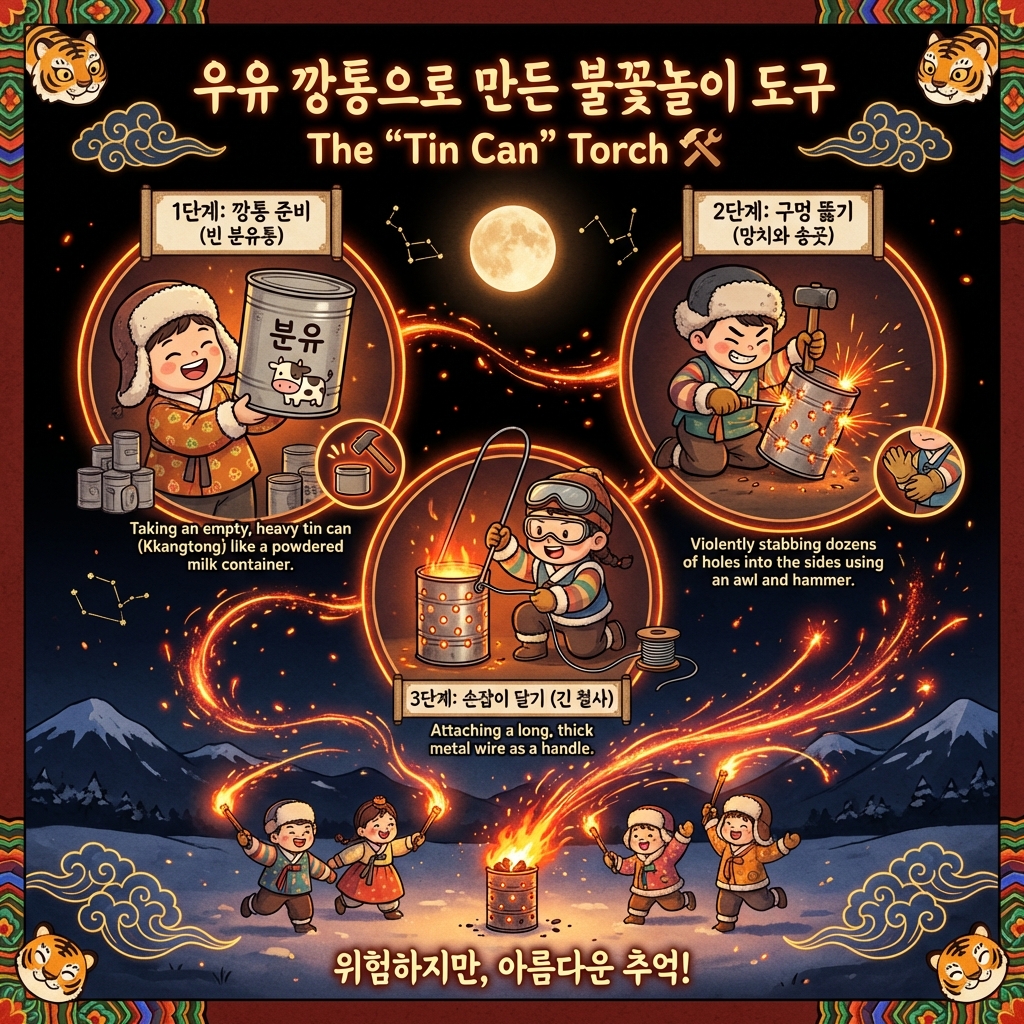
The “Tin Can” Torch 🛠️
You cannot buy a Jwibulnori spinner. It is a masterpiece of dangerous DIY engineering! ⚙️
In the 1970s, kids would scavenge thick, heavy empty tin cans (Kkangtong / 깡통) 🥫. They would violently punch dozens of air holes into the metal to feed oxygen to the internal fire 🌬️.
Then, they bolted on a tremendously long, thick metal wire so they could spin it without incinerating themselves! 🛡️
In the 1970s, kids would scavenge thick, heavy empty tin cans (Kkangtong / 깡통) 🥫. They would violently punch dozens of air holes into the metal to feed oxygen to the internal fire 🌬️.
Then, they bolted on a tremendously long, thick metal wire so they could spin it without incinerating themselves! 🛡️
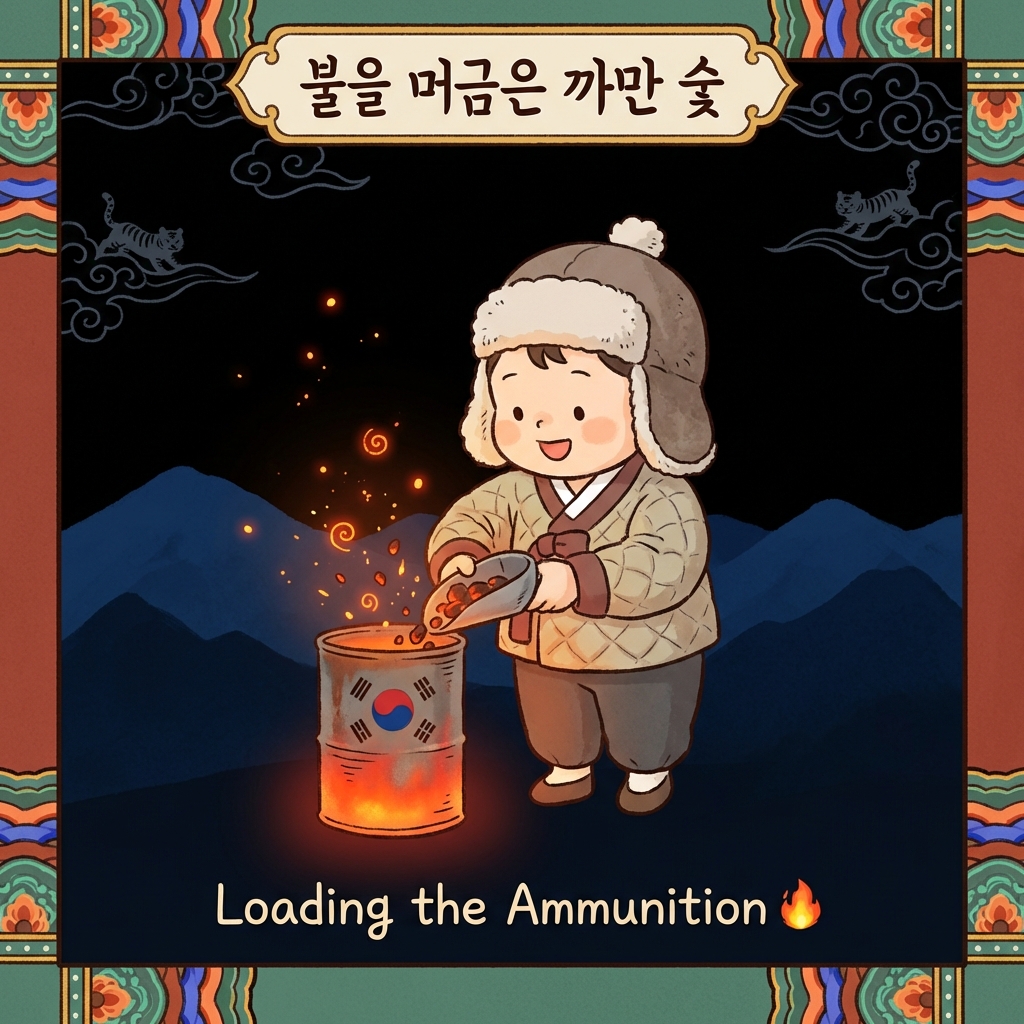
Loading the Ammunition 🔥
The fuel is pure nature. The can is loaded with highly dried pine needles (which burn incredibly hot and fast) 🌲 to start the fire, followed by heavy chunks of solid 숯 (Sut / Charcoal) 🌑.
Once the charcoal catches, the can becomes a literal, handheld furnace capable of burning the person holding it if they stop moving! ⚠️
Once the charcoal catches, the can becomes a literal, handheld furnace capable of burning the person holding it if they stop moving! ⚠️
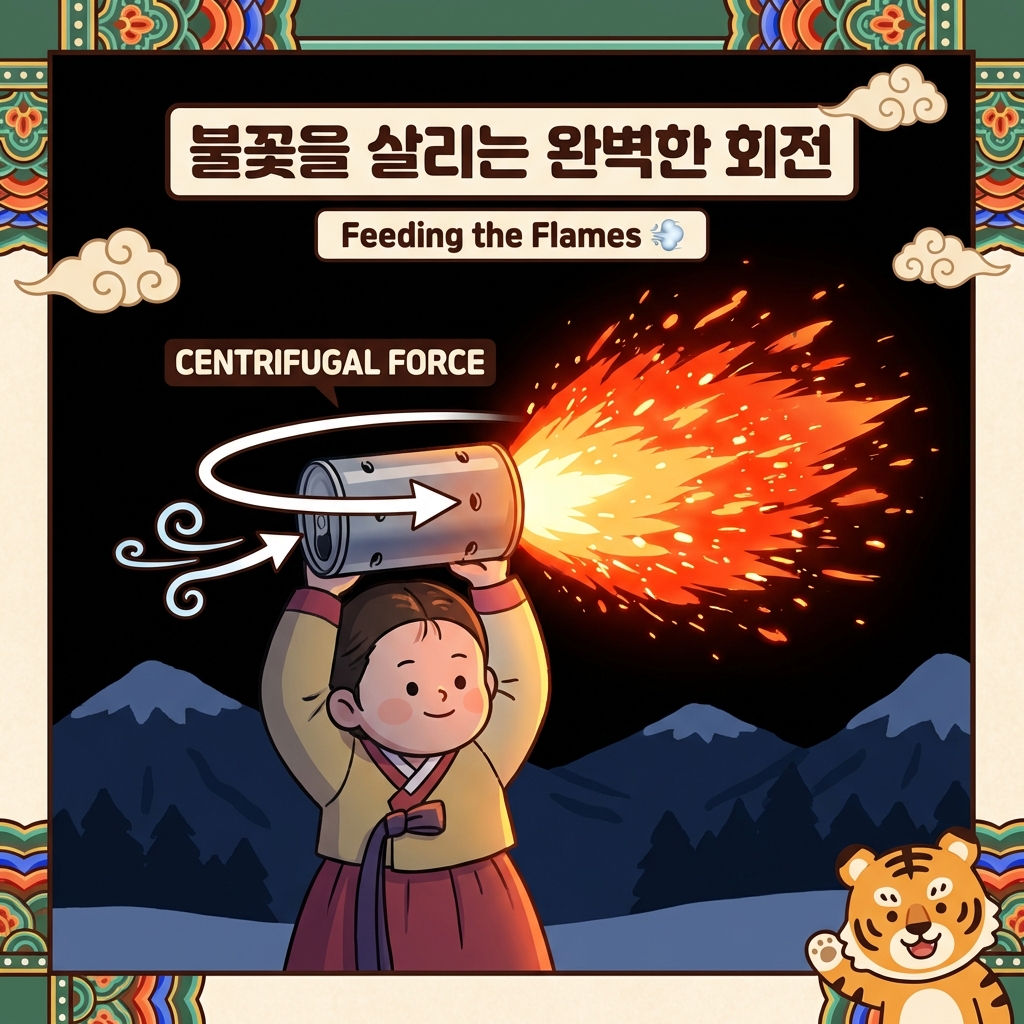
Feeding the Flames 💨
It is pure physics! 🔬
As the massive metal can spins through the freezing night air, oxygen is violently dragged through the tiny holes, super-heating the charcoal inside 🌬️.
Because of centrifugal force, the burning embers aren’t thrown forward; tiny red-hot sparks shoot safely downward and backward, creating an impossible, blindingly bright spinning halo of light! ✨🪐
As the massive metal can spins through the freezing night air, oxygen is violently dragged through the tiny holes, super-heating the charcoal inside 🌬️.
Because of centrifugal force, the burning embers aren’t thrown forward; tiny red-hot sparks shoot safely downward and backward, creating an impossible, blindingly bright spinning halo of light! ✨🪐
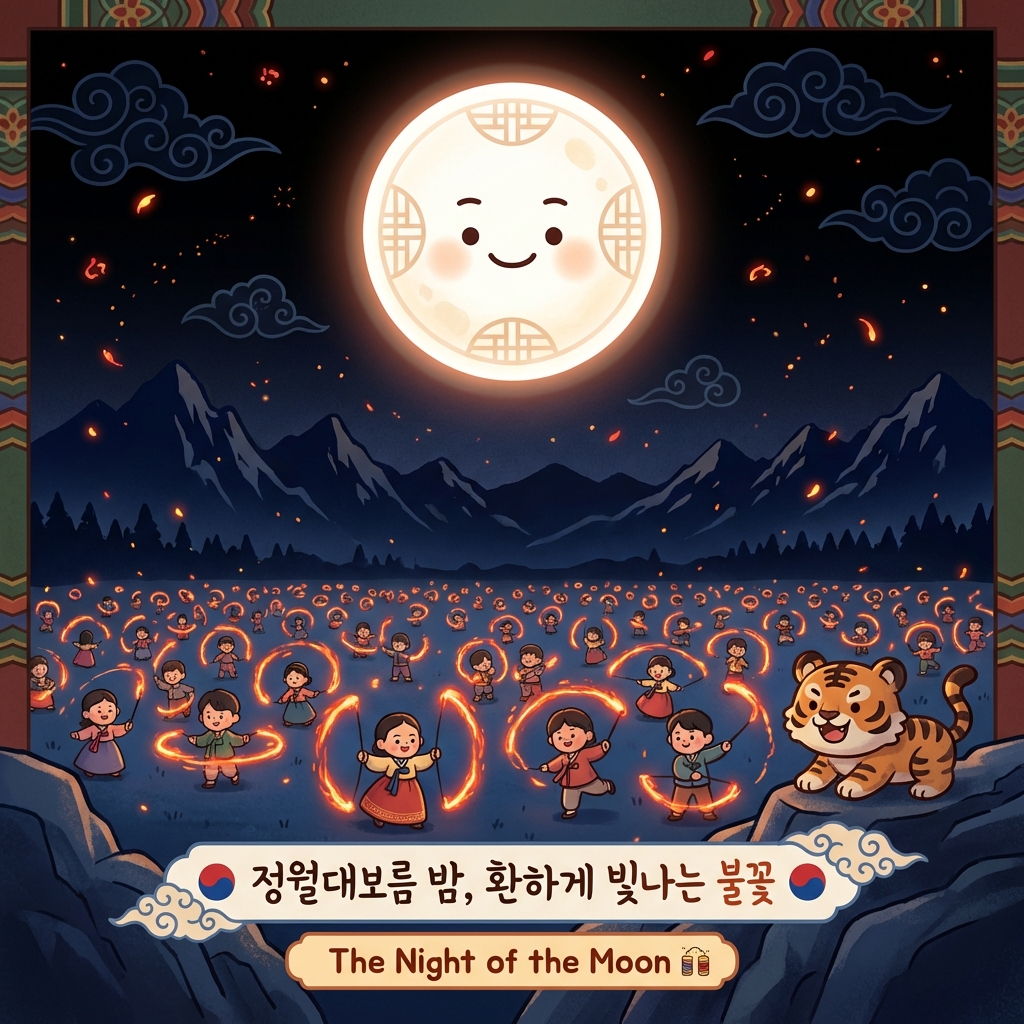
The Night of the Moon 🎑
This wasn’t played randomly. Jwibulnori is the explicit, required, iconic activity of 정월대보름 (Jeongwol Daeboreum)! 🌕
This ancient festival takes place on the absolute first Full Moon of the Lunar New Year (usually around February) 📆.
Entire villages gather on massive agricultural fields to pray for the harvest, eat traditional nuts, and spin roaring fire rings into the freezing night sky until dawn! 🌅
This ancient festival takes place on the absolute first Full Moon of the Lunar New Year (usually around February) 📆.
Entire villages gather on massive agricultural fields to pray for the harvest, eat traditional nuts, and spin roaring fire rings into the freezing night sky until dawn! 🌅
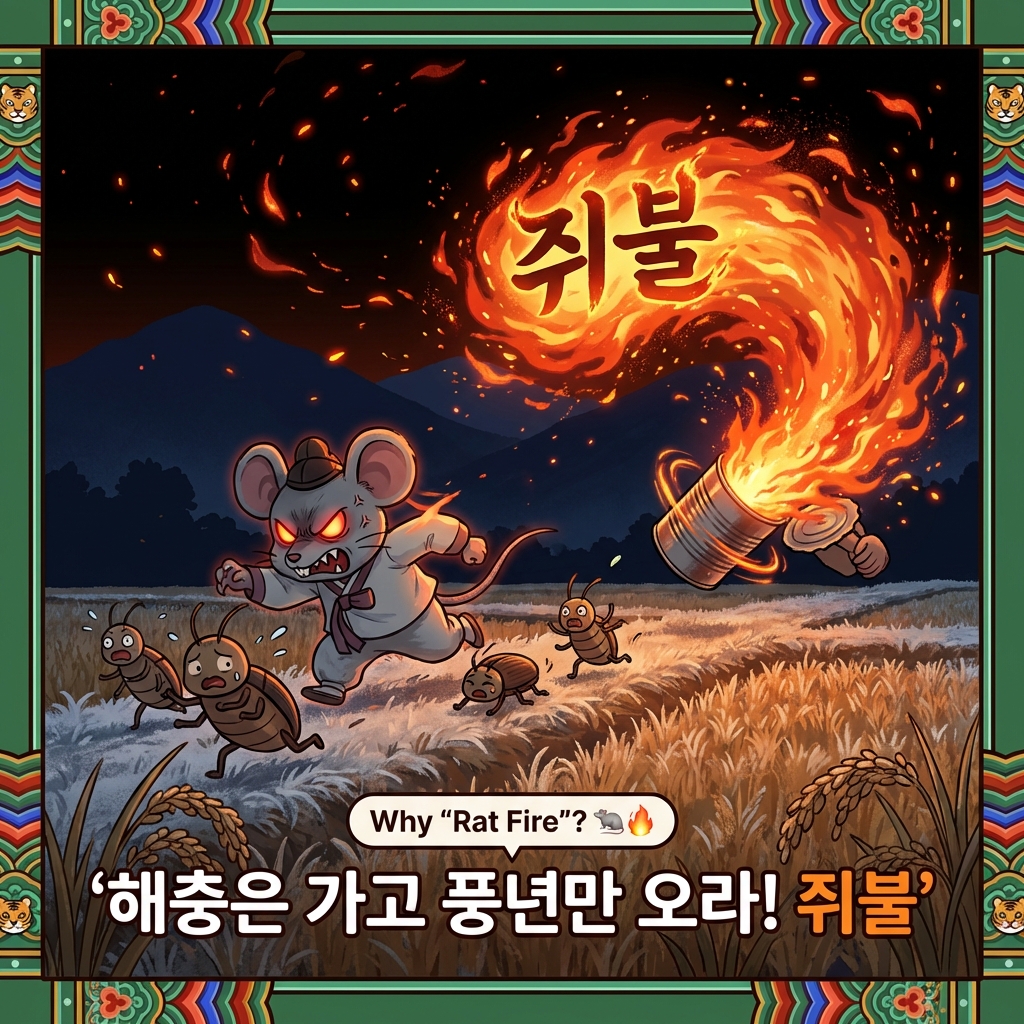
Why “Rat Fire”? 🐀🔥
The name is literally: 쥐 (Jwi / Rat) + 불 (Bul / Fire)! 🐀🔥
Historically, Jwibulnori was a highly practical farming tactic! 🚜
By throwing the massive fire cans and burning the dead, overgrown winter grasses along the edges of the rice paddies, the flames purged the fields of disease-carrying rats 🐀 and massive nests of pest insects 🐛 hiding in the dirt!
The spinning ring of fire guaranteed a safe, bountiful harvest for the spring! 🌾✨
Historically, Jwibulnori was a highly practical farming tactic! 🚜
By throwing the massive fire cans and burning the dead, overgrown winter grasses along the edges of the rice paddies, the flames purged the fields of disease-carrying rats 🐀 and massive nests of pest insects 🐛 hiding in the dirt!
The spinning ring of fire guaranteed a safe, bountiful harvest for the spring! 🌾✨
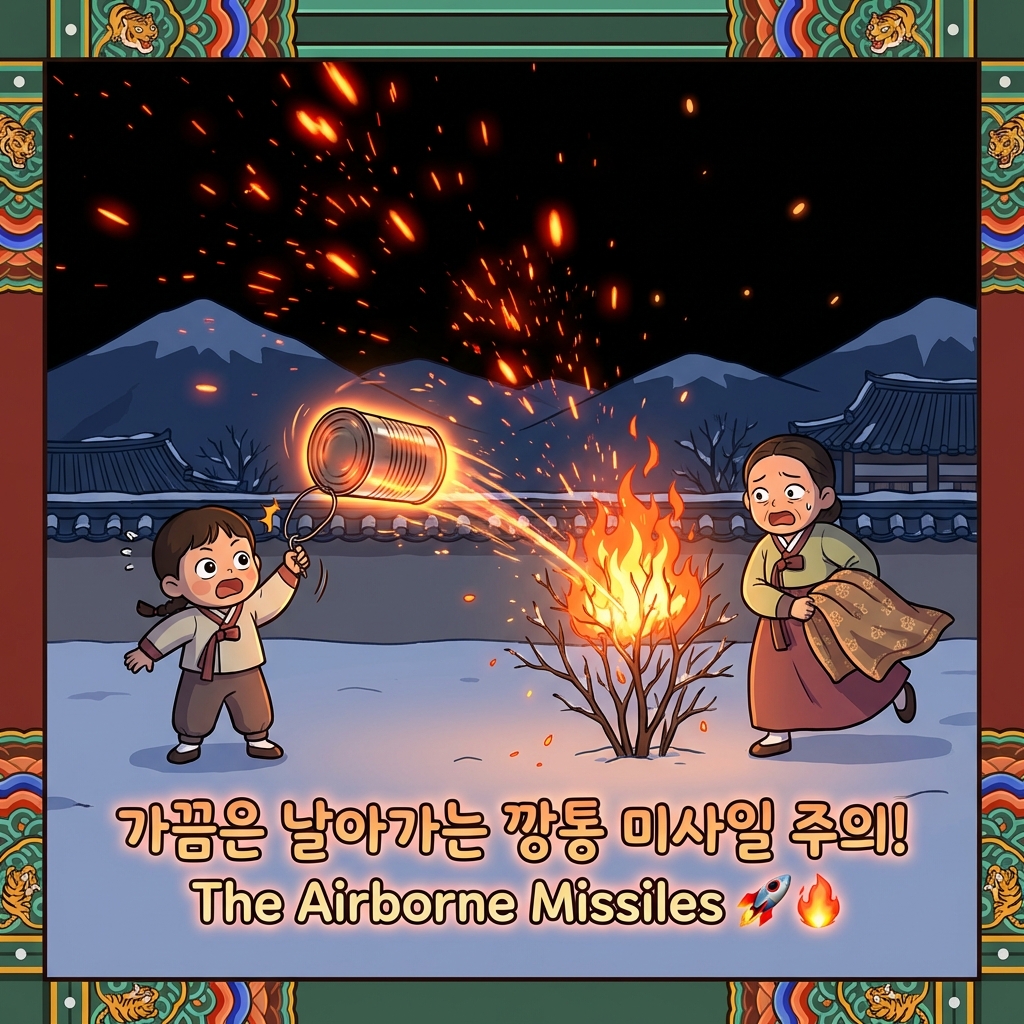
The Airborne Missiles 🚀🔥
Was Jwibulnori safe? Absolutely not! 🤣
Eventually, the heat and aggressive spinning would snap the metal wire handles 💥.
When the wire snapped, the blazing charcoal-filled can would turn into a blinding, flaming missile, flying violently across the field and landing randomly in the bushes! 🚀🔥
Parents constantly had to chase down rogue fireballs before they burned the village! 🚒
Eventually, the heat and aggressive spinning would snap the metal wire handles 💥.
When the wire snapped, the blazing charcoal-filled can would turn into a blinding, flaming missile, flying violently across the field and landing randomly in the bushes! 🚀🔥
Parents constantly had to chase down rogue fireballs before they burned the village! 🚒
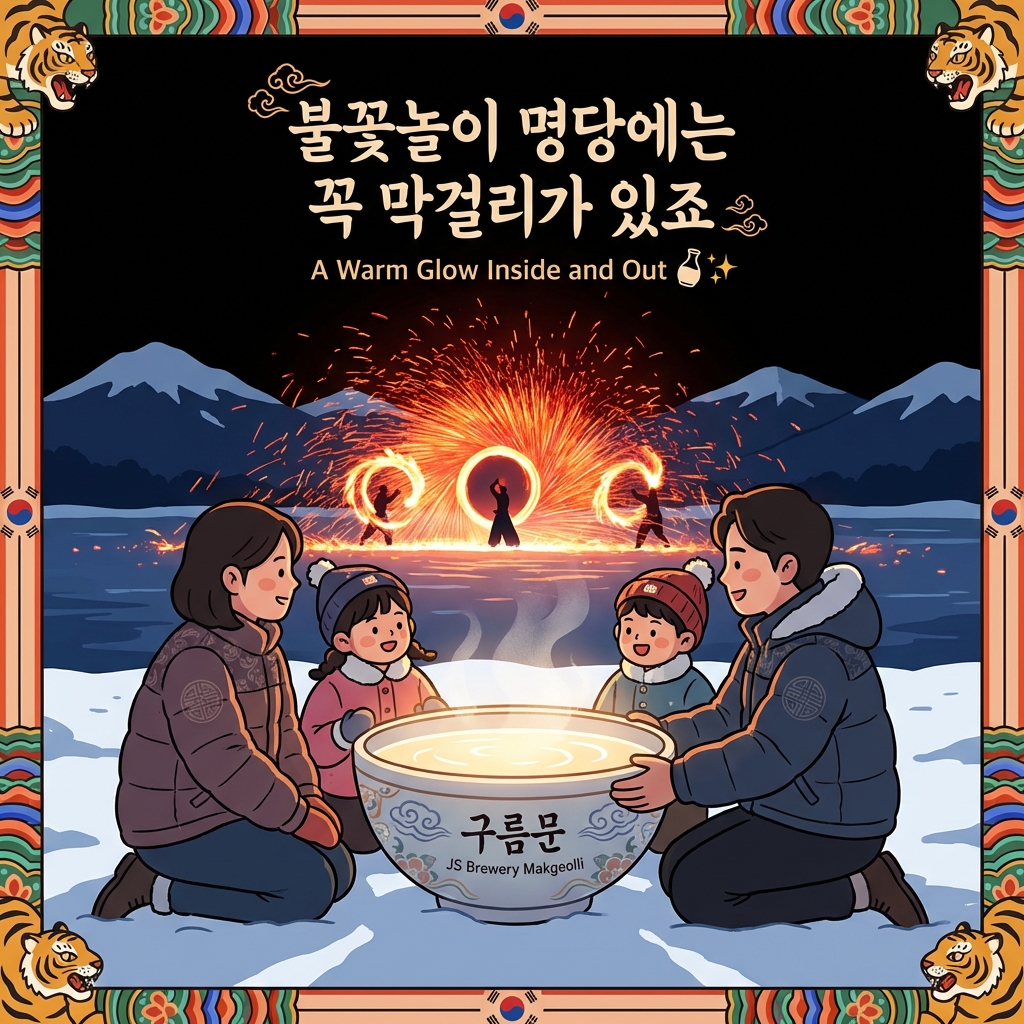
A Warm Glow Inside and Out 🍶✨
While modern laws have largely banned randomly spinning fire cans in city streets (for obvious reasons) 🚫🚒…
Many traditional villages still host highly organized Jwibulnori exhibitions! 🧨
There is nothing cozier than standing in the freezing night, watching the hypnotic, spinning orange halos of fire while sharing an incredibly smooth, fermented bowl of JS Brewery Makgeolli 🍶 to keep the cold at bay! ❄️✨
Many traditional villages still host highly organized Jwibulnori exhibitions! 🧨
There is nothing cozier than standing in the freezing night, watching the hypnotic, spinning orange halos of fire while sharing an incredibly smooth, fermented bowl of JS Brewery Makgeolli 🍶 to keep the cold at bay! ❄️✨
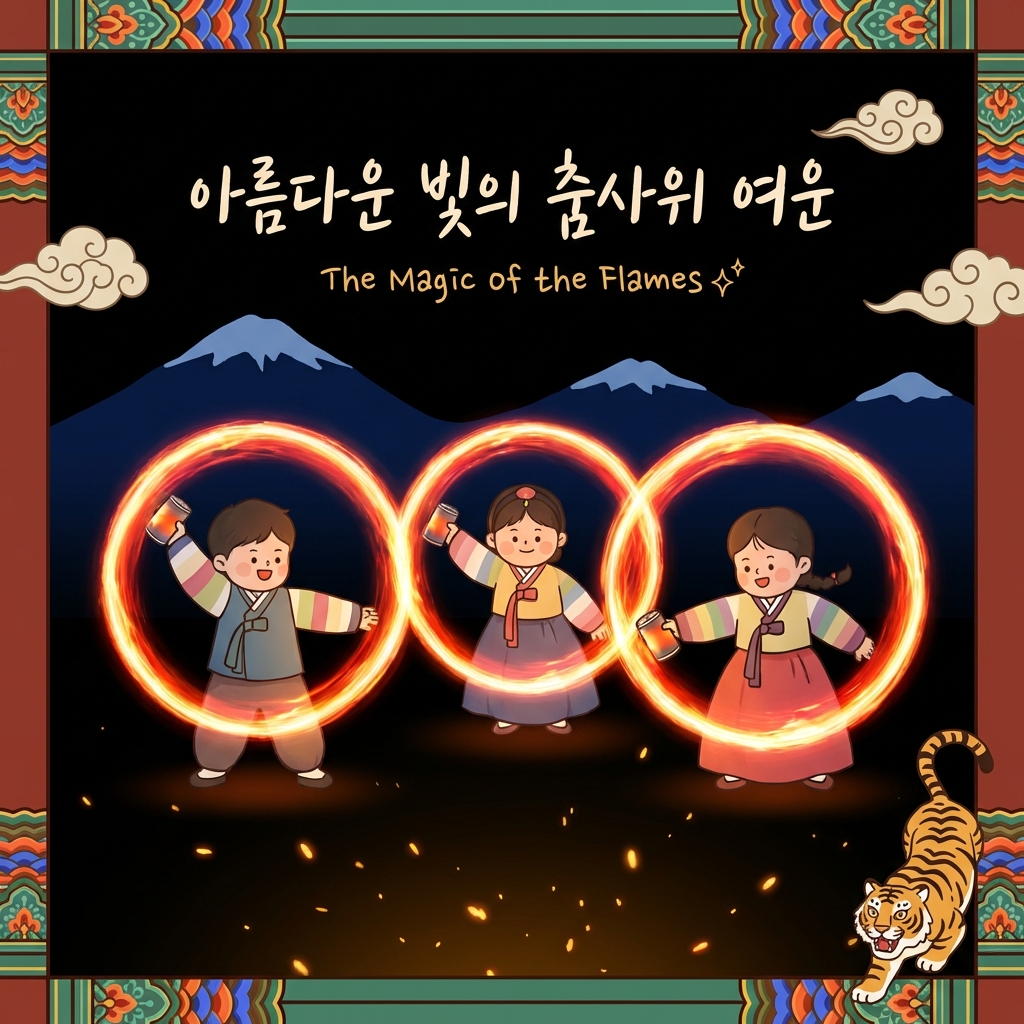
The Magic of the Flames ✨
Have you ever seen a Jwibulnori festival at night? Could you spin a can of hot blazing charcoal over your head without getting scared? 🌪️🔥 Let us know! 👇
1 / 9