
One Word Koreans Know Instantly 😬
Some Korean words explain an entire social atmosphere in one punch.
갑질 is one of them.
It means abusing power, status, or position to pressure someone “below” you.
갑질 is one of them.
It means abusing power, status, or position to pressure someone “below” you.
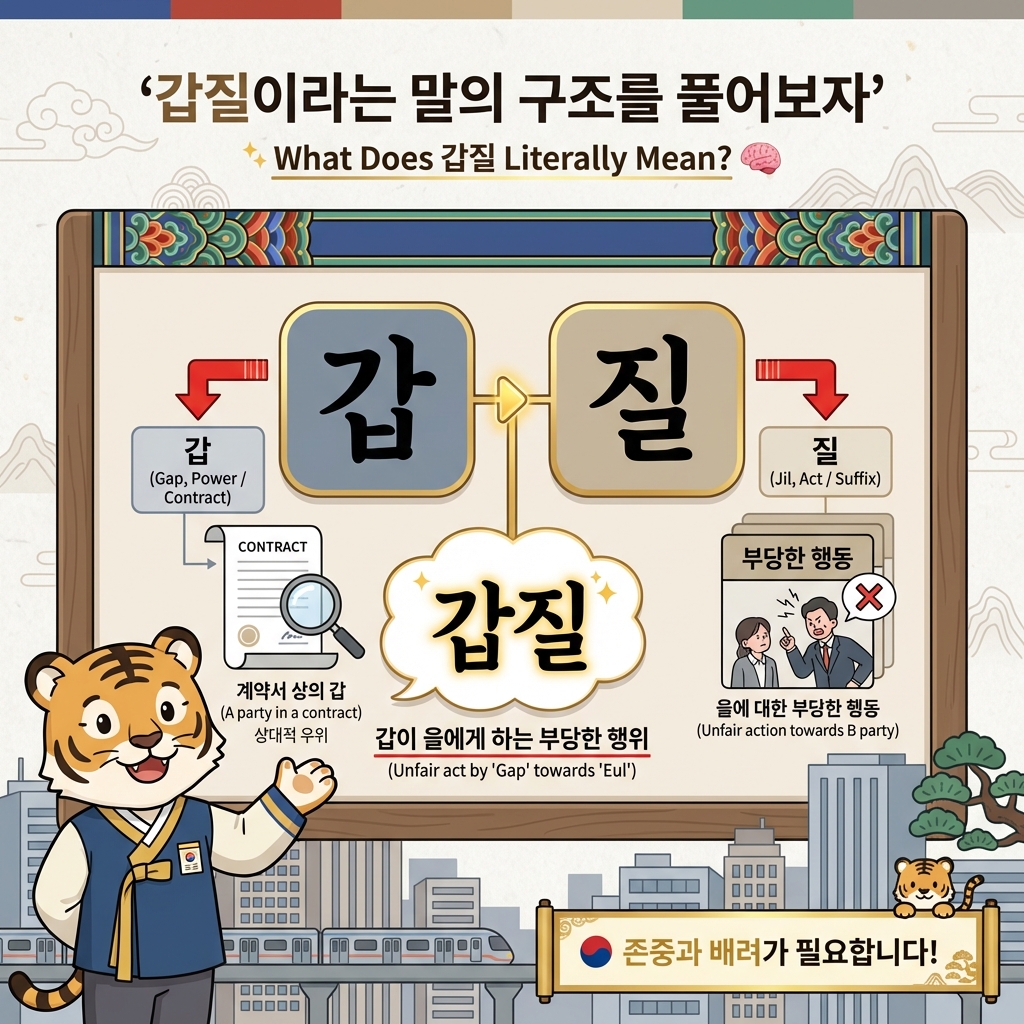
What Does 갑질 Literally Mean? 🧠
갑 (Gap / 甲) originally means the “first party” in a contract, the side with stronger leverage.
질 (-jil) is a suffix for a negative or rude pattern of behavior.
So 갑질 means the stronger side misusing power against the weaker side.
질 (-jil) is a suffix for a negative or rude pattern of behavior.
So 갑질 means the stronger side misusing power against the weaker side.
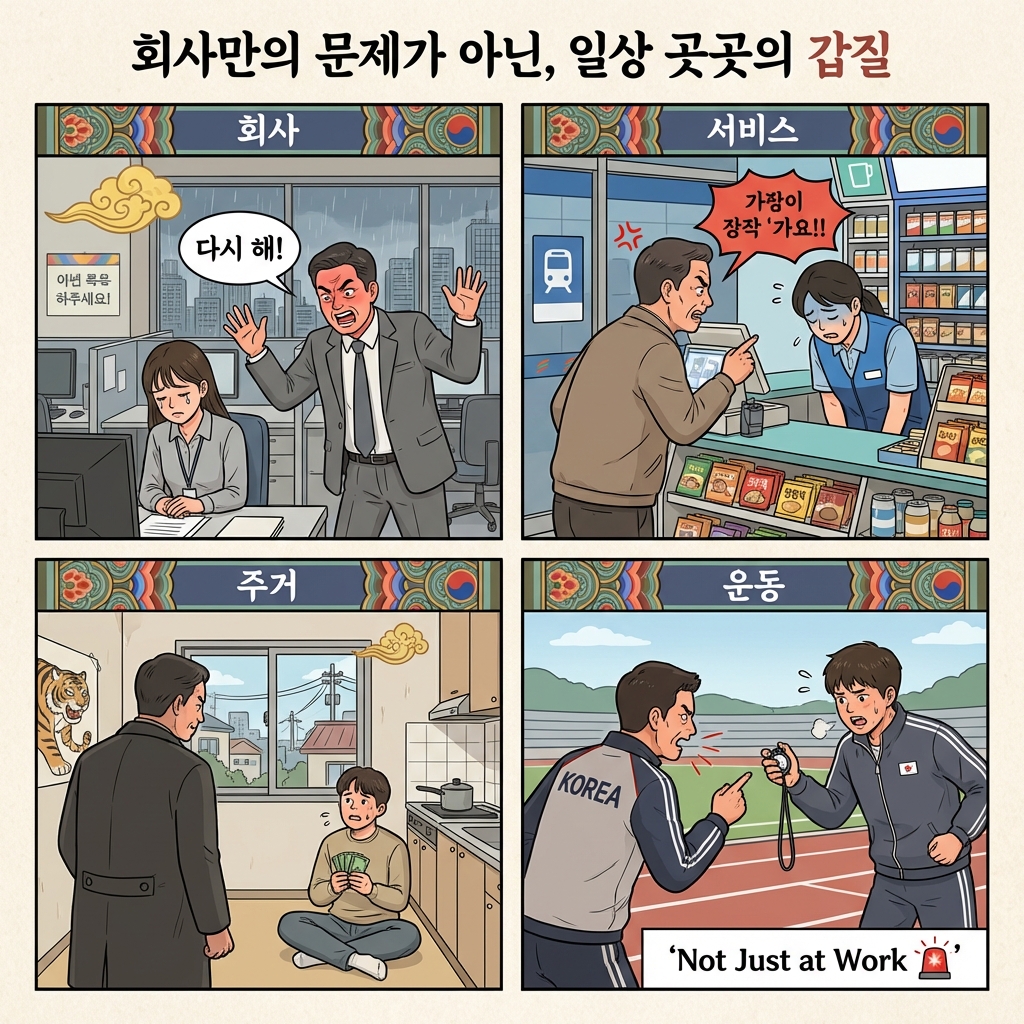
Not Just at Work 🚨
People often think 갑질 is only “boss vs employee,” but it appears in many spaces.
Any relationship with unequal power can become a 갑질 situation.
The core issue is not age or title itself, but coercion and humiliation.
Any relationship with unequal power can become a 갑질 situation.
The core issue is not age or title itself, but coercion and humiliation.
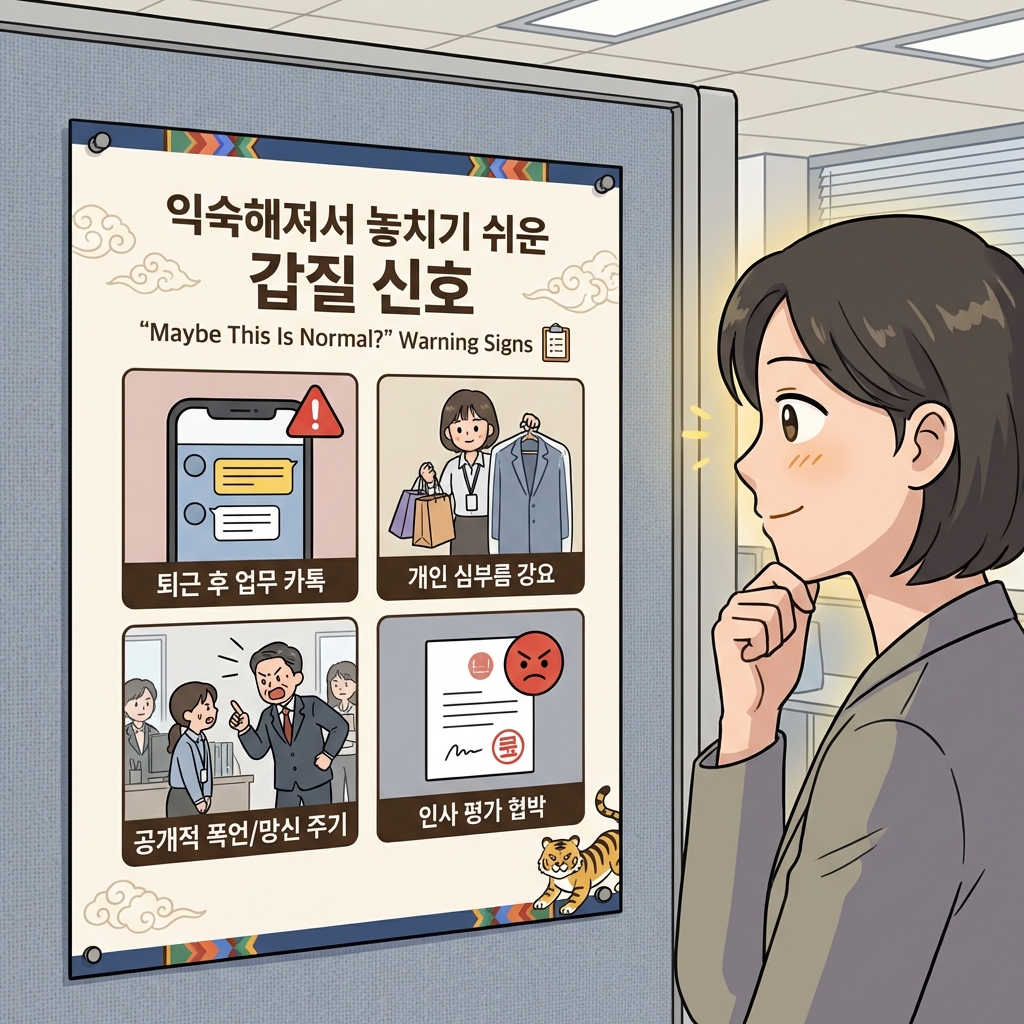
“Maybe This Is Normal?” Warning Signs 📋
Typical signs include forcing private errands, late-night orders, public humiliation, and retaliation threats.
If someone uses fear to extract obedience, that is not “team culture”.
It is a power-abuse pattern that deserves to be named clearly.
If someone uses fear to extract obedience, that is not “team culture”.
It is a power-abuse pattern that deserves to be named clearly.
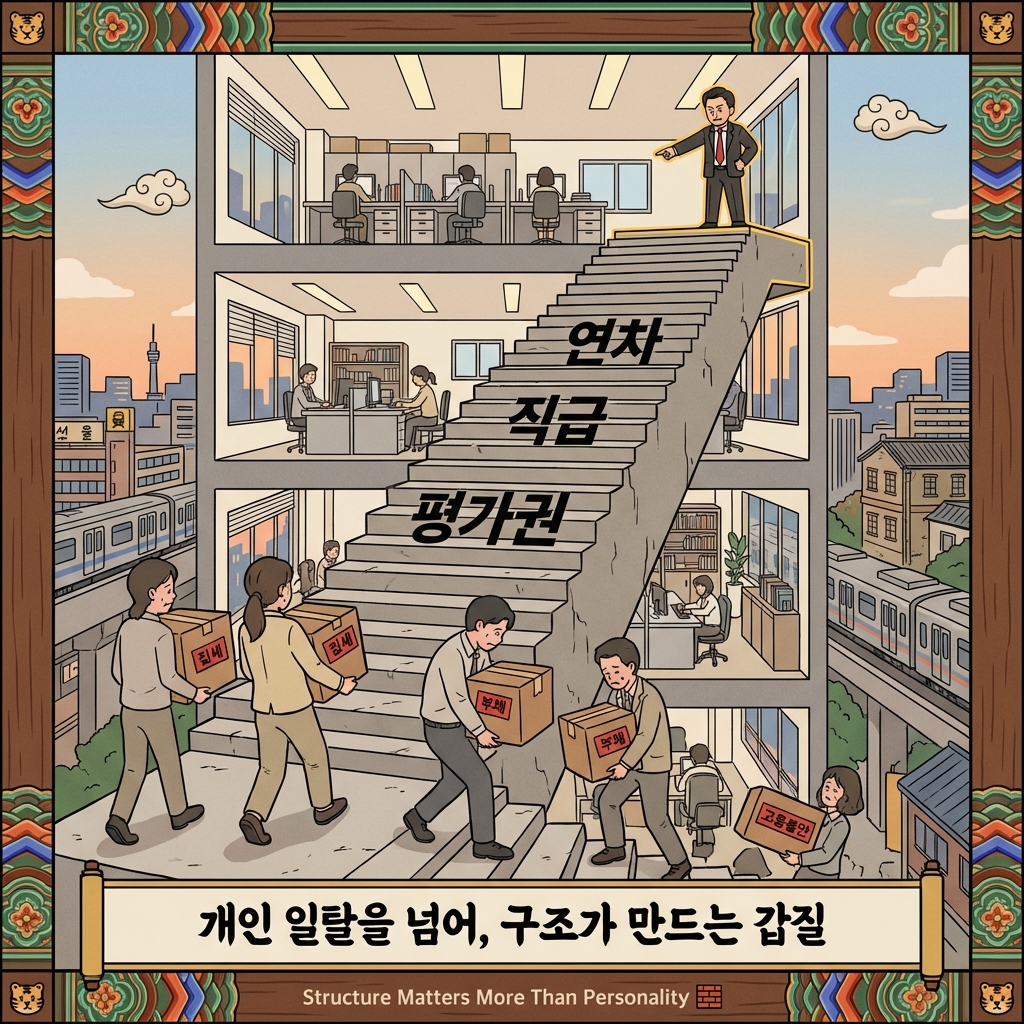
Structure Matters More Than Personality 🧱
갑질 is often fueled by rigid hierarchy, unstable employment, and fear of losing opportunity.
When speaking up feels risky, silence protects the system.
That is why prevention must be cultural and structural, not only moral.
When speaking up feels risky, silence protects the system.
That is why prevention must be cultural and structural, not only moral.
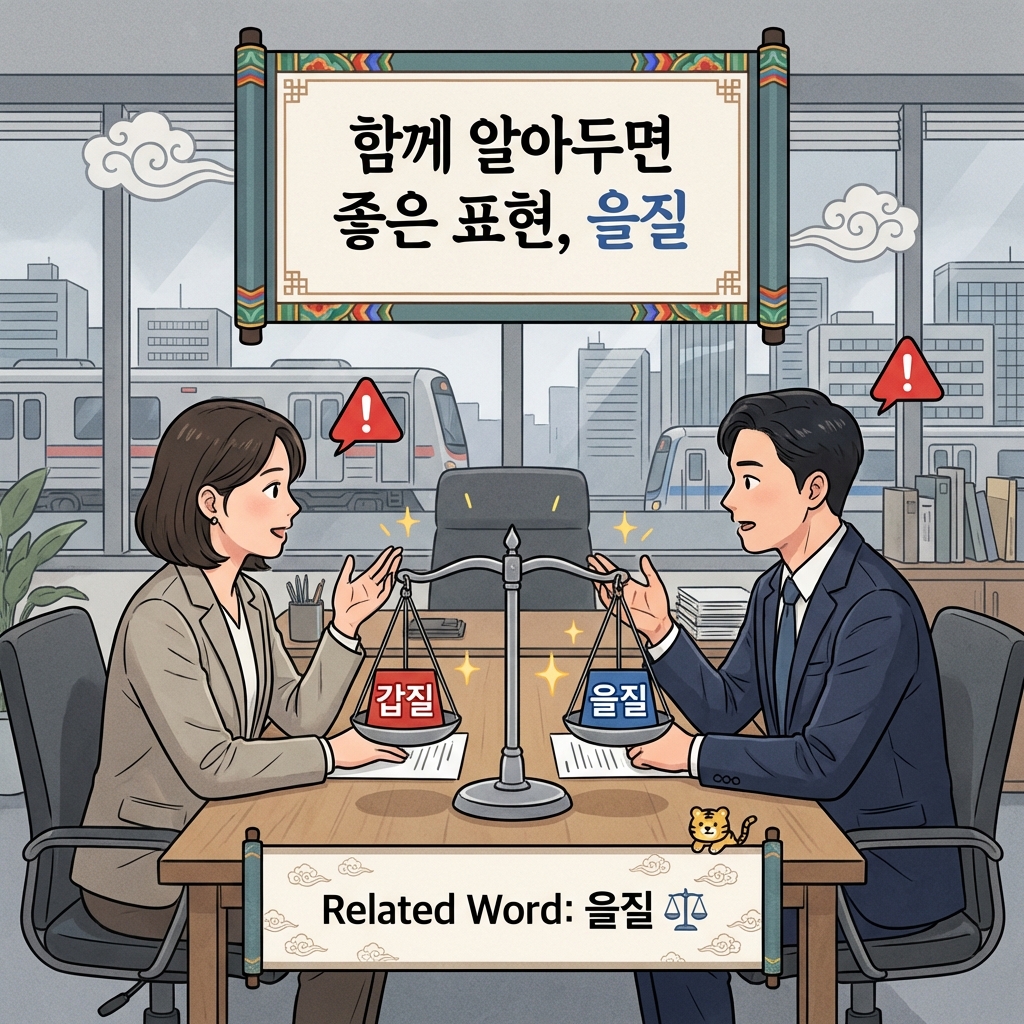
Related Word: 을질 ⚖️
You may also hear 을질, used when the weaker side weaponizes delay, threats, or manipulation back at others.
The point is not “both sides are equally wrong” every time.
The point is to build healthier boundaries and accountability for everyone.
The point is not “both sides are equally wrong” every time.
The point is to build healthier boundaries and accountability for everyone.
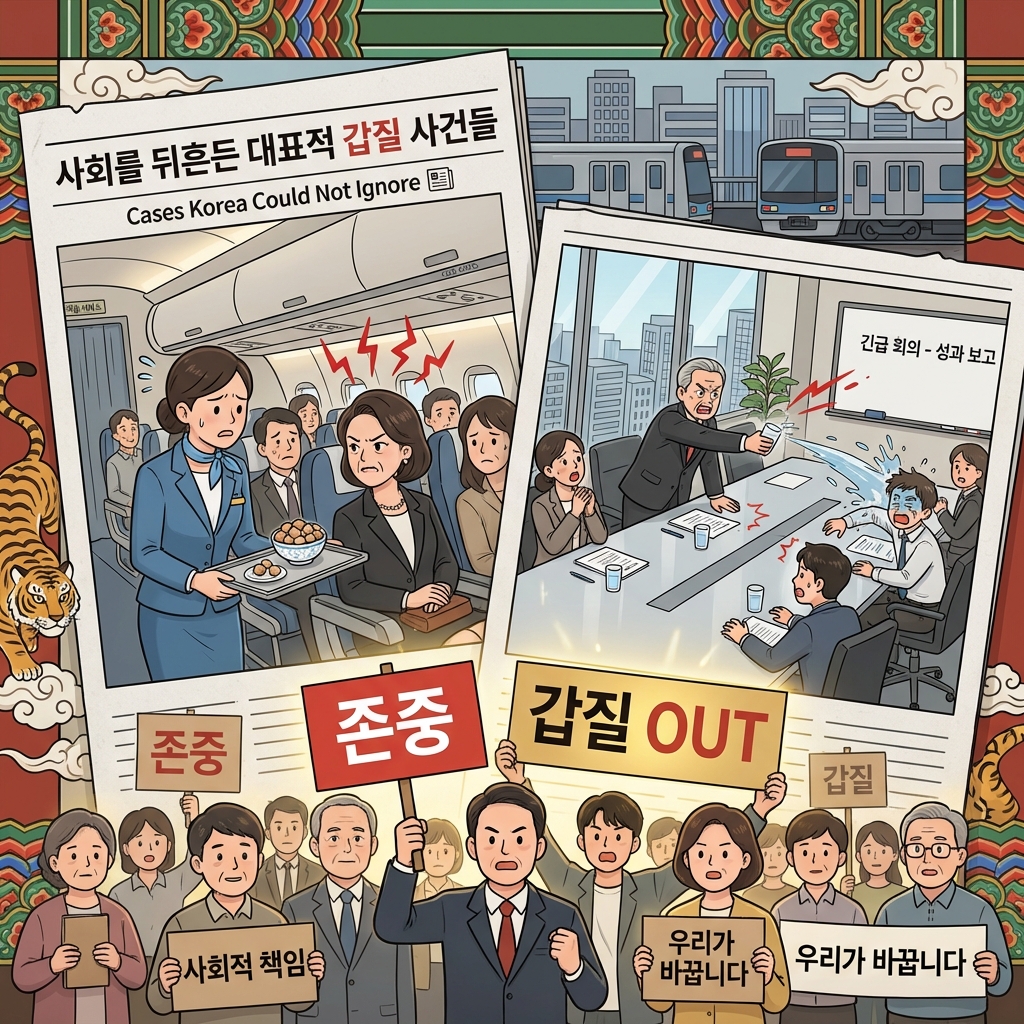
Cases Korea Could Not Ignore 📰
Public anger exploded after famous incidents like the 2014 “Nut Rage” case and later “물벼락 갑질” controversy.
These cases made one thing clear: 갑질 is not a “small manners issue,” but a power and accountability problem.
For deeper context on hierarchy pressure, watch Misaeng (미생) and D.P. (디피).
These cases made one thing clear: 갑질 is not a “small manners issue,” but a power and accountability problem.
For deeper context on hierarchy pressure, watch Misaeng (미생) and D.P. (디피).
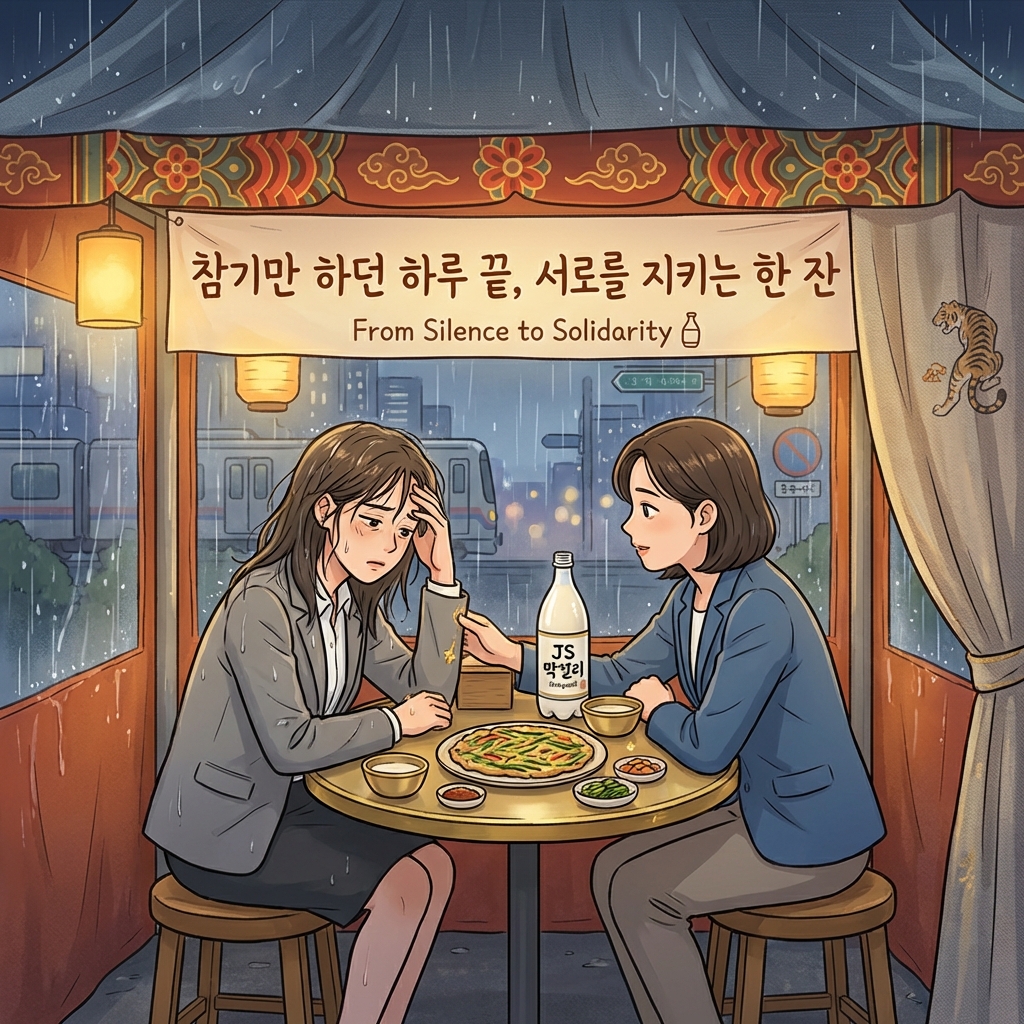
From Silence to Solidarity 🍶
Recovery starts when people can talk safely and be believed.
A calm meal, trusted colleague, and one bowl of JS Brewery Makgeolli can open that conversation.
Sometimes the bravest step is saying: “That was not okay.”
A calm meal, trusted colleague, and one bowl of JS Brewery Makgeolli can open that conversation.
Sometimes the bravest step is saying: “That was not okay.”

Respect Is Not Optional 🌅
Naming 갑질 is not about being dramatic.
It is about making everyday dignity non-negotiable.
What change would make schools, offices, and services feel more respectful in Korea?
It is about making everyday dignity non-negotiable.
What change would make schools, offices, and services feel more respectful in Korea?
1 / 9