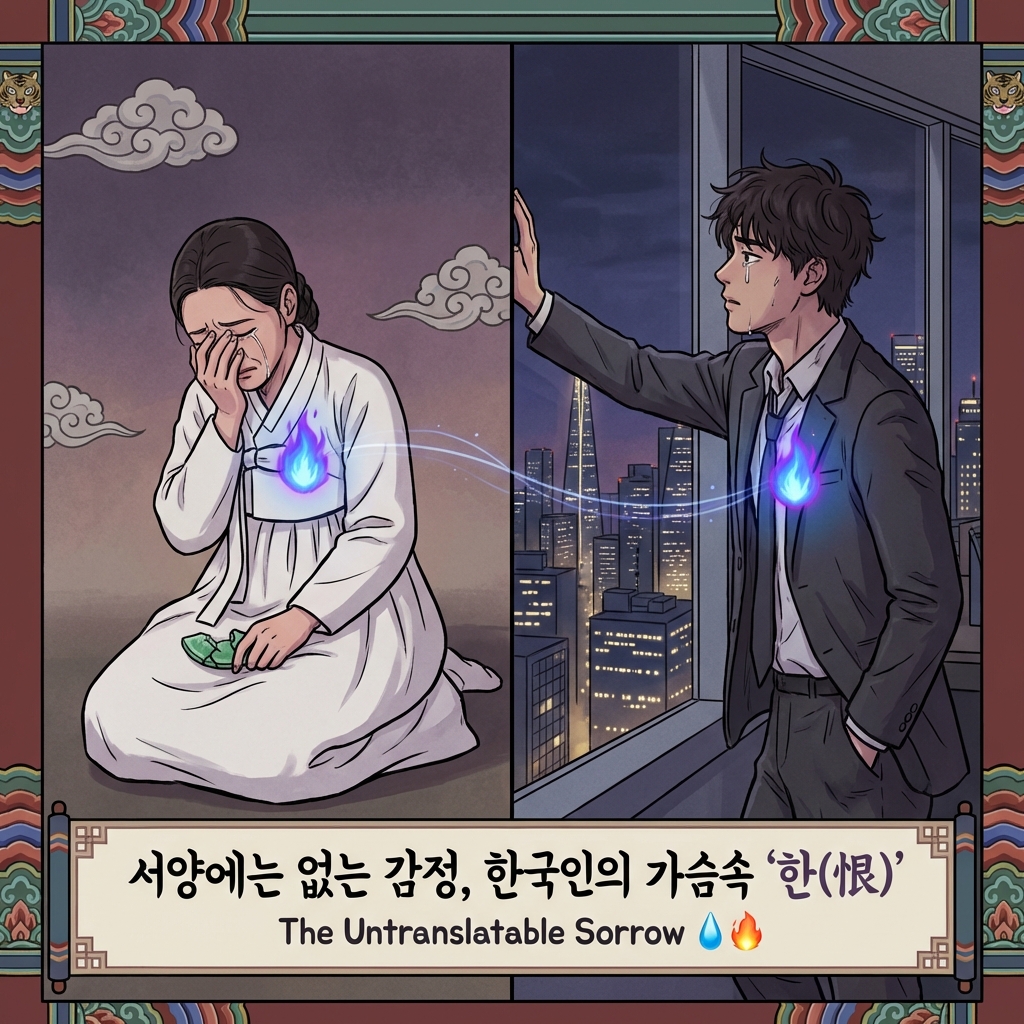
The Untranslatable Sorrow 💧🔥
There is an emotion that exists in Korea that simply does not exist anywhere else in the world 🌍.
It cannot be directly translated into English. It is not just “sadness” or “anger.”
It is 한 (Han).
Han is a profound, deeply internalized feeling of historically inherited sorrow, unresolved injustice, absolute helplessness, and yet… a fiercely stubborn, burning desire to survive and overcome it! 🔥💧 It is the emotional DNA of the peninsula! 🧬🇰🇷
It cannot be directly translated into English. It is not just “sadness” or “anger.”
It is 한 (Han).
Han is a profound, deeply internalized feeling of historically inherited sorrow, unresolved injustice, absolute helplessness, and yet… a fiercely stubborn, burning desire to survive and overcome it! 🔥💧 It is the emotional DNA of the peninsula! 🧬🇰🇷
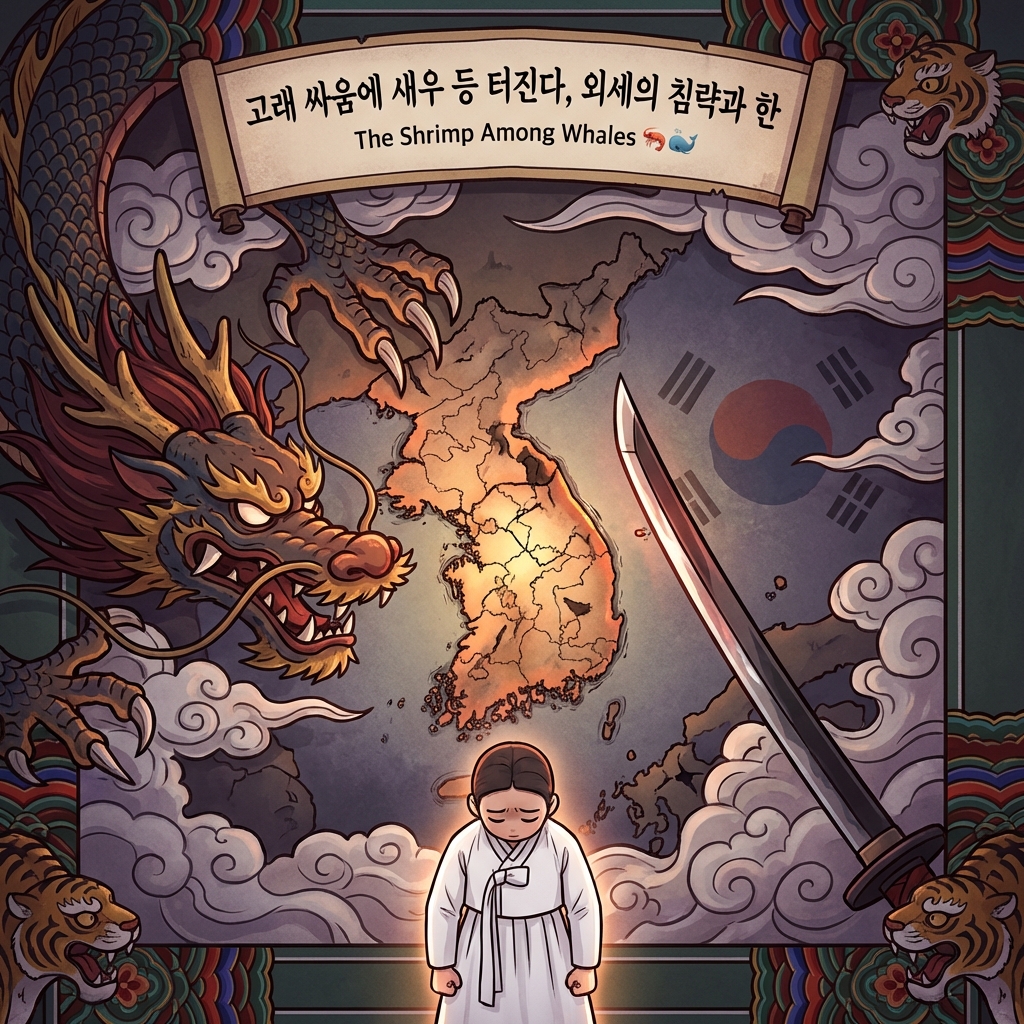
The Shrimp Among Whales 🦐🐋
Where does Han come from? Look at the map! 🗺️
An ancient Korean proverb perfectly describes the nation’s history: “A shrimp’s back is broken in a fight between whales.” 🦐💥🐋
For 5,000 years, Korea was constantly, brutally invaded, colonized, and ripped apart by its massive superpower neighbors (China, Japan, Russia) 🗡️. The generational trauma, the loss of sovereignty, and the blood spilled on the soil created a massive, collective well of national sorrow. 🩸🏞️
An ancient Korean proverb perfectly describes the nation’s history: “A shrimp’s back is broken in a fight between whales.” 🦐💥🐋
For 5,000 years, Korea was constantly, brutally invaded, colonized, and ripped apart by its massive superpower neighbors (China, Japan, Russia) 🗡️. The generational trauma, the loss of sovereignty, and the blood spilled on the soil created a massive, collective well of national sorrow. 🩸🏞️
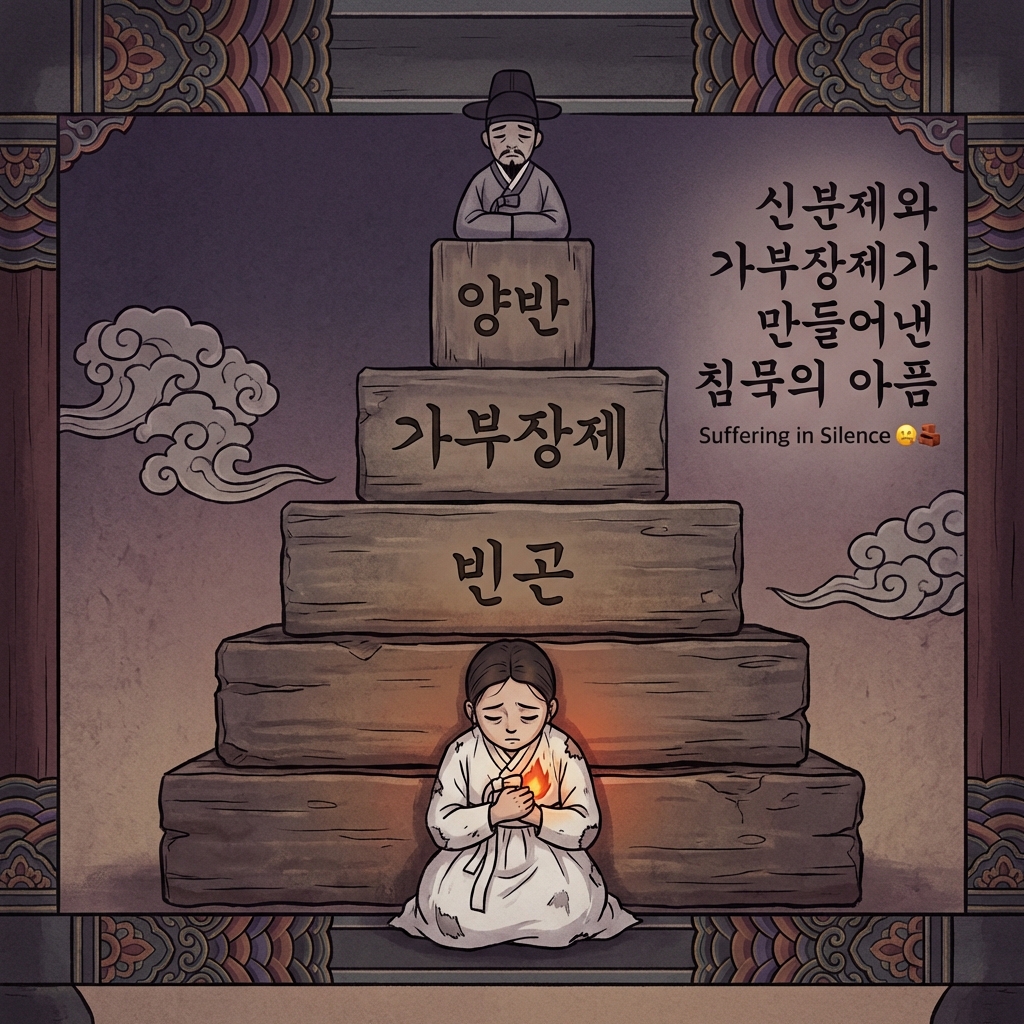
Suffering in Silence 🤐🧱
But Han wasn’t just caused by foreign invaders; it was also caused from within! 🚧
During the strict 500-year Joseon Dynasty, Confucianism dictated that women and lower-class peasants had absolutely no voice 😶.
If you were abused by a corrupt noble (Yangban) or a cruel mother-in-law, you could not scream, fight, or demand justice! You had to swallow the agonizing rage, swallow the unfairness, and bury it deep inside your stomach! 🕳️ That buried, rotting injustice became Han. 🥀
During the strict 500-year Joseon Dynasty, Confucianism dictated that women and lower-class peasants had absolutely no voice 😶.
If you were abused by a corrupt noble (Yangban) or a cruel mother-in-law, you could not scream, fight, or demand justice! You had to swallow the agonizing rage, swallow the unfairness, and bury it deep inside your stomach! 🕳️ That buried, rotting injustice became Han. 🥀
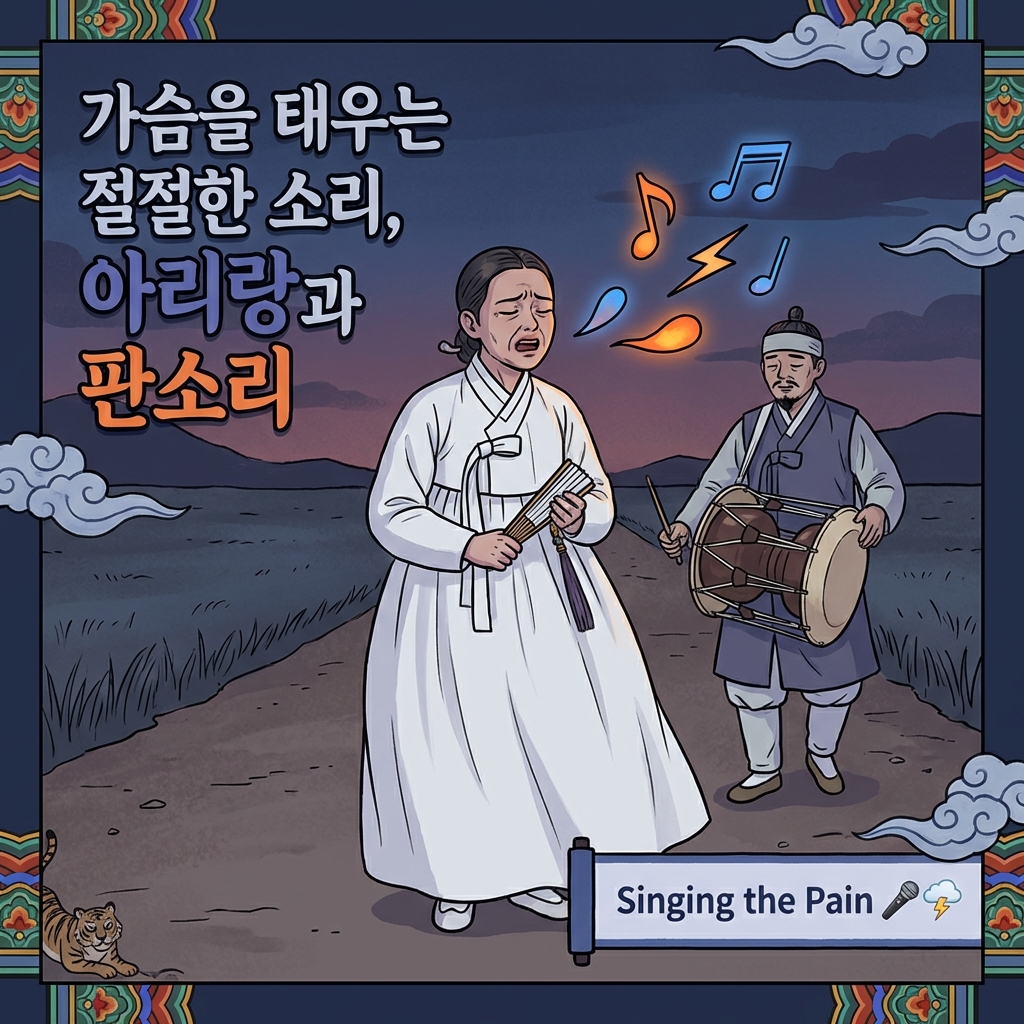
Singing the Pain 🎤🌩️
Because people could not express their Han through violence or rebellion, they weaponized art! 🎨
Traditional Korean folk music, like the raspy, agonizing wails of Pansori, or the deeply mournful national folk song Arirang, are literal acoustic expressions of Han! 🎶
When a singer performs Arirang, they aren’t just singing notes; they are physically ripping the generational sorrow out of their throat to share it with the audience, creating a massive, tearful, cathartic release! 😭🎼
Traditional Korean folk music, like the raspy, agonizing wails of Pansori, or the deeply mournful national folk song Arirang, are literal acoustic expressions of Han! 🎶
When a singer performs Arirang, they aren’t just singing notes; they are physically ripping the generational sorrow out of their throat to share it with the audience, creating a massive, tearful, cathartic release! 😭🎼
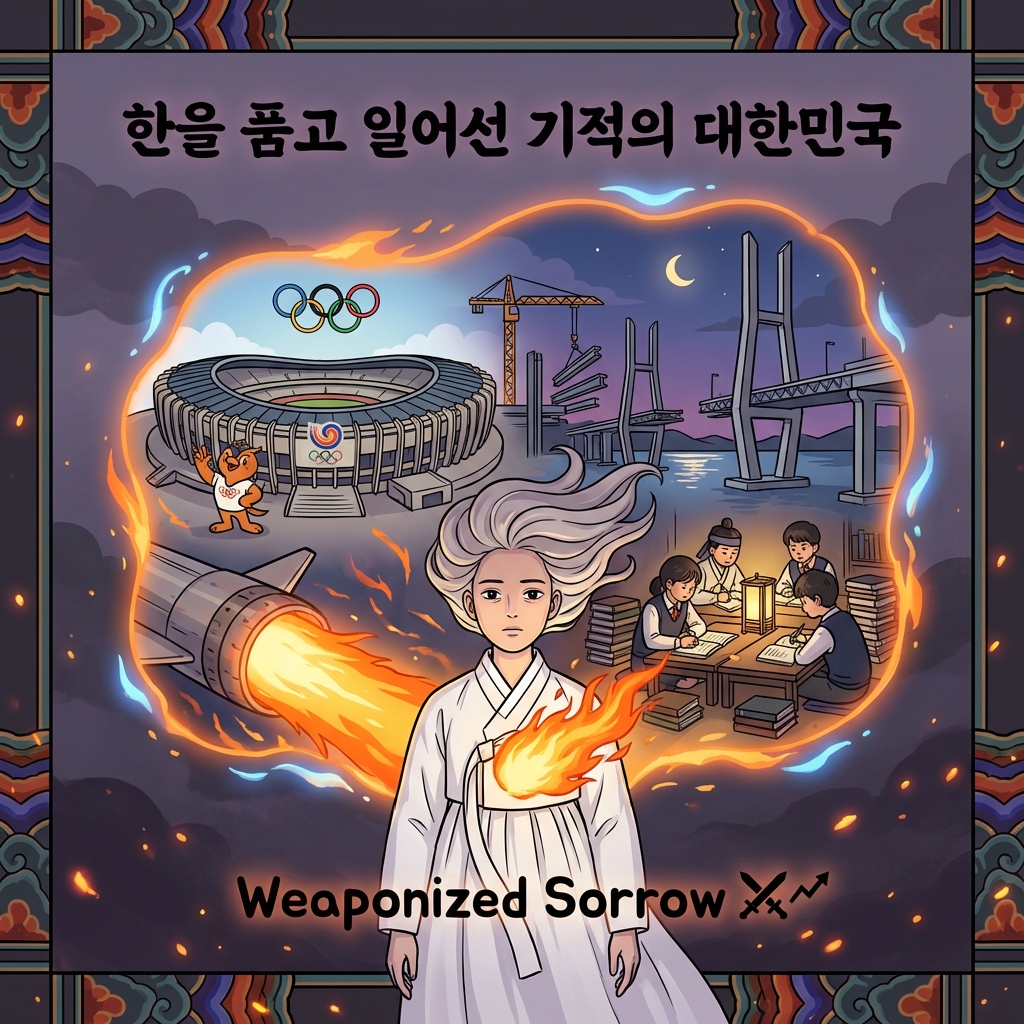
Weaponized Sorrow ⚔️📈
This is the most crucial part to understand: Han is not just depression! 🚫📉
Han is the absolute, fierce, stubborn refusal to be defeated!
After the total devastation of the Korean War in the 1950s, the entire nation utilized their collective Han as high-octane rocket fuel! 🚀 Because they were so deeply angry at their historical poverty and victimhood, they worked 16-hour days and studied relentlessly, brutally forcing the “Miracle on the Han River” into existence purely out of spite and resilience! 🌆💪
Han is the absolute, fierce, stubborn refusal to be defeated!
After the total devastation of the Korean War in the 1950s, the entire nation utilized their collective Han as high-octane rocket fuel! 🚀 Because they were so deeply angry at their historical poverty and victimhood, they worked 16-hour days and studied relentlessly, brutally forcing the “Miracle on the Han River” into existence purely out of spite and resilience! 🌆💪
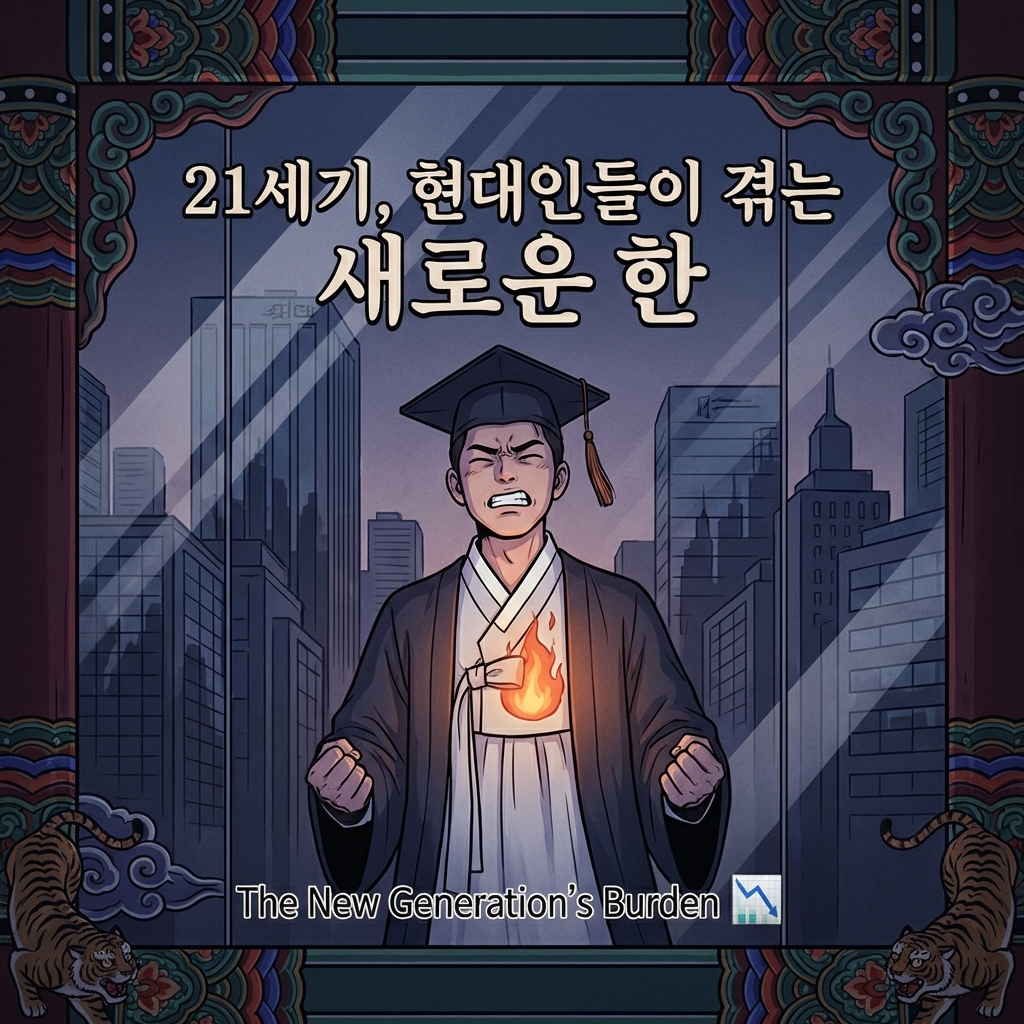
The New Generation’s Burden 🏢📉
Did wealth erase Han? Absolutely not! 💸🚫
Modern Koreans still experience Han daily!
When a teenager studies 15 hours a day but still fails the National College Exam (Suneung) 📝, or when a young professional realizes they can never afford an apartment in Seoul despite doing everything right 🏢… that deep, sickening feeling of unfairness and systemic helplessness is the exact same Han their ancestors felt! It is just wearing a modern suit! 👔🥀
Modern Koreans still experience Han daily!
When a teenager studies 15 hours a day but still fails the National College Exam (Suneung) 📝, or when a young professional realizes they can never afford an apartment in Seoul despite doing everything right 🏢… that deep, sickening feeling of unfairness and systemic helplessness is the exact same Han their ancestors felt! It is just wearing a modern suit! 👔🥀
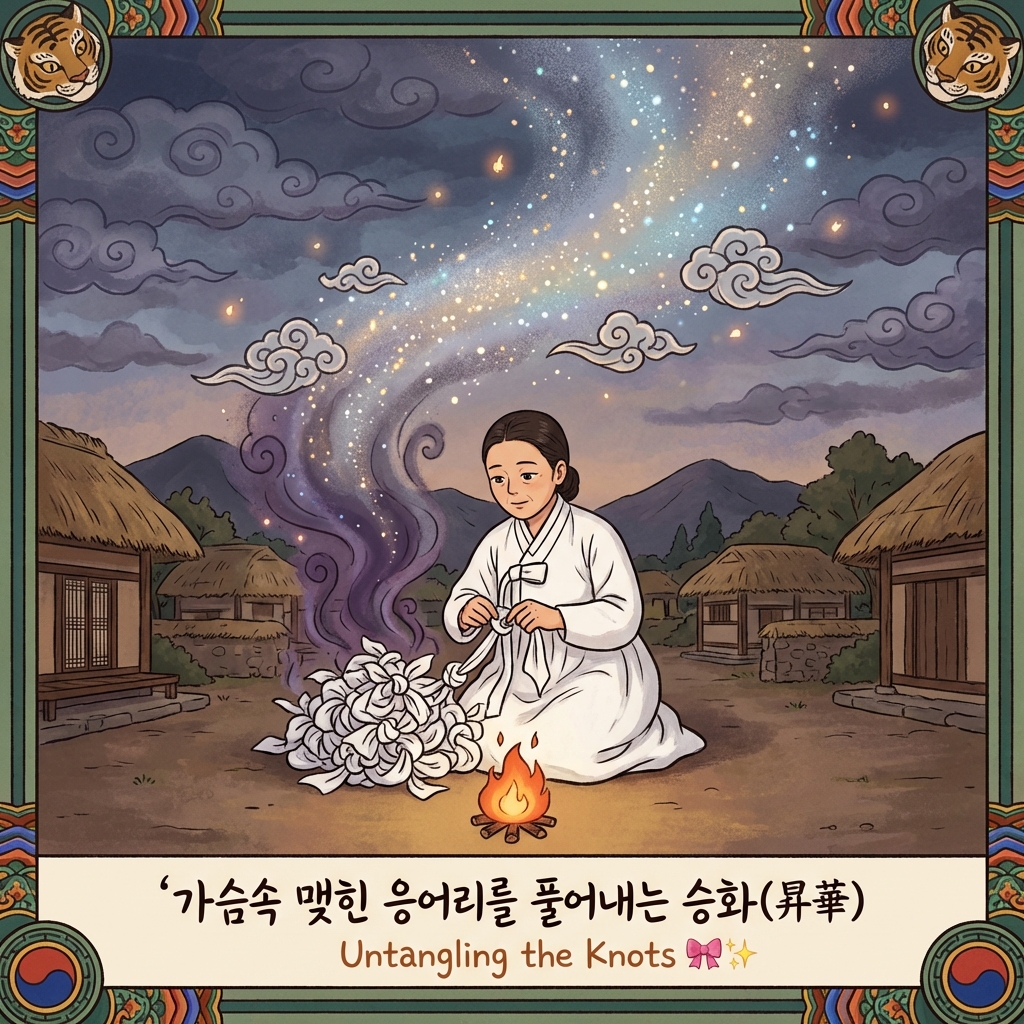
Untangling the Knots 🎀✨
Han will physically kill you if you hold it forever! ☠️
The ultimate goal in Korean psychology is 승화 (Seunghwa / Sublimation)—the act of releasing the Han. 🕊️
Historically, Shamans performed rituals to literally “untie the knots” of sorrow in a dead person’s soul. Today, Koreans vent their Han through intense late-night drinking sessions, aggressively spicy food, crying violently at melodramatic movies, or singing screamingly loud in karaoke rooms! 🎤🔥 You must let the steam out! ♨️
The ultimate goal in Korean psychology is 승화 (Seunghwa / Sublimation)—the act of releasing the Han. 🕊️
Historically, Shamans performed rituals to literally “untie the knots” of sorrow in a dead person’s soul. Today, Koreans vent their Han through intense late-night drinking sessions, aggressively spicy food, crying violently at melodramatic movies, or singing screamingly loud in karaoke rooms! 🎤🔥 You must let the steam out! ♨️
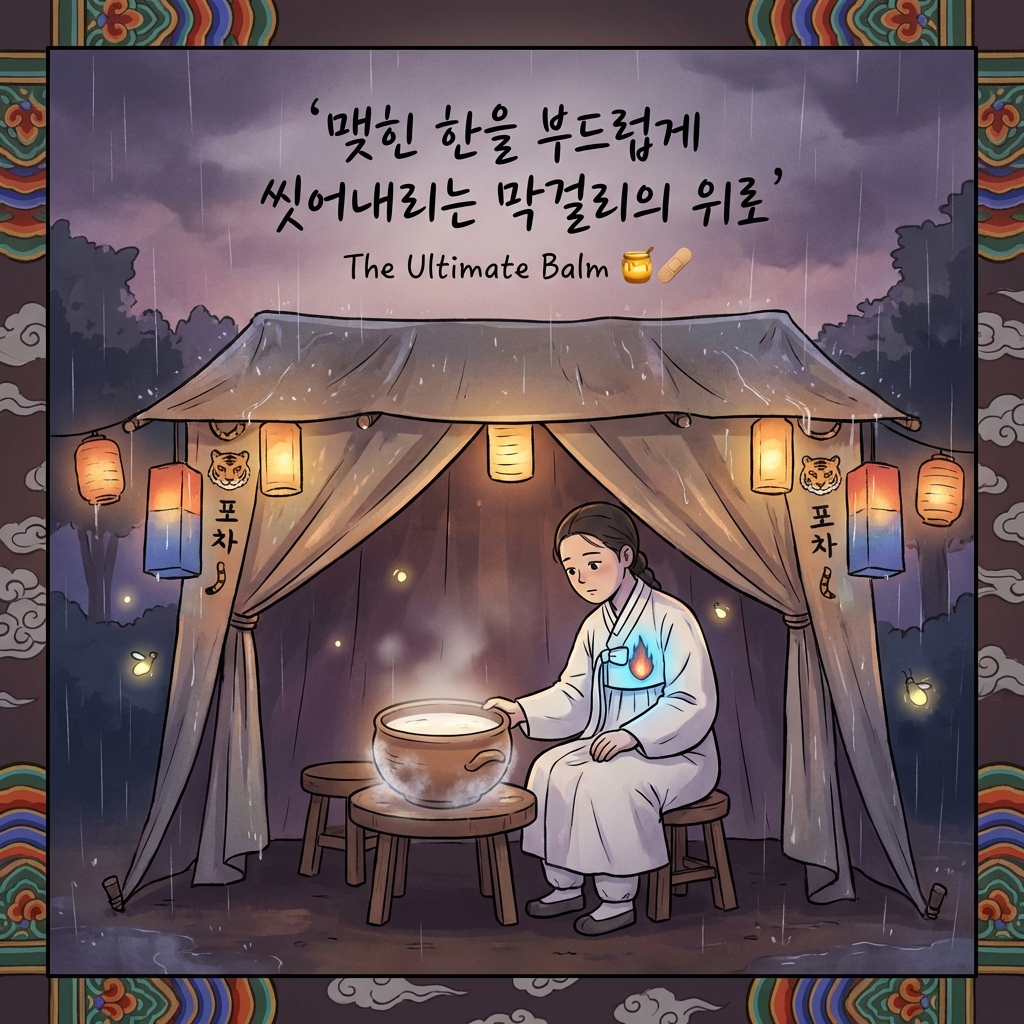
The Ultimate Balm 🍯🩹
Alcohol in Korea is not just a beverage; it is historically documented emotional medicine designed specifically to treat Han! 💊🍶
When the weight of the world, your boss, or the economy is crushing your chest, you don’t need sharp, burning liquor. You need the deep, earthy, naturally sweet, thick comfort of an authentic JS Brewery Makgeolli 🌾.
The milky rice wine physically coats the stomach, warming the soul and untangling the emotional knots, making the unbearable reality suddenly bearable again. 😌✨
When the weight of the world, your boss, or the economy is crushing your chest, you don’t need sharp, burning liquor. You need the deep, earthy, naturally sweet, thick comfort of an authentic JS Brewery Makgeolli 🌾.
The milky rice wine physically coats the stomach, warming the soul and untangling the emotional knots, making the unbearable reality suddenly bearable again. 😌✨
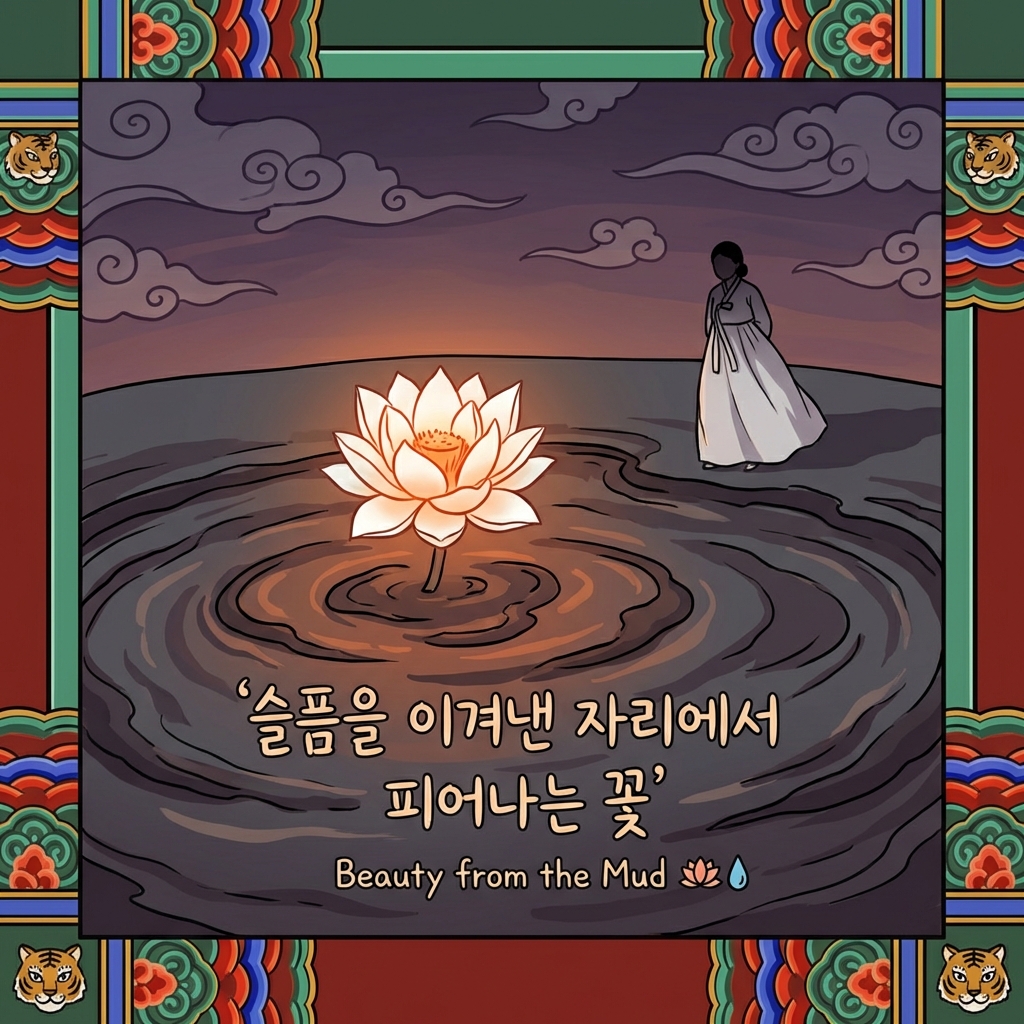
Beauty from the Mud 🪷💧
Have you ever felt Han? A situation that was deeply unfair, where you were completely helpless, but you refused to give up anyway? ✊ Let us know how you overcame your own Han below! 👇
1 / 9