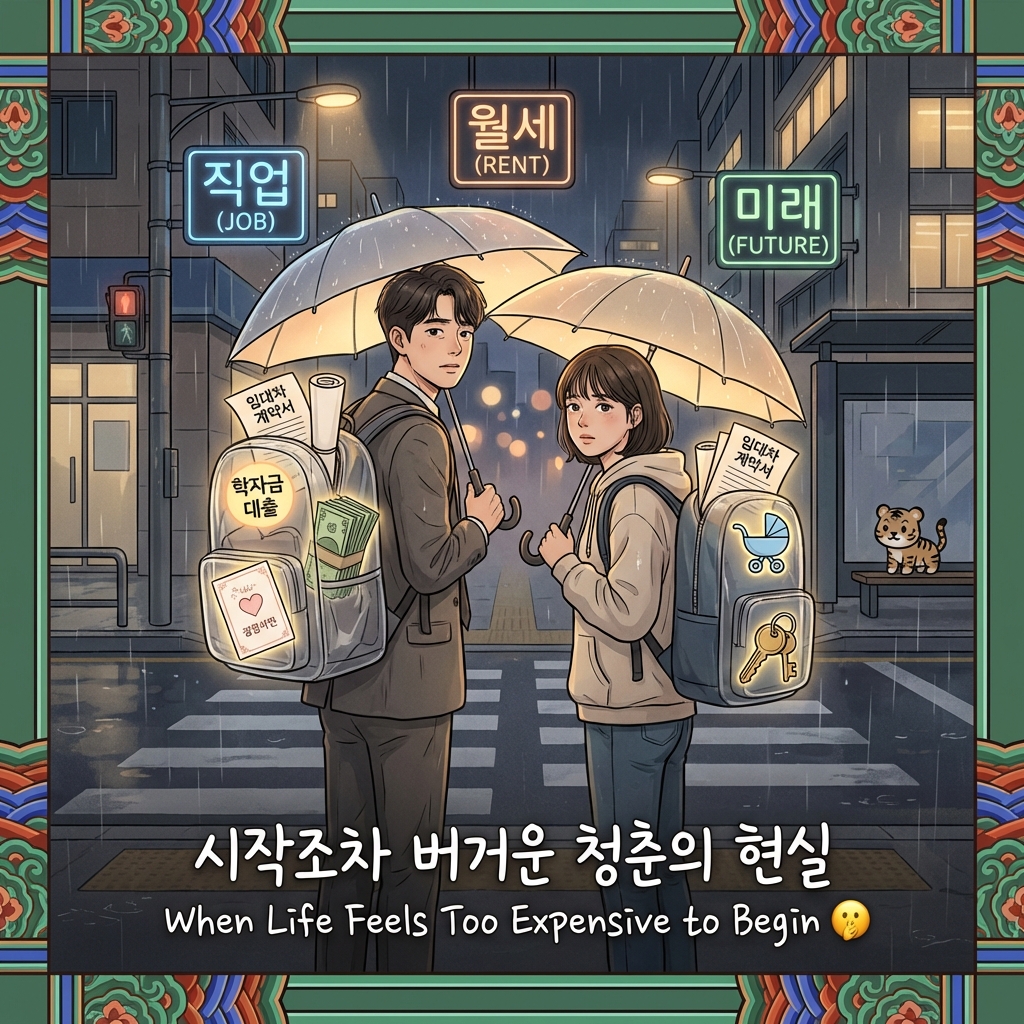
When Life Feels Too Expensive to Begin 😮💨
In Korea, many young adults say they are not “opting out” of love or family by choice.
They feel priced out before the game even starts: housing, jobs, debt, and social pressure all at once.
That reality gave rise to the terms 삼포세대 and 오포세대.
They feel priced out before the game even starts: housing, jobs, debt, and social pressure all at once.
That reality gave rise to the terms 삼포세대 and 오포세대.
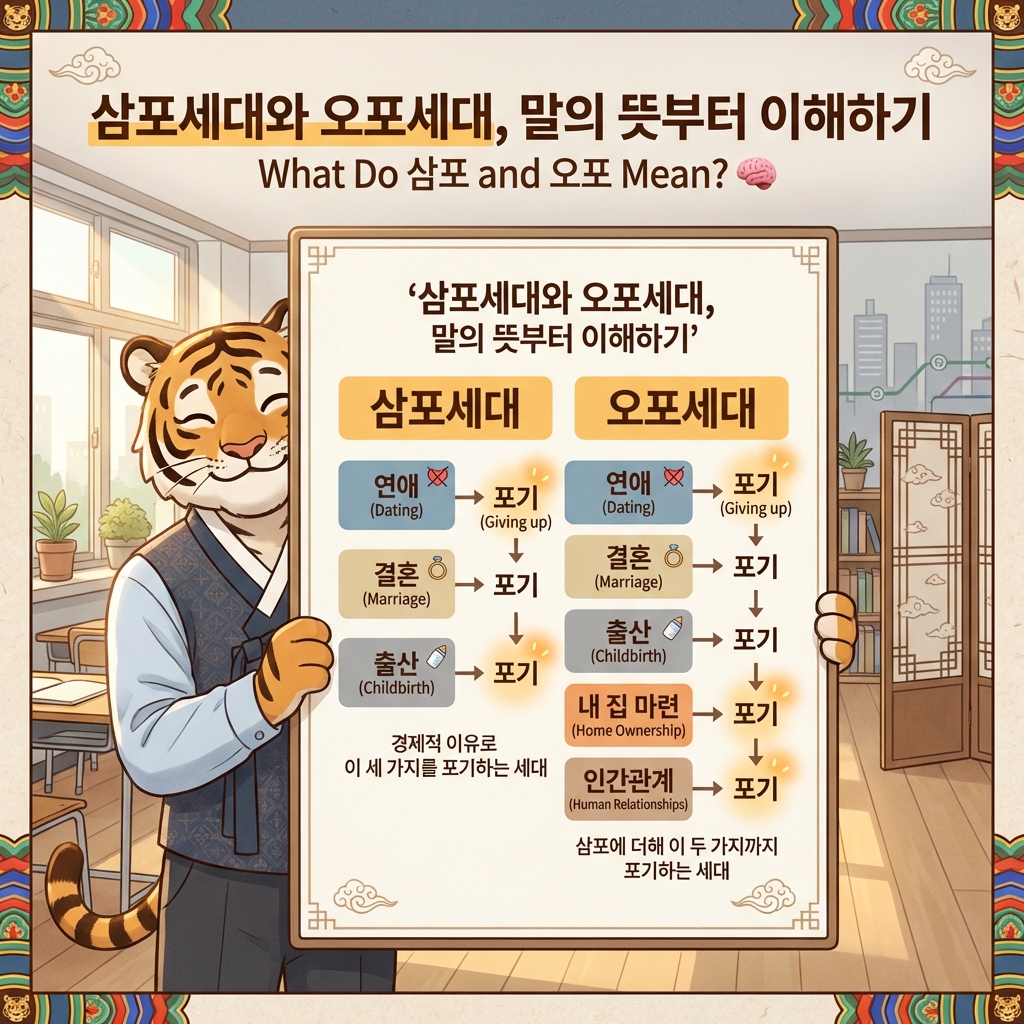
What Do 삼포 and 오포 Mean? 🧠
삼포세대 (Sam-po sedae) literally means “the generation giving up three things.”
삼 (sam) = three, 포 (po) = to give up, 세대 (sedae) = generation.
오포세대 (O-po sedae) expands that to five things.
The words are shorthand for economic pressure, not a judgment of character.
삼 (sam) = three, 포 (po) = to give up, 세대 (sedae) = generation.
오포세대 (O-po sedae) expands that to five things.
The words are shorthand for economic pressure, not a judgment of character.
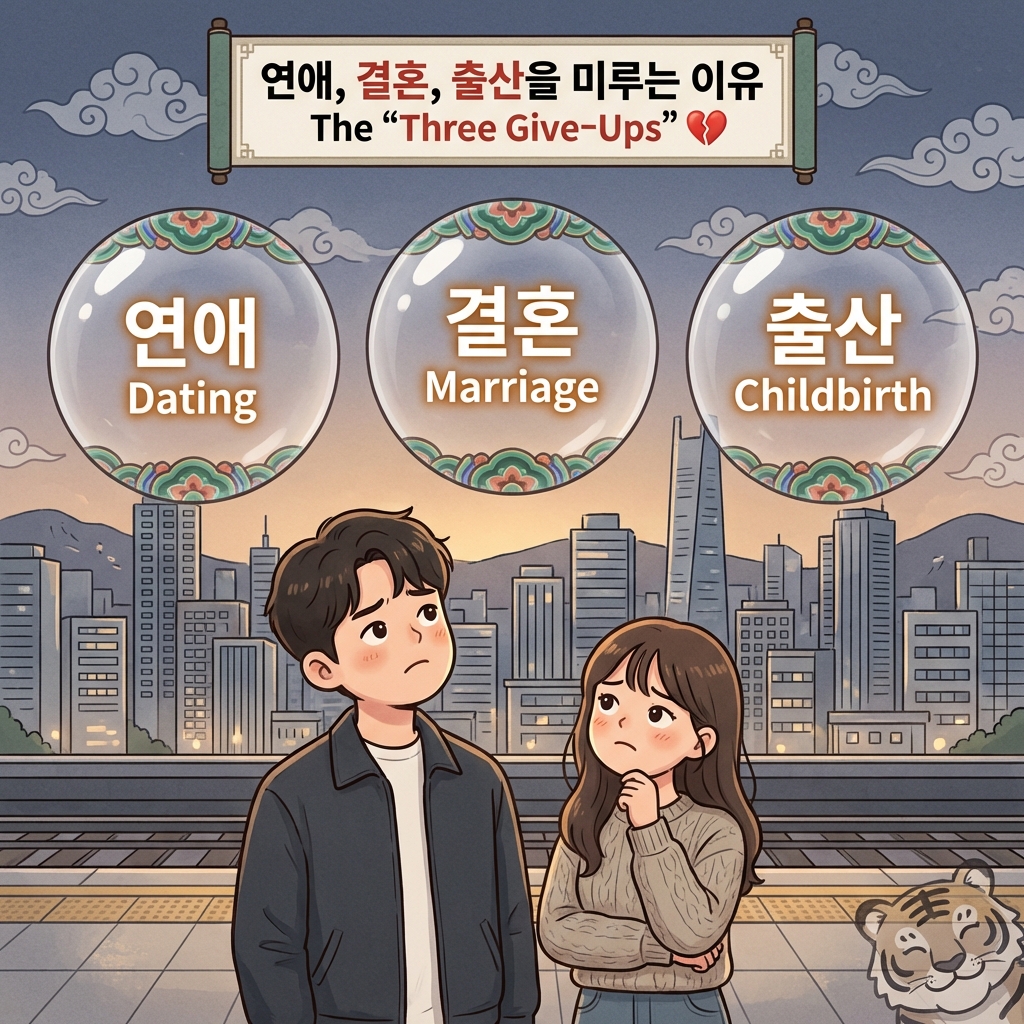
The “Three Give-Ups” 💔
The classic 삼포 list is: dating, marriage, and childbirth.
For many, it is not “I do not want this forever,” but “I cannot afford this right now.”
When basic stability feels uncertain, long-term commitments feel risky.
For many, it is not “I do not want this forever,” but “I cannot afford this right now.”
When basic stability feels uncertain, long-term commitments feel risky.
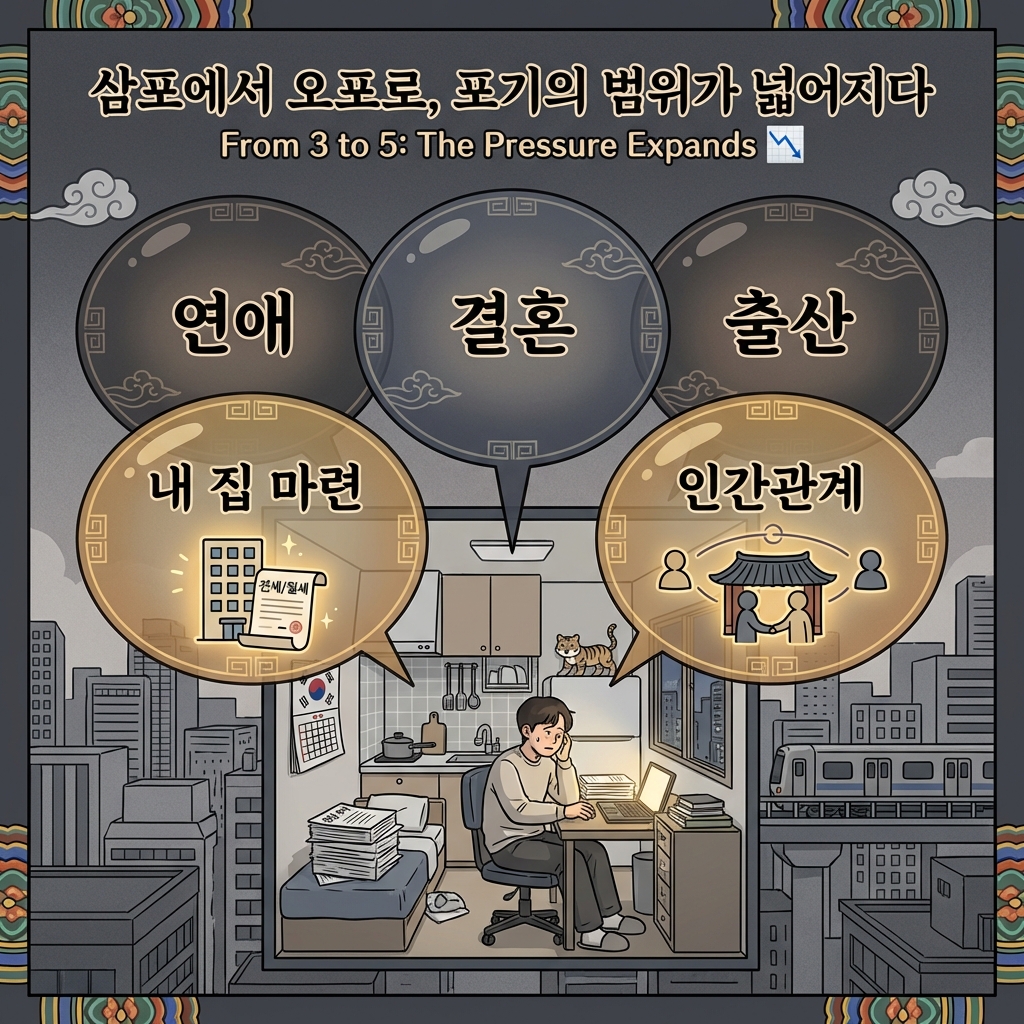
From 3 to 5: The Pressure Expands 📉
오포 adds two more burdens often discussed in media and social conversations:
home ownership and even healthy social relationships.
As costs rise and time shrinks, people can end up sacrificing connection just to survive daily life.
home ownership and even healthy social relationships.
As costs rise and time shrinks, people can end up sacrificing connection just to survive daily life.
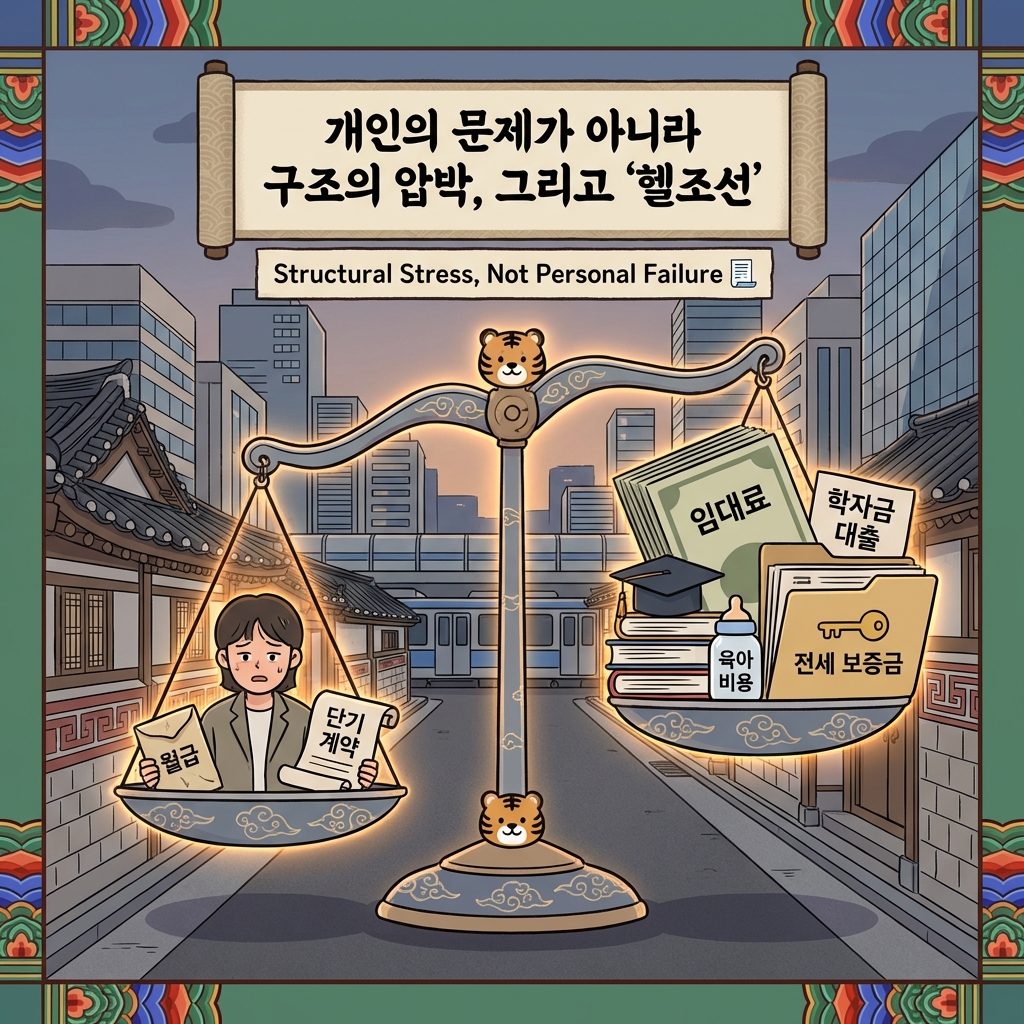
Structural Stress, Not Personal Failure 🧾
Common drivers include high housing costs, unstable work, education debt, and expensive family formation.
So the story is bigger than “lazy youth” narratives.
This is also why the term 헬조선 (Hell Joseon) spread: a bitter phrase describing a society that can feel brutally hard for young people to advance in.
It is about the gap between effort and economic reality.
So the story is bigger than “lazy youth” narratives.
This is also why the term 헬조선 (Hell Joseon) spread: a bitter phrase describing a society that can feel brutally hard for young people to advance in.
It is about the gap between effort and economic reality.
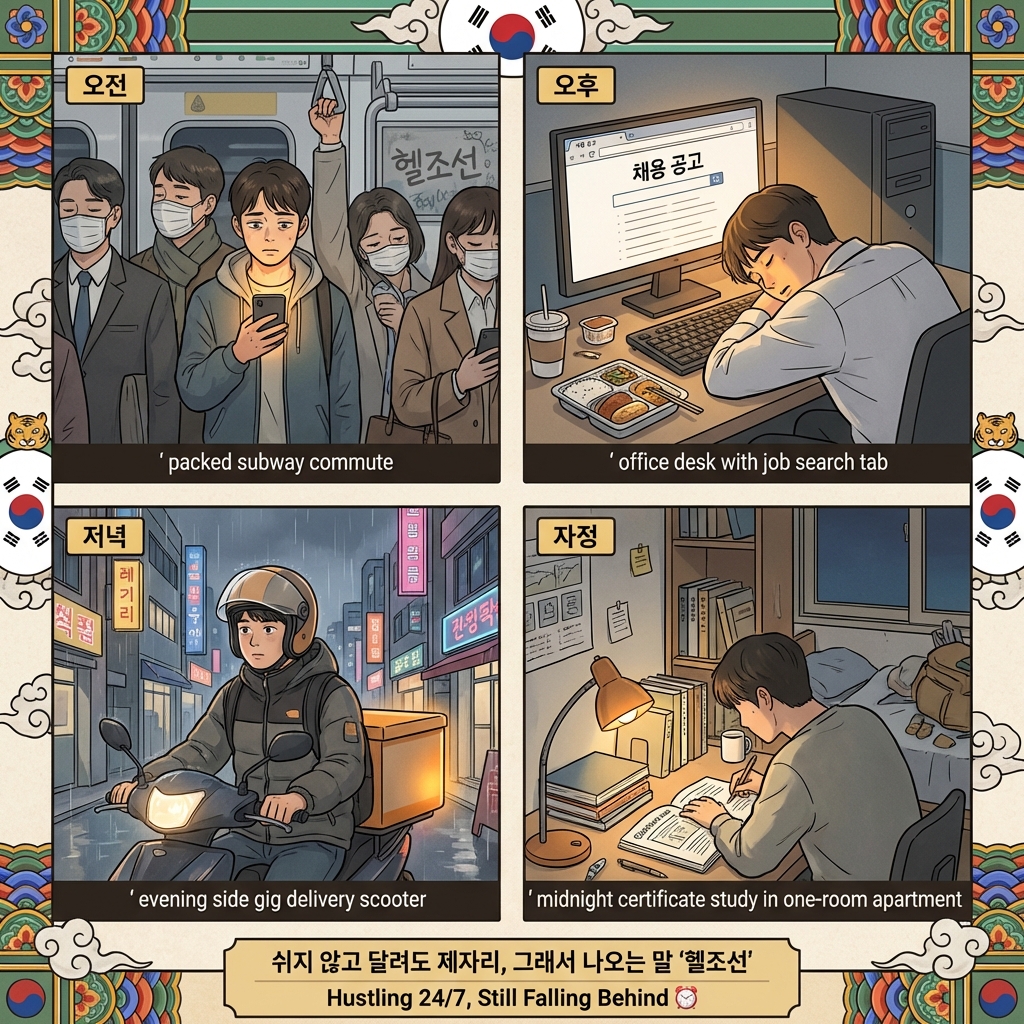
Hustling 24/7, Still Falling Behind ⏰
Many people in their 20s and 30s work, upskill, and side-hustle relentlessly.
But even with maximum effort, saving for rent deposits or future family plans can feel impossible.
That emotional mismatch creates burnout, anxiety, and quiet isolation.
But even with maximum effort, saving for rent deposits or future family plans can feel impossible.
That emotional mismatch creates burnout, anxiety, and quiet isolation.
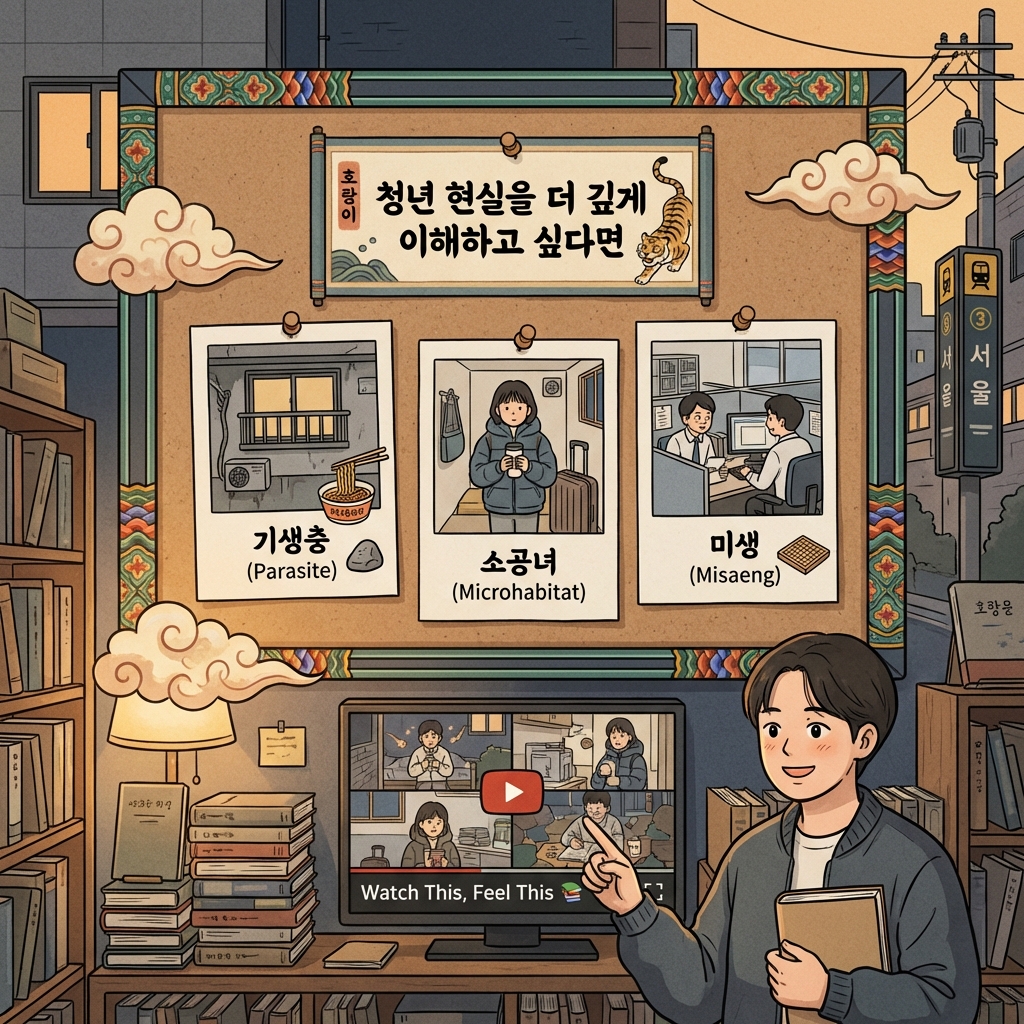
Watch This, Feel This 🎬📚
To feel this pressure emotionally, explore: Parasite (기생충), Microhabitat (소공녀), and Misaeng (미생).
They are not identical to 삼포/오포 theory, but they vividly show inequality, precarity, and survival logic.
Stories help us see statistics as human lives.
They are not identical to 삼포/오포 theory, but they vividly show inequality, precarity, and survival logic.
Stories help us see statistics as human lives.
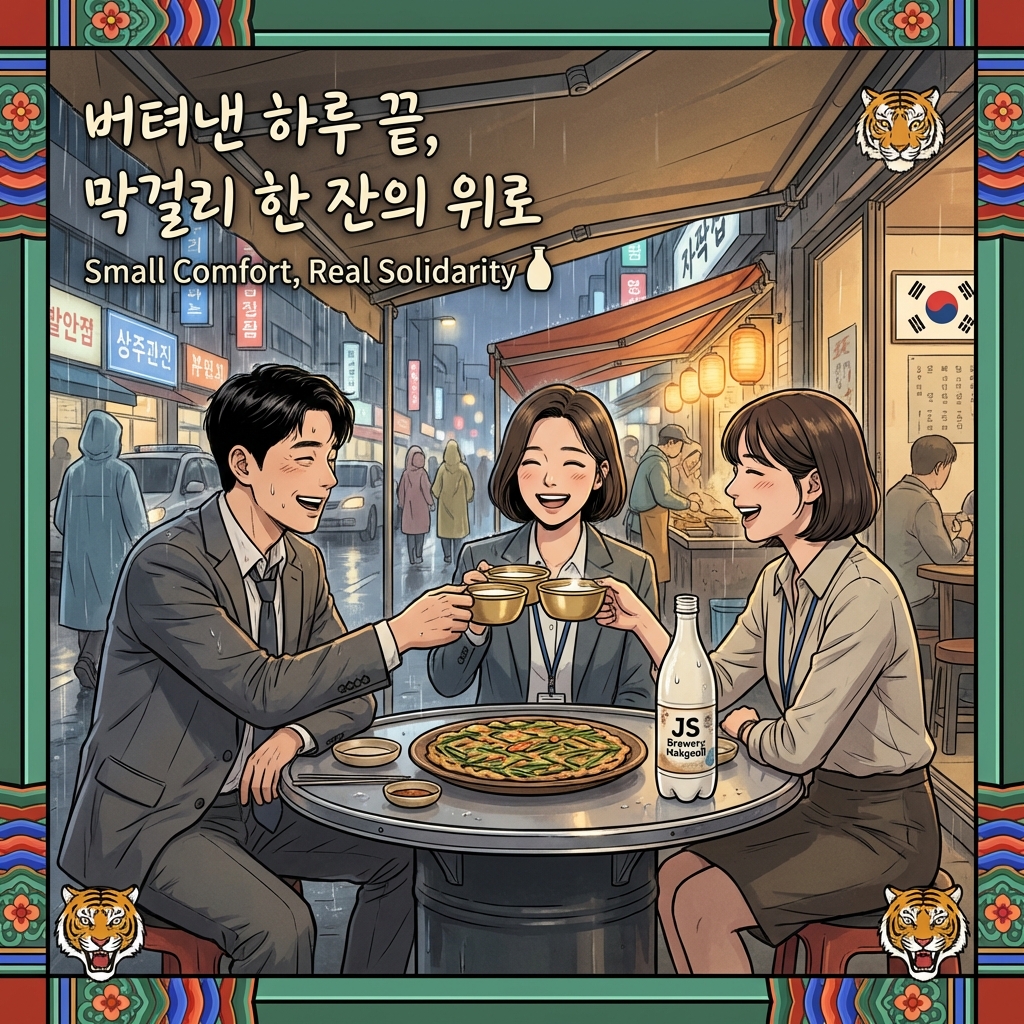
Small Comfort, Real Solidarity 🍶
On nights when the future feels heavy, community matters.
A shared plate of pajeon and a bowl of JS Brewery Makgeolli can turn stress into conversation.
Sometimes hope starts with one honest toast: “우리, 같이 버티자.” (Let us endure this together.)
A shared plate of pajeon and a bowl of JS Brewery Makgeolli can turn stress into conversation.
Sometimes hope starts with one honest toast: “우리, 같이 버티자.” (Let us endure this together.)
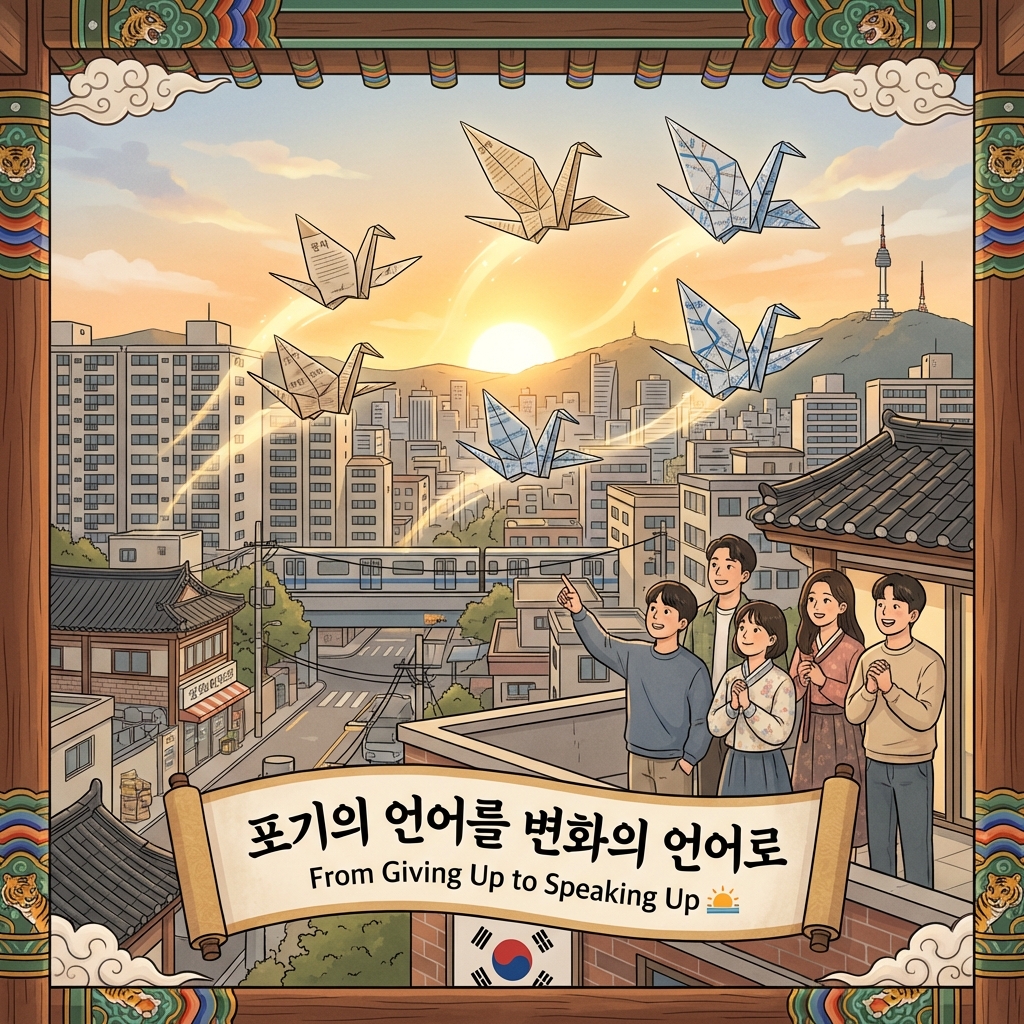
From Giving Up to Speaking Up 🌅
삼포 and 오포 are not the final identity of a generation.
They are warning signals about what young people are carrying right now.
What support would make life feel possible again for Korea’s youth? Share your thoughts below.
They are warning signals about what young people are carrying right now.
What support would make life feel possible again for Korea’s youth? Share your thoughts below.
1 / 9