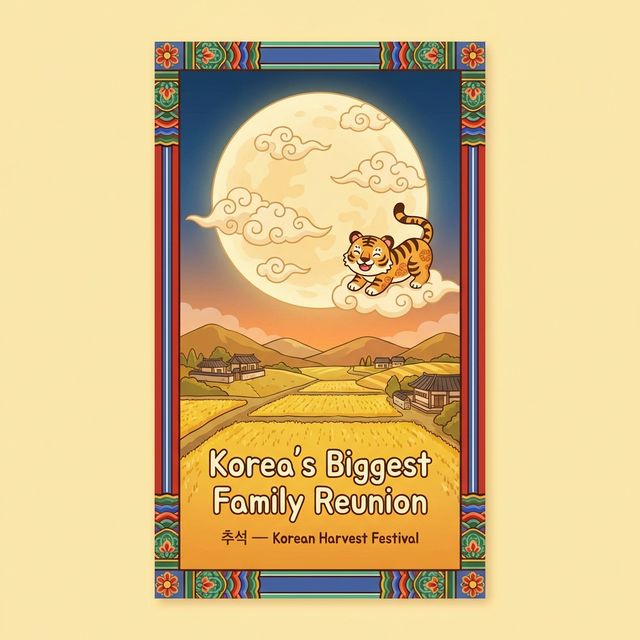
Korea’s Biggest Family Reunion.
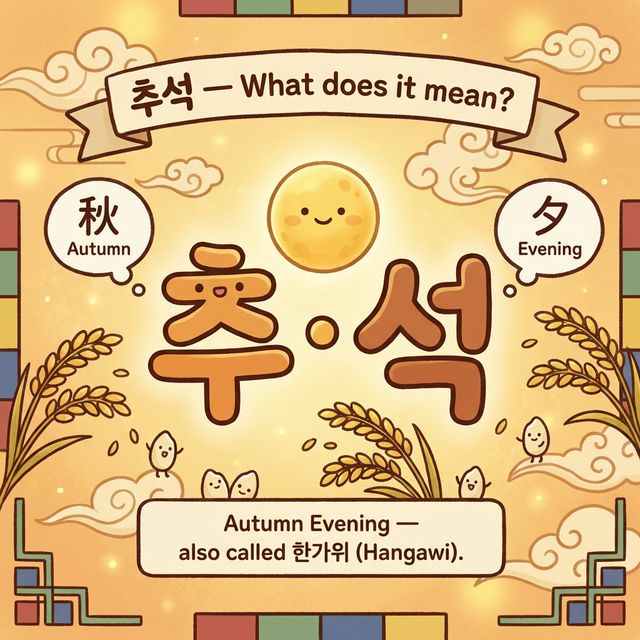
추석 — What does it mean?
The name comes from Chinese characters (한자): 추 (chu / 秋) = Autumn. 석 (seok / 夕) = Evening. “Autumn Evening” — referring to the beautiful full moon on the 15th day of the 8th lunar month. Also called 한가위 (Hangawi), a pure Korean word meaning “the great middle (of autumn).”
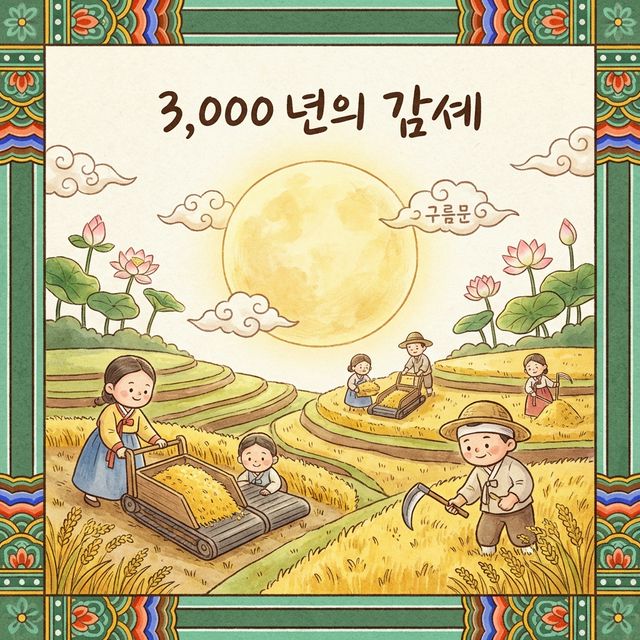
3,000 Years of Gratitude.
Chuseok dates back to ancient Korean harvest celebrations — a time to thank the earth for a bountiful crop. The Silla Dynasty (57 BC – 935 AD) formalized it as a festival with weaving contests and feasts. It remains Korea’s most important family holiday — often compared to American Thanksgiving, but much older.
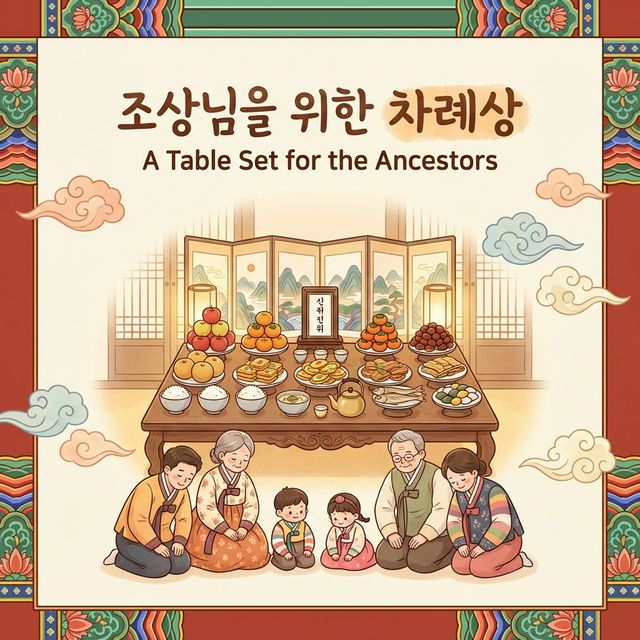
A Table Set for the Ancestors.
Early on Chuseok morning, families perform 차례 (charye) — an ancestral memorial rite. A carefully arranged table of food is prepared as an offering to honor grandparents and ancestors. The placement of every dish follows specific rules — fruit on the east, fish on the west. It’s a moment of deep respect and connection across generations.
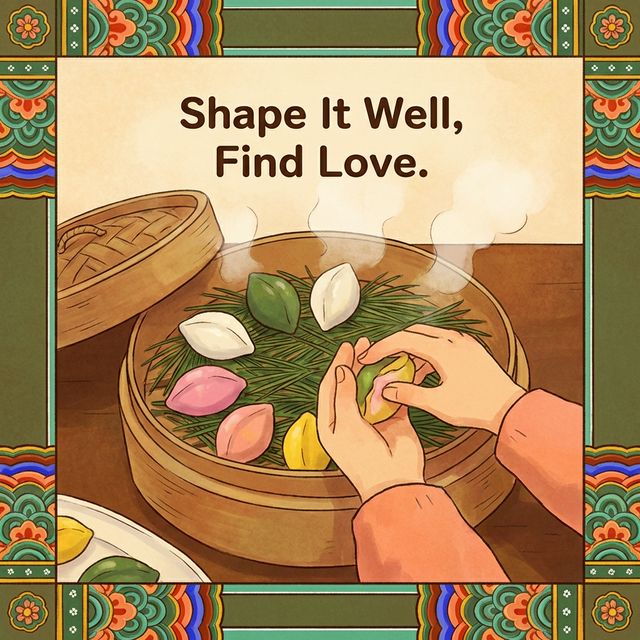
Shape It Well, Find Love.
송편 (songpyeon) is THE Chuseok food — half-moon shaped rice cakes stuffed with sweet fillings and steamed on pine needles (hence the name: 송 = pine). The whole family makes them together the night before. Korean folklore says: the person who shapes the prettiest songpyeon will find a beautiful spouse 💕. The half-moon shape represents growth — a half moon becoming full.
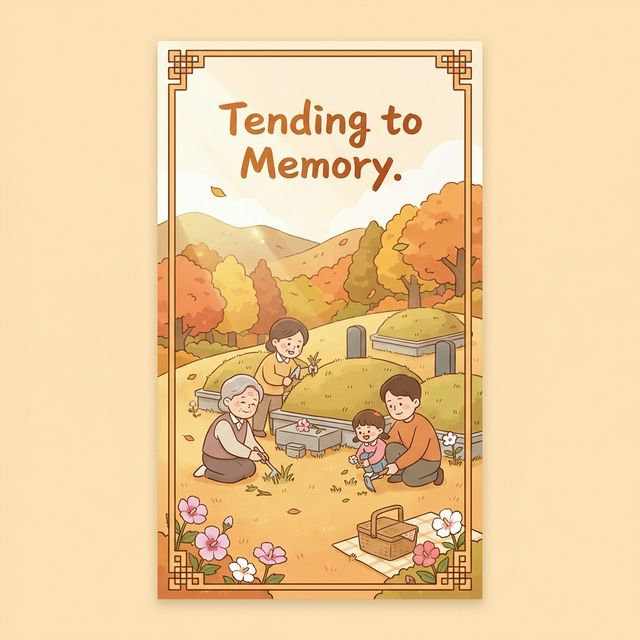
Tending to Memory.
Before or after 차례, families visit their ancestral graves (성묘 / seongmyo). They clear weeds (벌초 / beolcho), tidy the burial mounds, and pay their respects. In a country that urbanized rapidly, this tradition sends millions of Koreans back to their hometowns — creating the famous Chuseok traffic jams (귀성길).
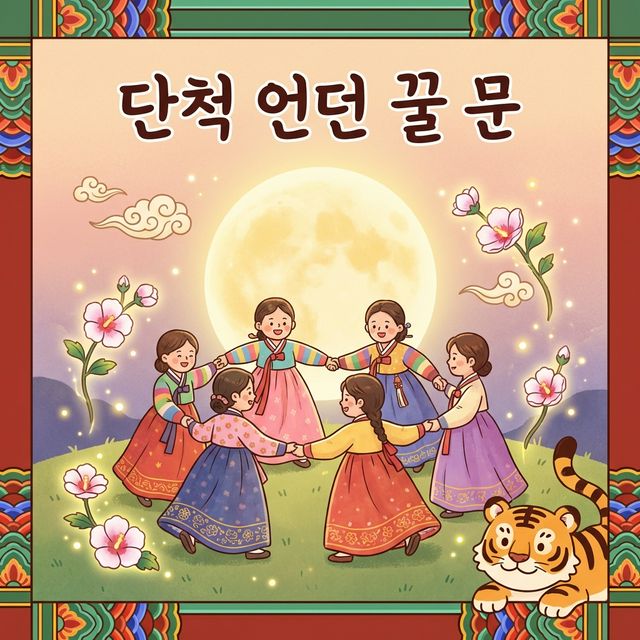
Dancing Under the Full Moon.
강강술래 (ganggangsullae) is an ancient Korean circle dance performed under the Chuseok full moon. Women join hands and dance in a circle, singing traditional songs. It’s believed to have origins in a military strategy — women danced on hilltops to make the enemy think the Korean forces were larger. UNESCO recognized it as an Intangible Cultural Heritage in 2009.
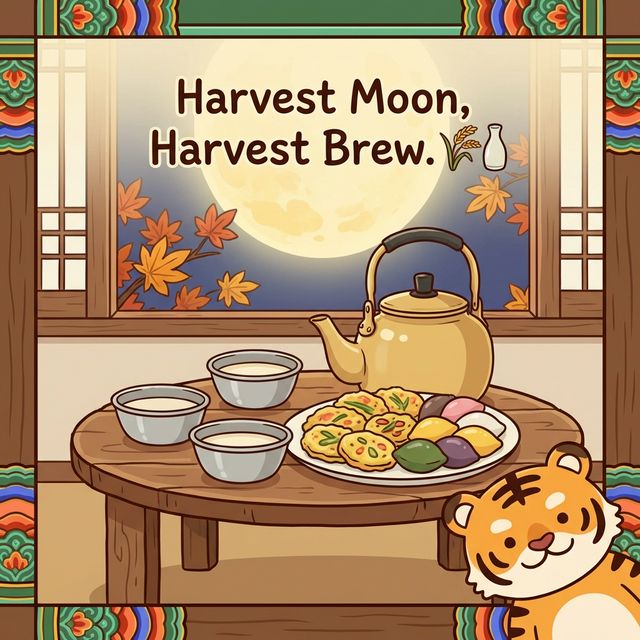
Harvest Moon, Harvest Brew.
Chuseok and Makgeolli are inseparable. Made from freshly harvested rice, Chuseok Makgeolli is the freshest of the year. Families share it during 차례 and throughout the holiday — poured from a 주전자 into tin bowls, alongside towers of 전. It’s the taste of autumn, gratitude, and togetherness. 🌾🍶
Gratitude is a harvest.
What are you most thankful for this season? 👇
1 / 9