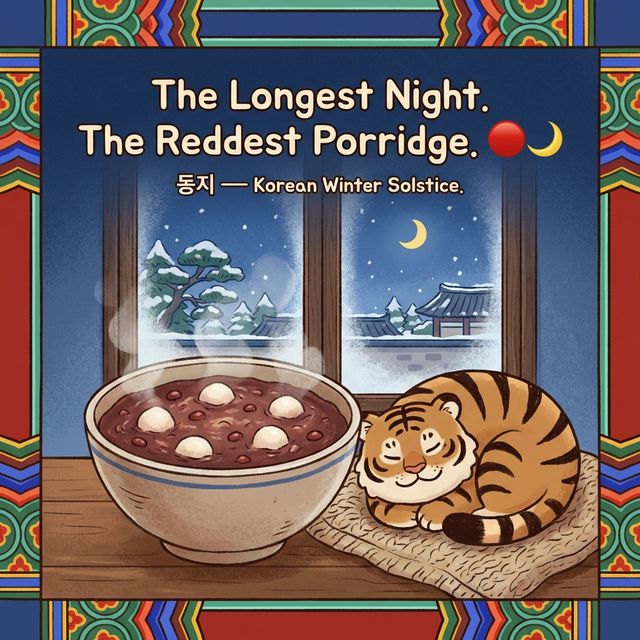
The Longest Night. The Reddest Porridge. 🔴🌙
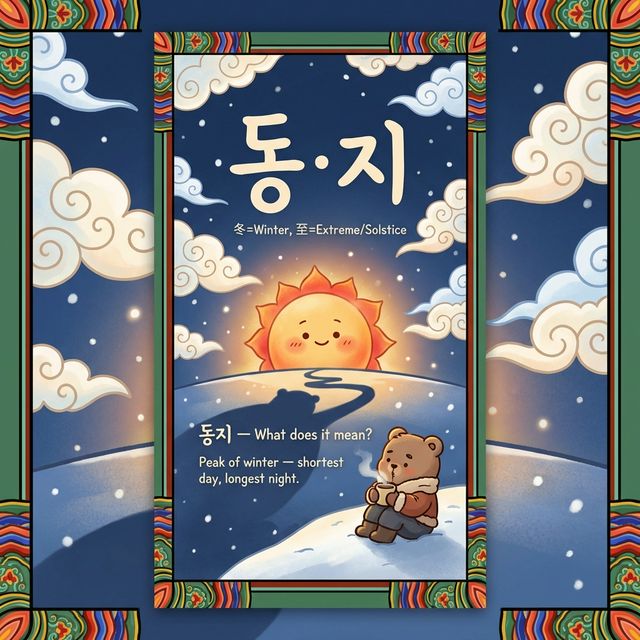
동지 — What does it mean?
The name is straightforward: 동 (dong / 冬) = Winter. 지 (ji / 至) = Extreme / Solstice (“arriving at the peak”). “The peak of winter” — the shortest day and longest night of the year. Falls around December 21–22 on the solar calendar. Koreans traditionally called it “작은 설” (little New Year) — a second beginning.
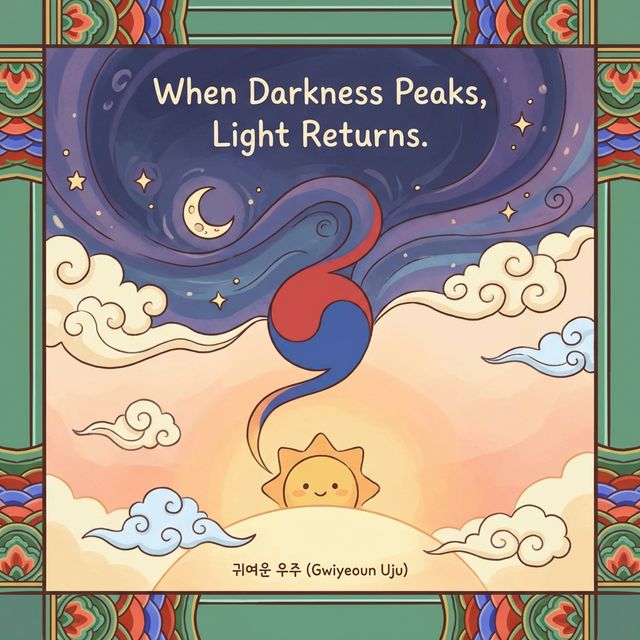
When Darkness Peaks, Light Returns.
In Korean cosmology, 동지 is profoundly meaningful: It’s the moment when 음 (eum/yin, darkness) reaches its maximum — and 양 (yang, light) begins its return. After 동지, days slowly grow longer. The sun is reborn. Koreans saw this as a spiritual turning point — evil spirits are strongest on the darkest night, so protection rituals are essential.
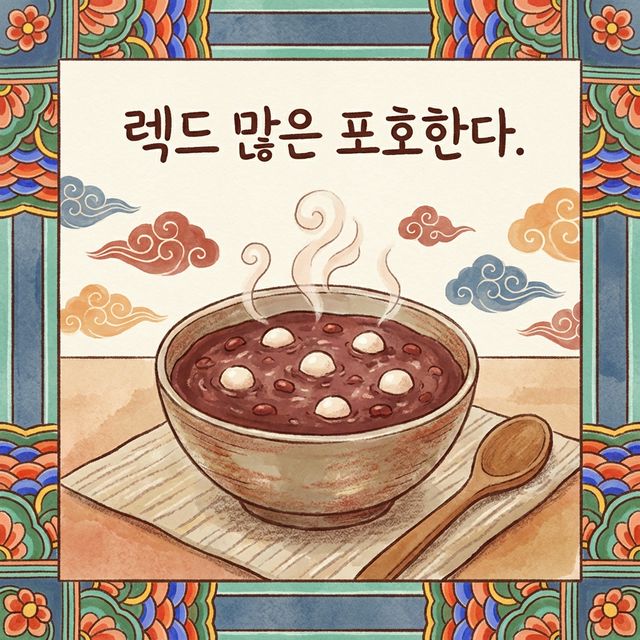
Red Means Protection.
The star of 동지 is 팥죽 (patjuk) — red bean porridge. Red beans (팥) have been believed to ward off evil spirits since ancient times — the color red repels darkness. The small white rice dumplings (새알심/saealsim) are added — one for each year of your age. Eating 팥죽 on 동지 is like putting on spiritual armor for the coming year. 🛡️
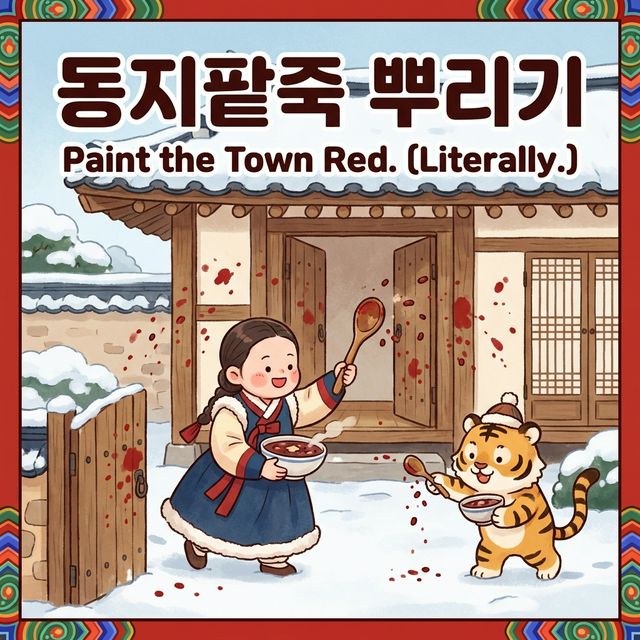
Paint the Town Red. (Literally.)
Eating 팥죽 isn’t enough — you also spread it around the house. Families would smear red bean porridge on doorframes, walls, and gates to create a spiritual barrier. The red color was believed to keep evil spirits (잡귀) from entering. Think of it as Korea’s original home security system — powered by beans. 🫘
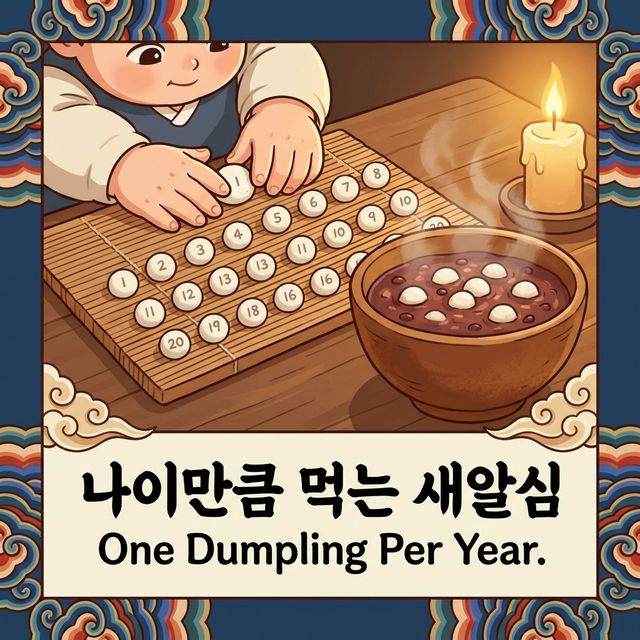
One Dumpling Per Year.
The white rice ball dumplings in 팥죽 are called 새알심 (saealsim) — “little bird eggs.” Tradition says you add one dumpling for each year of your age. So your 팥죽 is literally a bowl of your life story in dumpling form. Some families also make them in pairs for good luck — because even dumplings shouldn’t be lonely. 😊
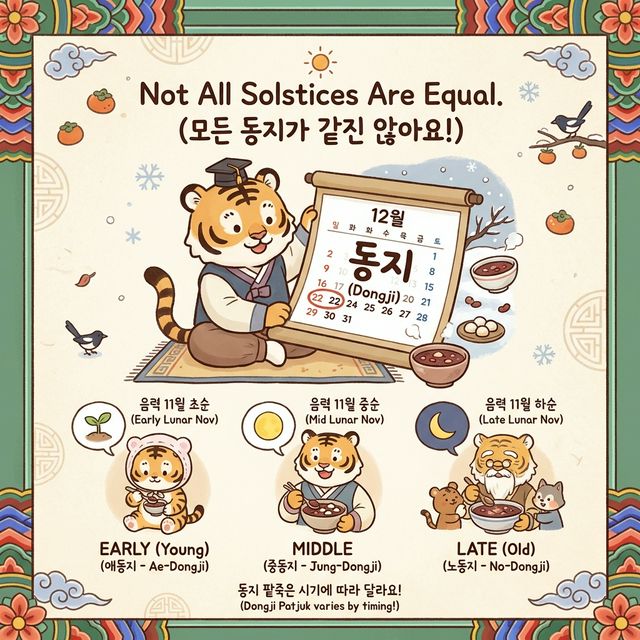
Not All Solstices Are Equal.
Koreans categorize 동지 into three types based on when it falls in the lunar month: 애동지 (ae-dongji) — Falls on the 1st–10th: “young solstice.” Too early for 팥죽 — families make 팥시루떡 (red bean rice cake) instead. 중동지 (jung-dongji) — Falls on the 11th–20th: “middle solstice.” Standard 팥죽 celebration. 노동지 (no-dongji) — Falls on the 21st–30th: “old solstice.” Full 팥죽 with all traditions observed.
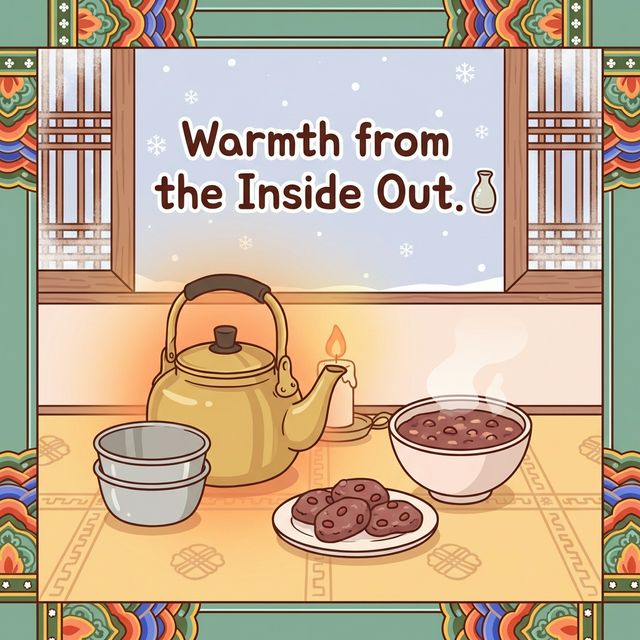
Warmth from the Inside Out. 🍶
On the longest, coldest night, what pairs better with 팥죽 than Makgeolli? Traditionally, families gathered on the warm 온돌 (ondol, heated floor), sharing food and drink. The milky sweetness of Makgeolli meets the earthy warmth of red bean porridge — a match made for Korean winters. Pour one, stay warm, wait for the light to return. 🌅
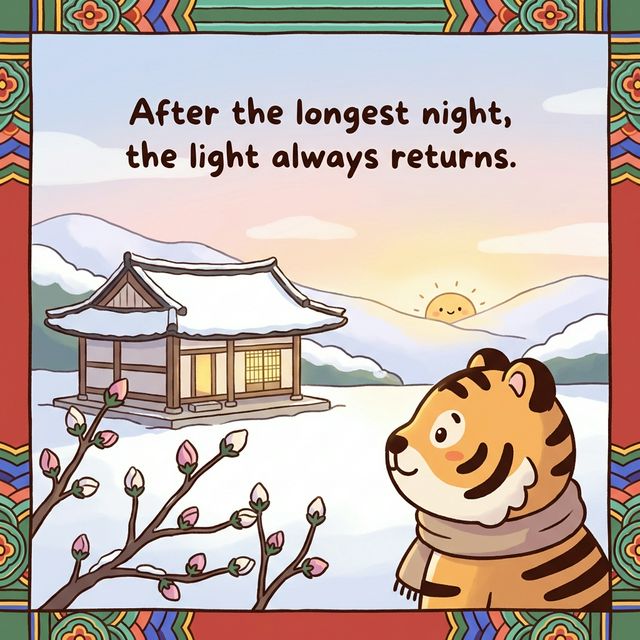
After the longest night, the light always returns.
What warms you on the coldest days? 🔴🌙 👇
1 / 9