
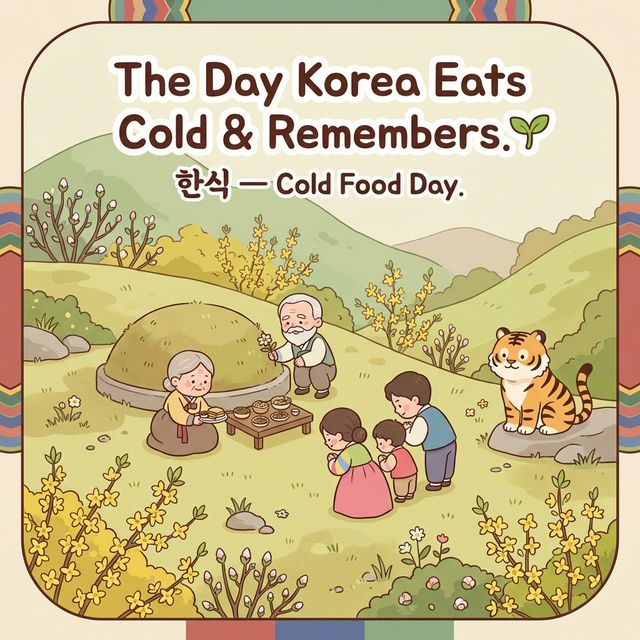
The Day Korea Eats Cold & Remembers. 🌱
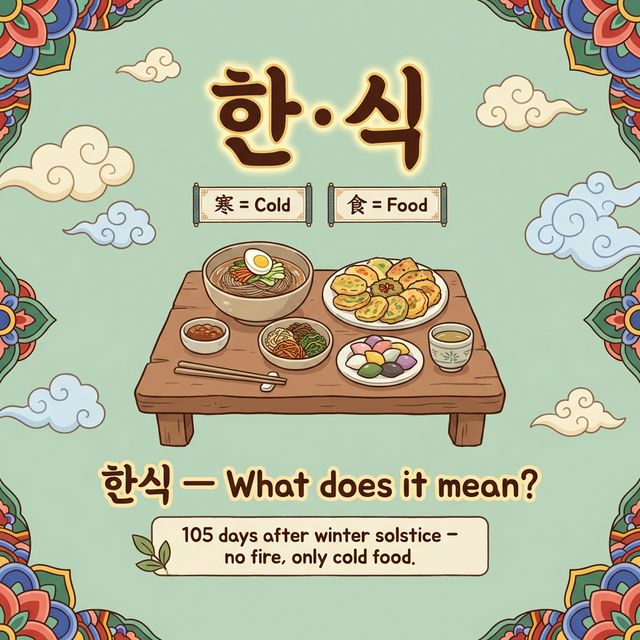
한식 — What does it mean?
The name is literal: 한 (han / 寒) = Cold. 식 (sik / 食) = Food. “Cold Food” — a day when no fire is lit and only cold food is eaten. It falls 105 days after the winter solstice (동지), usually in early April — right as spring awakens.
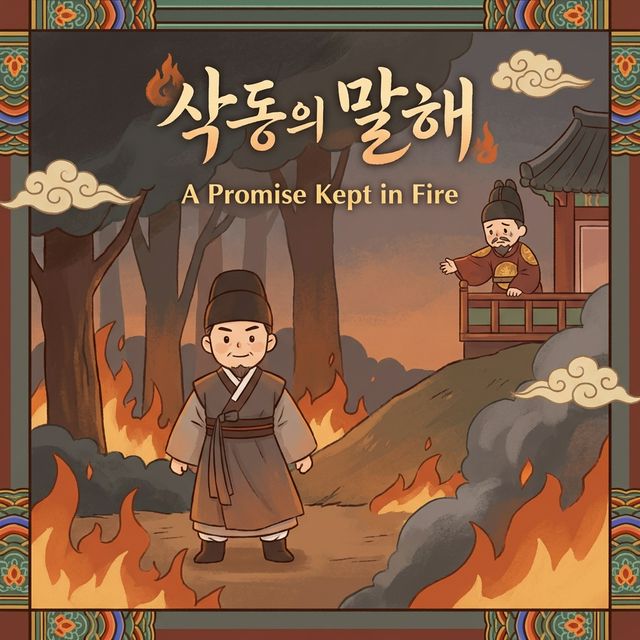
A Promise Kept in Fire.
The origin is a heartbreaking tale from ancient China, adopted into Korean tradition: A loyal minister named 개자추 (Gae Ja-chu) refused to be rewarded by his king and retreated to a mountain. The king set the mountain on fire to force him out — but 개자추 chose to die rather than leave. In grief, the king decreed that no fires would be lit on that day — and only cold food would be eaten in his memory.
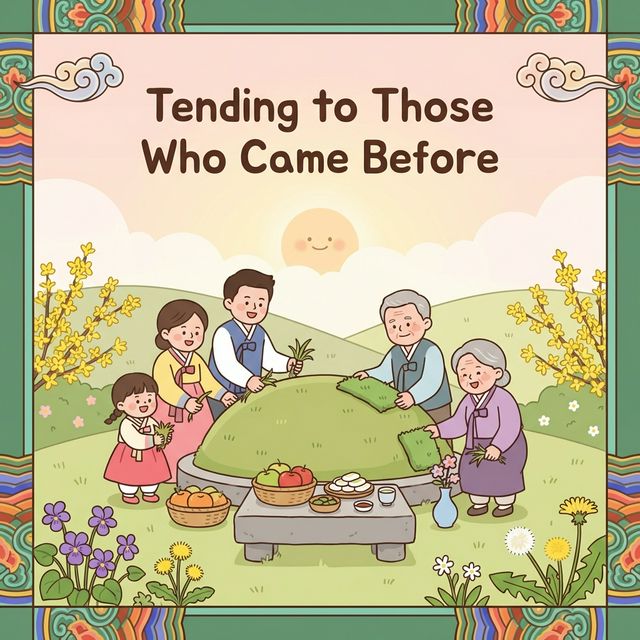
Tending to Those Who Came Before.
The most important 한식 tradition is 성묘 (seongmyo) — visiting ancestral graves. Families travel to their family burial grounds and: 🌿 Pull weeds and repair the mounds 🪦 Replace damaged headstones 🌸 Place fresh flowers and food offerings It’s a day of quiet care — showing love through physical acts of remembrance.
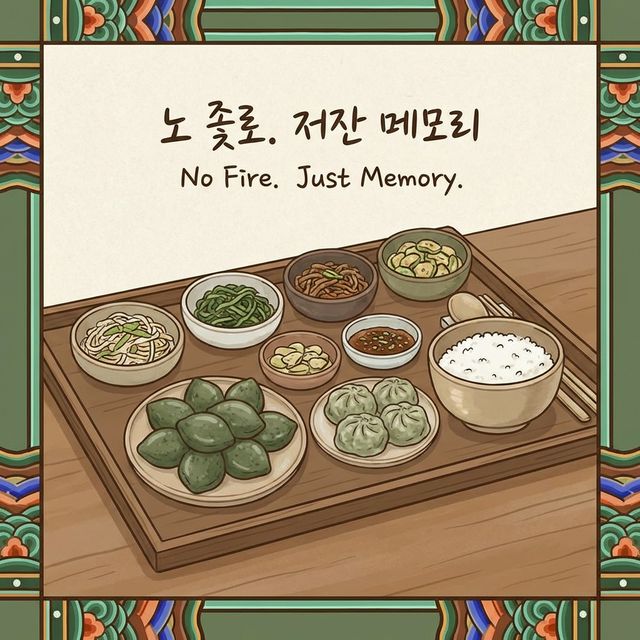
No Fire. Just Memory.
On 한식, the kitchen stays cold: 🍃 쑥떡 (ssuktteok) — mugwort rice cakes, fragrant and green 🥟 쑥단자 (ssukdanja) — mugwort dumplings rolled in bean powder 🥬 묵은 나물 — cold seasoned vegetables The simplicity is intentional — it mirrors the solemnity of the day. No cooking, no fire, just quiet nourishment.
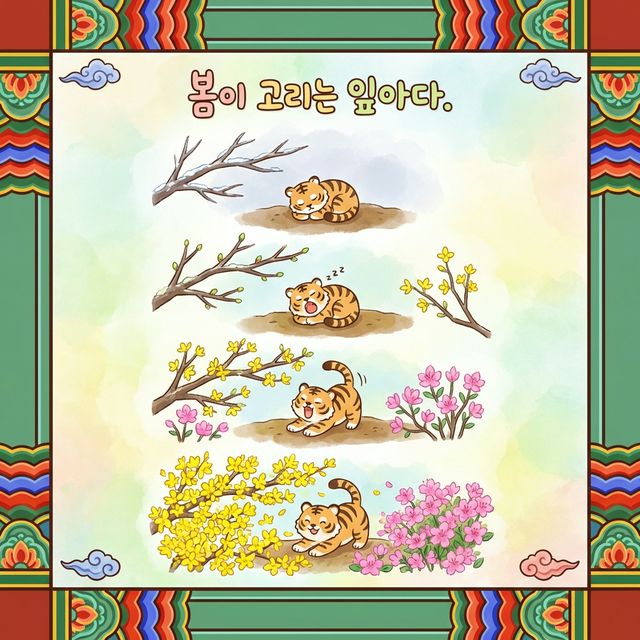
Spring Comes Quietly.
한식 arrives exactly when Korea’s spring explodes into color: 🌼 개나리 (gaenari / forsythia) turns hillsides yellow 🌺 진달래 (jindalrae / azalea) carpets mountains in pink 🌱 Mugwort and wild greens push through the soil The timing isn’t coincidence — 한식 connects the remembrance of the dead with the renewal of the living.
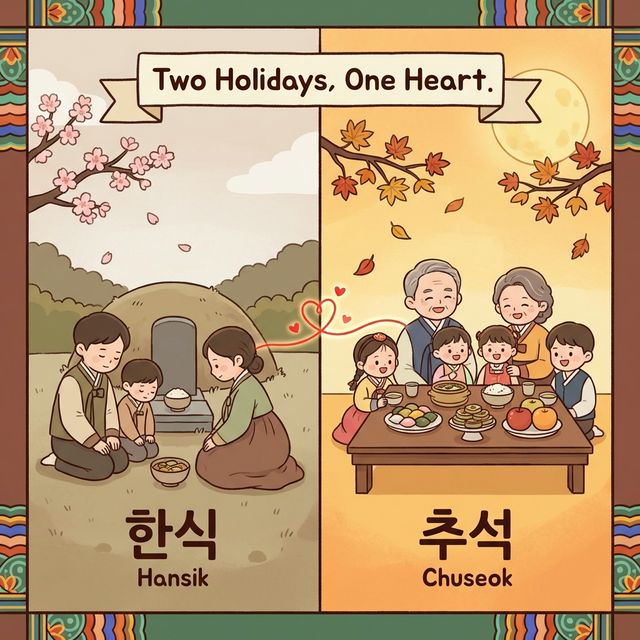
Two Holidays, One Heart.
Korea has two major grave-visiting holidays — and they complement each other: | | 한식 (Spring) | 추석 (Autumn) | |—|—|—| | Mood | Quiet, reflective | Festive, grateful | | Food | Cold, simple | Hot, abundant | | Focus | Cleaning & repairing | Feasting & celebrating | Together, they form a cycle of care → gratitude → care that keeps ancestors present in Korean life.
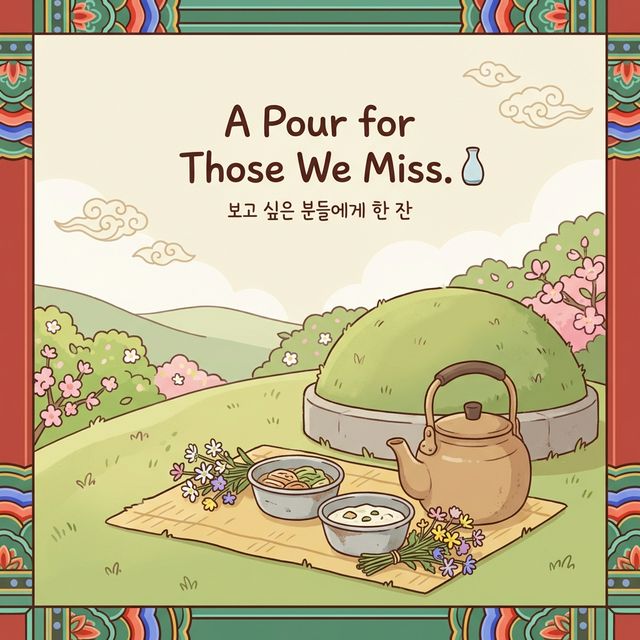
A Pour for Those We Miss. 🍶
Even on a day of no fire, Makgeolli has its place. Families pour Makgeolli as an offering at the grave — a drink shared between the living and the departed. After the rites, the family shares the food and drink together on the hillside. It’s intimate, unhurried, and deeply Korean. 🌱🍶
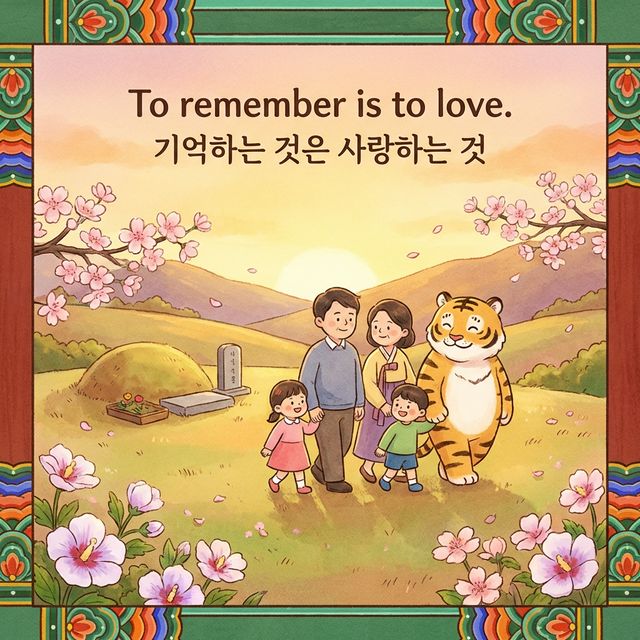
To remember is to love.
How do you honor those who came before you? 🌿 👇
1 / 9