
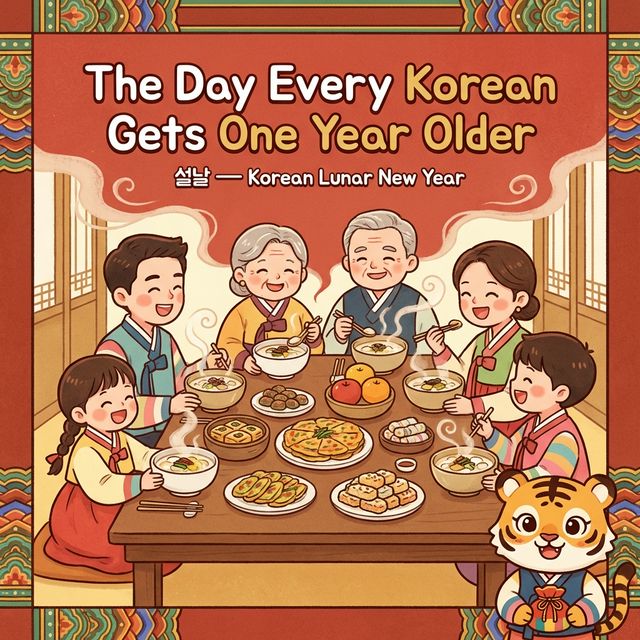
The Day Every Korean Gets One Year Older.
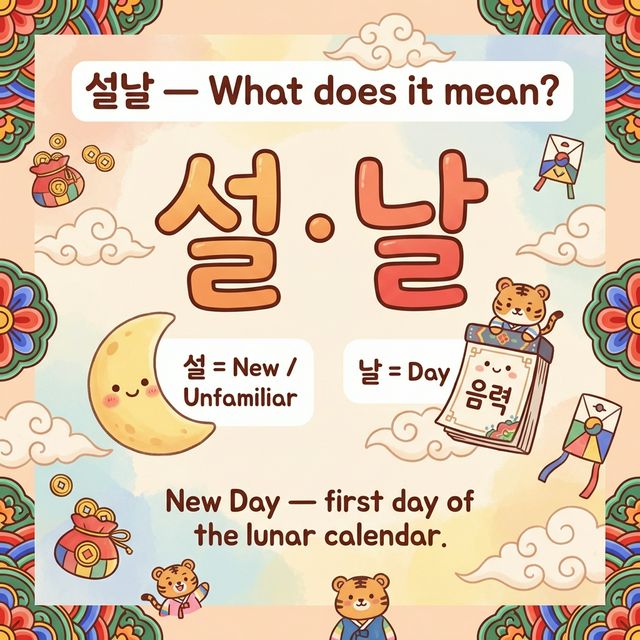
설날 — What does it mean?
The name carries layers of meaning: 설 (seol) = New / Unfamiliar (the “newness” of a fresh year). 날 (nal) = Day. “New Day” — the first day of the lunar calendar year. It falls on the 1st day of the 1st lunar month (usually late January to mid-February).
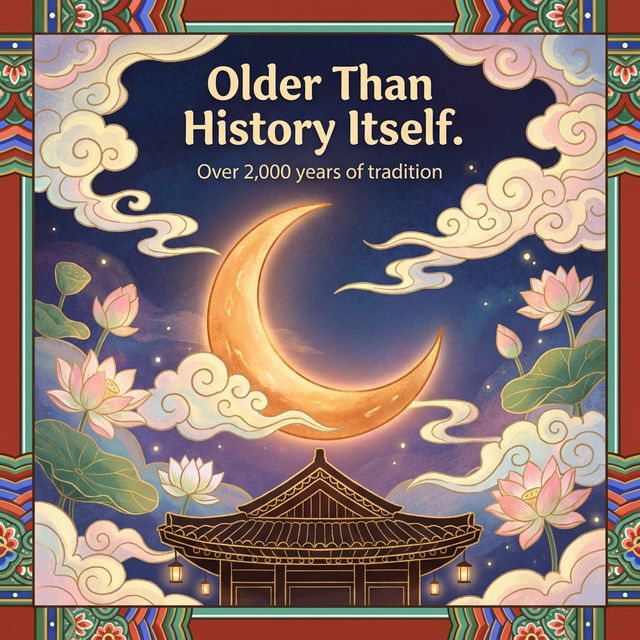
Older Than History Itself.
Seollal has been celebrated for over 2,000 years, rooted in Korea’s agricultural and lunar traditions. It marks the beginning of a new cycle — a time for honoring ancestors, family, and fresh starts. During Japanese occupation, the solar New Year (January 1st) was enforced — but Koreans quietly kept Seollal alive.
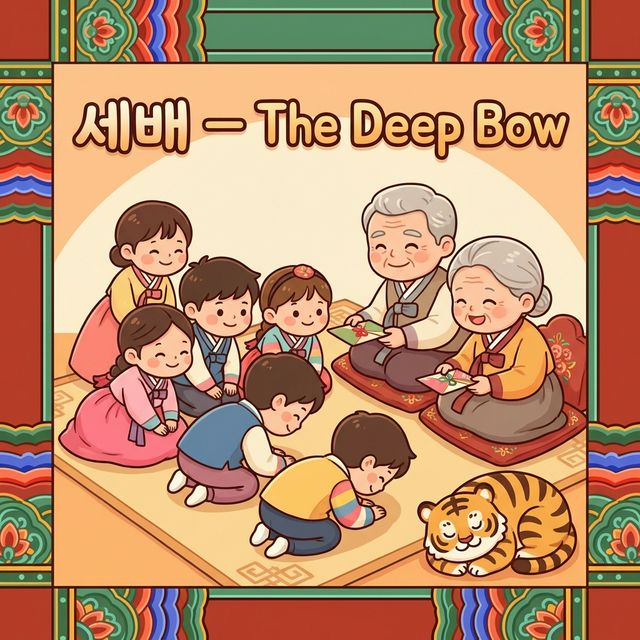
세배 — The Deep Bow.
The most important Seollal tradition: 세배 (sebae). Younger family members perform a deep, formal bow to their elders. In return, elders give 세뱃돈 (sebaetdon) — New Year’s money in envelopes — along with words of wisdom and blessings for the year ahead.
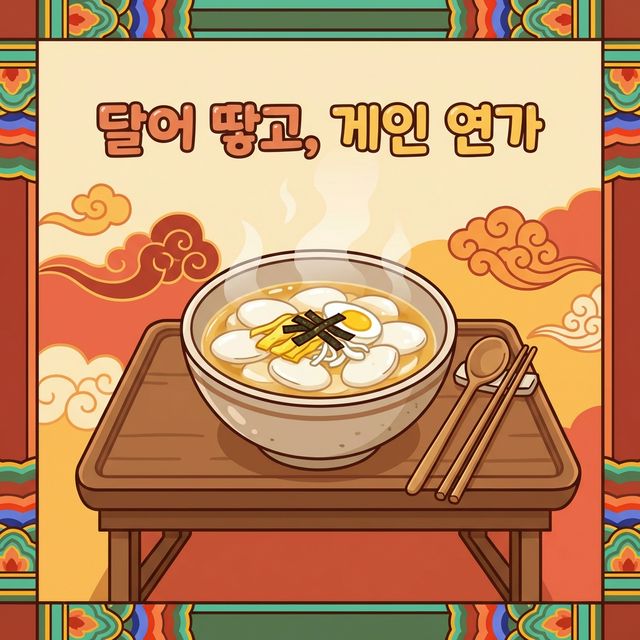
Eat a Bowl, Gain a Year.
On Seollal, everyone eats 떡국 (tteokguk) — rice cake soup. The white, oval rice cakes symbolize coins (prosperity) and purity (a clean start). Here’s the fun part: you don’t officially age until you eat your bowl. That’s why Koreans say: “몇 살이에요?” → “떡국 몇 그릇 먹었어요?” (How many bowls of tteokguk have you eaten?)
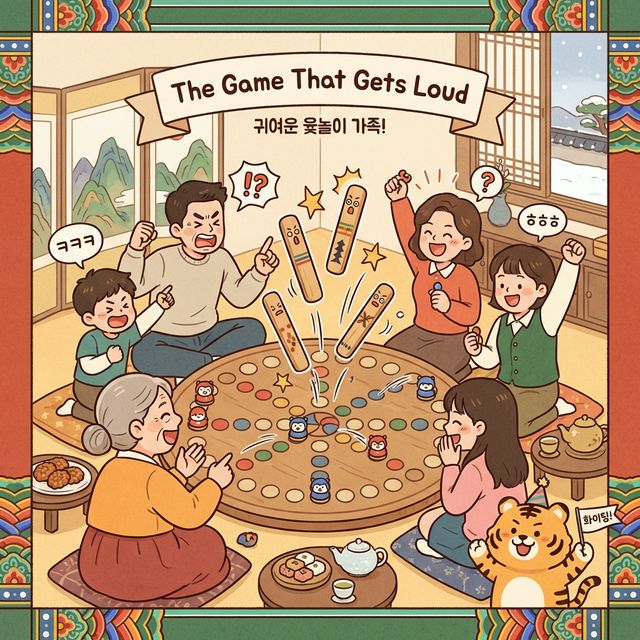
The Game That Gets Loud.
윷놀이 (yutnori) is THE Seollal game — a 1,500-year-old Korean board game. Teams toss four wooden sticks and race their tokens around the board. It’s simple to learn but gets intensely competitive. Every Korean family has their own house rules. 😄
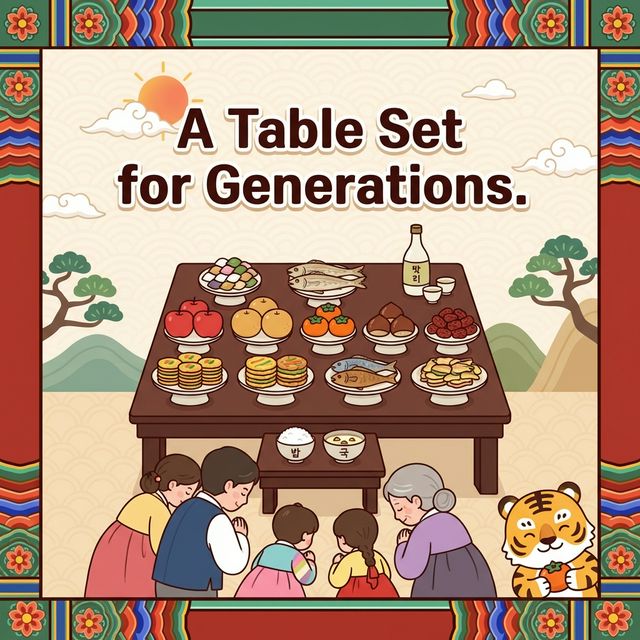
A Table Set for Generations.
On Seollal morning, families perform 차례 (charye) — an ancestral memorial rite. A carefully arranged table of food is set as an offering to honor grandparents and ancestors who have passed. Every dish has a specific placement — fruit on the east, fish on the west (동과서어). It’s a quiet, powerful moment: three generations in one room, honoring those who came before. 🙏
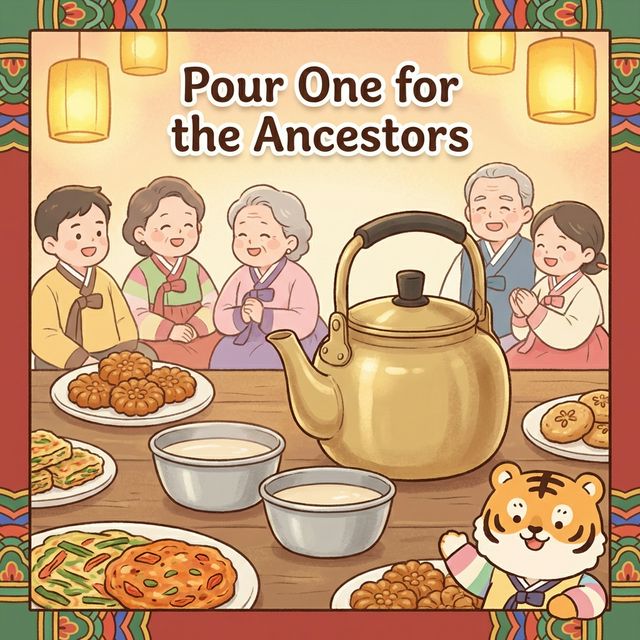
Pour One for the Ancestors.
No Seollal table is complete without Makgeolli. During 차례 (charye) — the ancestral rite — Makgeolli is placed on the offering table to honor those who came before. After the ceremony, the family shares the food and drinks together. 🍶
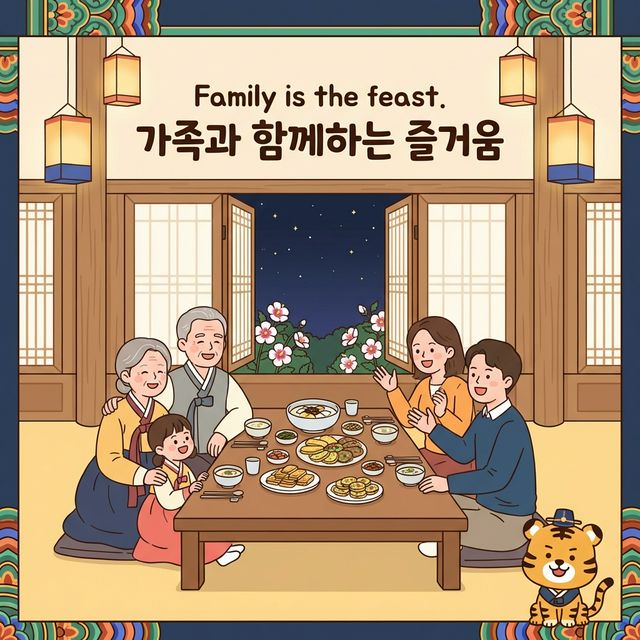
Family is the feast.
What’s your favorite Lunar New Year tradition? 👇
1 / 9